Promoting safe access is the cornerstone of all industrial sites. From routine inspections to maintenance, loading, repairs, and equipment operation, workers need reliable ways to reach the areas where work actually happens.
But safe access does not look the same in every facility. Some sites need permanent platforms built around fixed equipment. Others need mobile platforms that can move between work areas. Understanding the difference between these platform types is key to choosing the right solution for your application. In this article, we’ll break down the differences between modular, mobile, and fixed industrial work platforms, including where each option is commonly used and how they support safer, more efficient work.
What Are Industrial Access Platforms?
Industrial access platforms are engineered systems that provide safe, elevated work areas for inspection, maintenance, and operations tasks. They typically combine:
A work deck or platform
Stairs or ladders for access
Guardrails, toe boards, and gates for fall protection
Generally speaking, industrial access platforms fall into three major categories: fixed, modular, and mobile. Let’s break down some key details about all these systems.
Mobile Access Platforms
Mobile access platforms are rolling or movable platforms that can easily be repositioned to where they’re needed and locked in place during use. Typically, you’ll find mobile platforms in applications where:
The work moves around the site (e.g., maintenance on multiple pumps, valves, or vehicles)
Equipment of similar height is spread across a large area
You need temporary access during shutdowns, turnarounds, or project phases
Installing a permanent structure is not practical or cost‑effective
Some examples from Northern Platforms include:
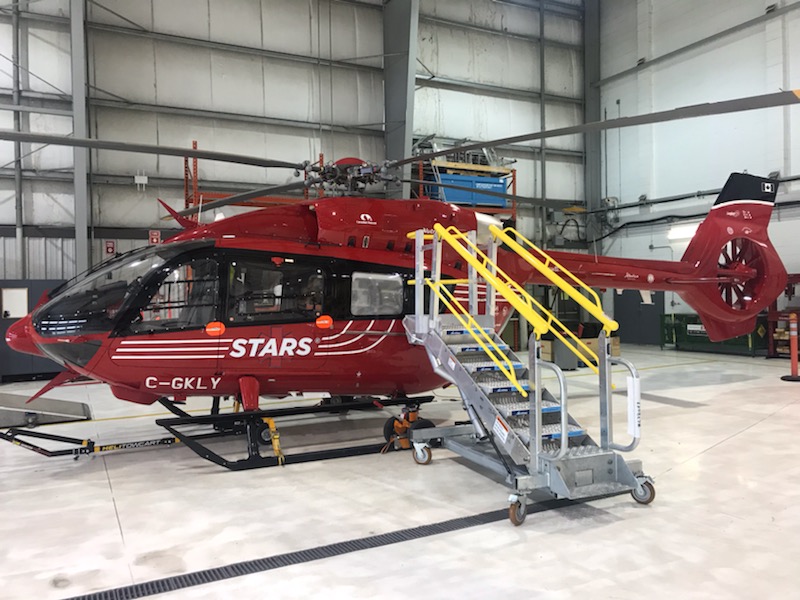
RollaStep MP Series mobile work platforms, which combine the stability of a fixed platform with the mobility of a rolling stair. Ideal for flatbed truck loading and unloading.
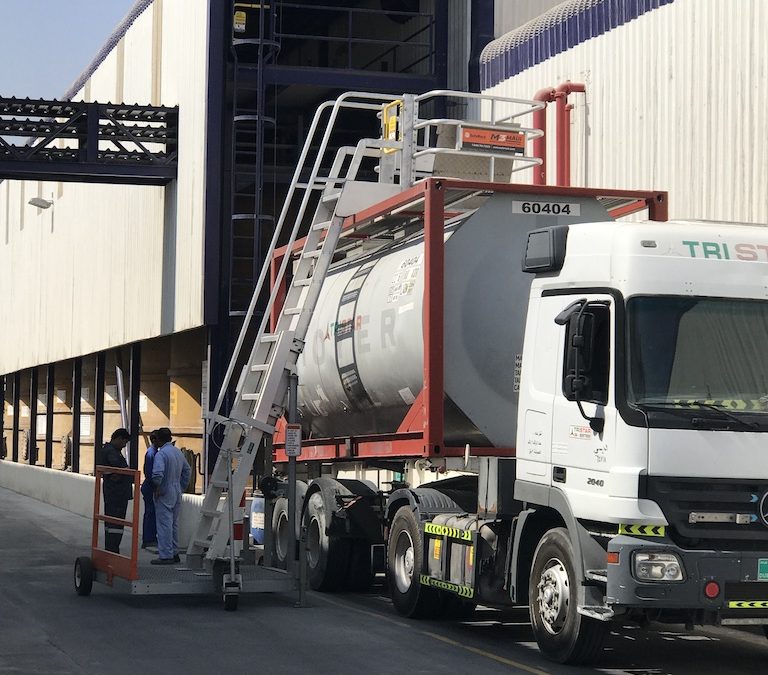
SafeRack MAUI Mobile Truck Loading Platform is a mobile tank truck access platform designed for safe loading access. It includes a stable base, telescoping ladder, and safety cage, with optional powered movement for easier positioning.
While mobile platforms can be useful, they should be avoided for high-traffic sites with consistent loading and unloading operations. In these situations, opt for a permanent/fixed loading rack.
Modular Access Platforms
Modular access platforms are built from standardized, pre-engineered components, like stairs, platforms, handrails, ladders, and supports, that bolt together easily. Generally, modular access platforms are ideal for:
Sites where access needs evolve over time
Projects on tight schedules that can’t wait for custom fabrication
Facilities that prefer bolt-together, no-welding installations for safety and speed
Applications where reconfiguration and expansion are expected
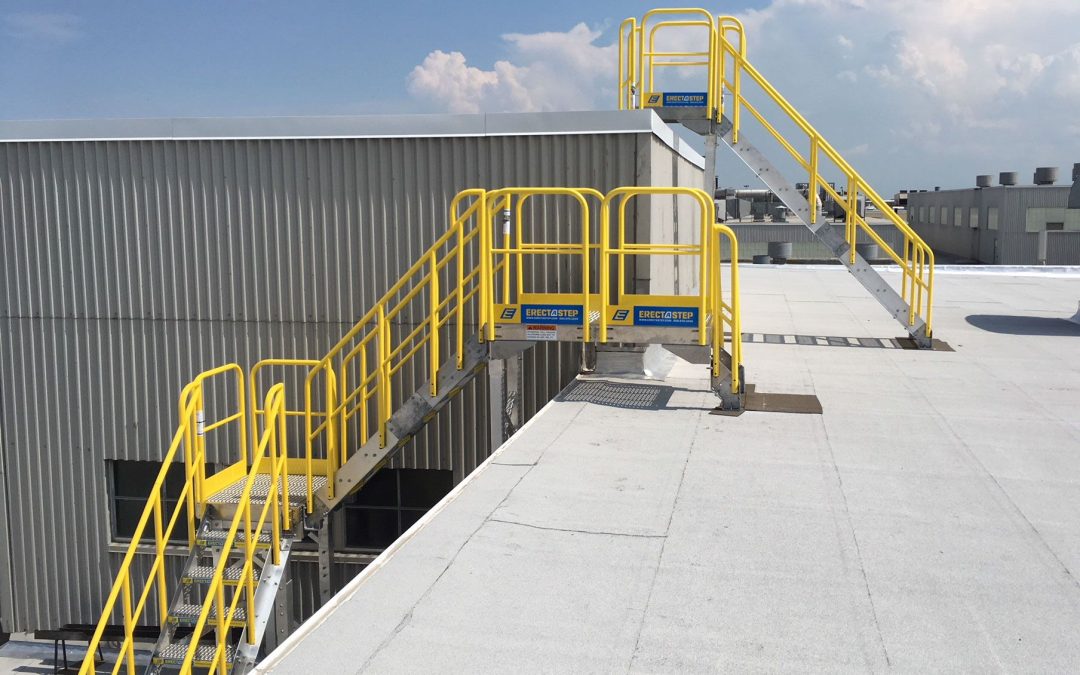
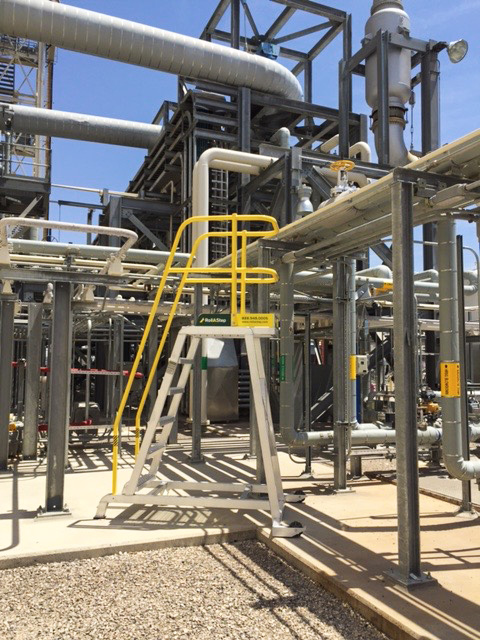
Systems like ErectaStep use a small set of standard components (universal platforms, stairs, ladders, tower supports, handrails) that can be combined into almost any configuration: crossovers, valve platforms, mezzanine access, ladder platforms, and more.
In practice, modular systems cover the majority of common industrial use cases, especially for valve access, pipeline crossovers, metering stations, industrial catwalks, rooftop access, and more. However, they are generally not used for truck and railcar loading and unloading.
Fixed Access Platforms
Fixed access platforms are permanently installed structures tied into the building, steelwork, or foundations. They don’t move and are engineered for long-term service in a defined location. Fixed platforms make sense when:
The access need is permanent and clearly defined (e.g., top of a tank, a mezzanine, or a fixed conveyor)
Loads are high or frequent, and continuous anchoring is required
Integration with existing building structure or process equipment is critical
The site must satisfy specific code or insurer requirements for permanent access
Northern Platforms has extensive experience building permanent loading platforms for a variety of applications. For further details about these projects, contact our office.
Industrial Access Platforms from Northern Platforms
Northern Platforms supplies and supports all three categories:
Mobile access platforms: Rolling work platforms and cantilever platforms for safe, mobile access to warehouse shelves, flatbed trailers, and other equipment
Modular access platforms: ErectaStep modular stairs and platforms for crossovers, valve access, metering stations, assembly lines, and more.
Fixed access platforms and loading systems: Truck and rail loading platforms integrating platforms, gangways, loading arms, and fall protection as complete systems.
Not sure what platform is best for your application? Our team specializes in assessing operations and proposing solutions that solve unique issues. For customers based in Alberta, we offer free site visits.
Portable stairs are one of those pieces of equipment that look simple from the outside but come in more configurations than most buyers expect. The right choice depends on what you’re accessing, how often you’re accessing it, whether the stairs need to move around the site, and what height variability you’re dealing with. This guide covers the four main types of portable stairs Northern Platforms carries, what each one is built for, and how to decide which is right for your application.
Type 1: Fixed Portable Stairs
Fixed portable stairs are prefabricated stair units designed for a set height range — typically used to provide access to a specific entry point, elevated surface, or piece of equipment that doesn’t change. Despite the name, they’re portable in the sense that they can be relocated when needed, but they’re generally positioned and left in place for extended use.
What they’re built for: Trailer and modular building access, elevated platform entry, roof access hatches, construction site office stairs, and any application where a permanent concrete or wood stair isn’t warranted but a stable, compliant access point is needed in one location.
Key specs to look for:
Height range matching your specific application (ErectaStep fixed portable stairs are available in 7 sizes from 28″ to 63″)
IBC, OSHA, and OH&S-compliant construction
Field-adjustable legs for uneven surfaces — essential for outdoor and construction site applications
Slip-resistant tread surface
Platform size adequate for the entry point (4×6′ and 4×4′ platforms available)
Entry configurations: direct, left, right, or multiple entry; double stair options for high-traffic access points
When it’s the right choice: You need a compliant, stable stair at a fixed location and don’t want to build or pour concrete. For temporary site trailers, construction phase access, or any elevated entry that needs to meet code without a permanent structure.
Type 2: Tilt-and-Roll Portable Stairs
Tilt-and-roll stairs are mobile stair units that can be tilted back on integrated rear wheels to move from one location to another, then set down flat for stable use. A single operator can reposition them without equipment or assistance.
What they’re built for: Warehouses, manufacturing facilities, and distribution centres where workers need to access shelving, mezzanines, or equipment at different points throughout a shift. Anywhere that a stair needs to serve multiple locations on the same floor.
Key specs to look for:
Wheel size and material — larger wheels handle uneven or outdoor surfaces better
Load rating on both the platform and the steps
Handrail configuration — full-height handrails on both sides for industrial applications
Locking mechanism when stationary — caster locks should engage quickly and hold firmly
Step width adequate for carrying tools or equipment while ascending
When it’s the right choice: Your workers need stair access at multiple points in a facility, and repositioning needs to be fast and single-operator. A fixed stair at every location isn’t practical; a tilt-and-roll unit serves the whole area.
Type 3: Rolling Self-Levelling Stairs
Rolling self-levelling stairs take mobility a step further. These units are designed to be repositioned frequently and adjust their platform height to match varying access heights — so the same unit can serve different pieces of equipment or vehicles without reconfiguration. The RollaStep G Series is the leading example of this type: a variable-height, self-levelling stair and platform with gas spring height adjustment and a locking pin to secure the set height.
What they’re built for: Process facilities, tank farms, refineries, and maintenance operations where workers access equipment at multiple heights throughout the day. Loading areas where vehicle or equipment heights vary. Any application where a single stair unit needs to replace multiple fixed-height platforms.
Key specs to look for:
Height adjustment range — the RollaStep G Series adjusts to accommodate a wide range of access heights
Self-levelling step and platform mechanism — steps should automatically level at every height setting, not require manual adjustment
Platform load rating — the G Series carries a 300 lb platform load limit
Caster quality — 360° locking casters with no-flat construction for outdoor and uneven surfaces
Platform size — the G Series provides a 6 square foot work surface, accommodating an operator with tools
Non-slip tread — self-draining, aggressive tread for wet and cold weather conditions
When it’s the right choice: You’re dealing with variable access heights across your site and want one unit that handles all of them. Particularly valuable in oil and gas, chemical processing, and maintenance environments where equipment heights vary, and workers move through multiple tasks in a shift.
Type 4: Cantilever Rolling Stairs
Cantilever rolling stairs are the most specialized type of portable stair — designed for applications where the access point is above or beyond an obstacle that prevents a standard stair from getting close enough. The platform extends out beyond the base of the unit, allowing workers to get above piping, containment walls, tank berms, or vehicle rooflines without the stair base contacting the obstacle or the equipment being serviced.
The RollaStep C Series is the industry standard for this type: a counterweighted cantilever platform that extends 2’5″ beyond the base, with 360° locking swivel casters that allow precise placement around sensitive equipment.
What they’re built for: Tank truck and railcar loading and unloading access, tank hatch access in process facilities, equipment access where piping or containment prevents direct approach, and chemical or petroleum handling environments where contact with the equipment must be avoided.
Key specs to look for:
Cantilever extension length — must reach far enough to position the operator above the access point
Counterweight design — a properly counterweighted unit should be stable with an operator on the platform without tipping
Caster locking — must lock securely before any operator climbs; look for total-lock casters that lock both rotation and swivel
Platform and handrail configuration — full handrails, adequate platform depth for working with equipment or hoses
OSHA compliance — non-negotiable for any industrial application
When it’s the right choice: You’re loading or unloading tank trucks or railcars, accessing tank hatches, or working above or around any obstacle that prevents a standard stair from approaching directly. This is the unit that replaces the improvised ladder-over-the-berm solution that no one should be using.
Portable Stairs from Northern Platforms
Northern Platforms carries the full RollaStep and ErectaStep portable stair lineup. We carry all four types above, and they are in stock and ready to ship. As an authorized distributor with nearly 30 years of experience supplying access equipment to oil and gas, construction, and industrial operations across Western Canada, our team can help you match the right unit to your specific application before you buy. Contact us today to get started!
Choosing the right elevated access system comes down to one key question: is your access need temporary, mobile, or permanent? Industrial facilities rely on safe, compliant access solutions, but not every worksite requires fixed infrastructure. In some cases, portable or rolling stairs provide the flexibility crews need. In others, a permanent access platform delivers greater stability and long-term value.
Wondering whether permanent or portable stairs are right for you? In this blog post we’ll discuss key features and break down the differences between these solutions. Keep reading!
What are Industrial Portable Stairs?
Industrial portable stairs are mobile access systems designed to provide safe, temporary elevation access in warehouses, construction sites, maintenance facilities, and loading areas. Depending on the configuration, they could include:
Non-slip treads
Handrails or full guardrail systems
A top platform for secure transitions
Locking casters or wheels
Heavy-duty aluminum or steel construction
Typically, portable stairs fall for industrial operations fall into two key categories.
Stairs for Temporary Buildings
Temporary modular stairs are designed to provide stable, structured access without requiring full structural installation. These systems are commonly used for:
Jobsite trailers
Temporary buildings
Elevated equipment access
Project-based application
They are typically assembled on-site and can be relocated or reconfigured as operational needs change. While not permanently anchored to the facility structure, they provide a secure, durable solution for mid- to long-term temporary access requirements.
Mobile or Rolling Stairs
Mobile rolling stairs, or portable stairs on wheels, are designed for frequent repositioning within a facility. Equipped with locking casters, these systems allow crews to move the stairs between work areas quickly and safely.
They are commonly used in:
Warehouses
Maintenance departments
Manufacturing facilities
Distribution centers
Rolling stairs prioritize flexibility and ease of movement, making them ideal when elevation points change regularly.
Interested in learning more about the rolling stair options that are currently available at the Northern Platforms? Read our complete guide or call our office for more information.
What are Permanent Access Platforms?
On the other hand, permanent access platforms are fixed structures installed at designated access points. While they can be modular and adaptable, the primary function of these systems is to provide consistent and reliable access to specific areas on your site. Certain options, like the modular work platforms from ErectaStep, can be custom-configured for the specific needs of your site.
How They Compare
Now that you have a clear understanding of your options, you might be wondering how these solutions compare. Use this table to understand the key differences between portable stairs and more permanent options:
Feature
Portable Stairs
Rolling Stairs
Permanent Platforms
Primary Function
Provide stable access for temporary or semi-permanent structures.
Provide flexible access that can be moved between locations
Deliver fixed, long-term access to designated elevated areas
Best For
Mid- to long-term projects requiring consistent access.
Completely customizable and modular. Available in multiple configurations.
Key Takeaway: Which Option is Right for You?
Still not sure which safe access solution is best for your site? Finding the right system is easy when you consider how it will be used within your operation.
If your access point needs to move between work areas throughout the day → Rolling portable stairs are likely the most practical choice.
If you require structured access for a jobsite trailer, temporary building, or project-based application → Temporary portable stairs provide stable, semi-permanent access without full structural installation.
If workers access the same elevated location multiple times per shift → A permanent access platform will typically offer greater stability and compliance consistency.
Make the Right Choice with Northern Platforms
No matter which option you choose, the Northern Platforms team is here to help. We work with facilities across Alberta and British Columbia to design, install, and maintain safety systems that meet real-world standards. When you partner with us, we’ll go above and beyond to understand your site, your needs, and any roadblocks.
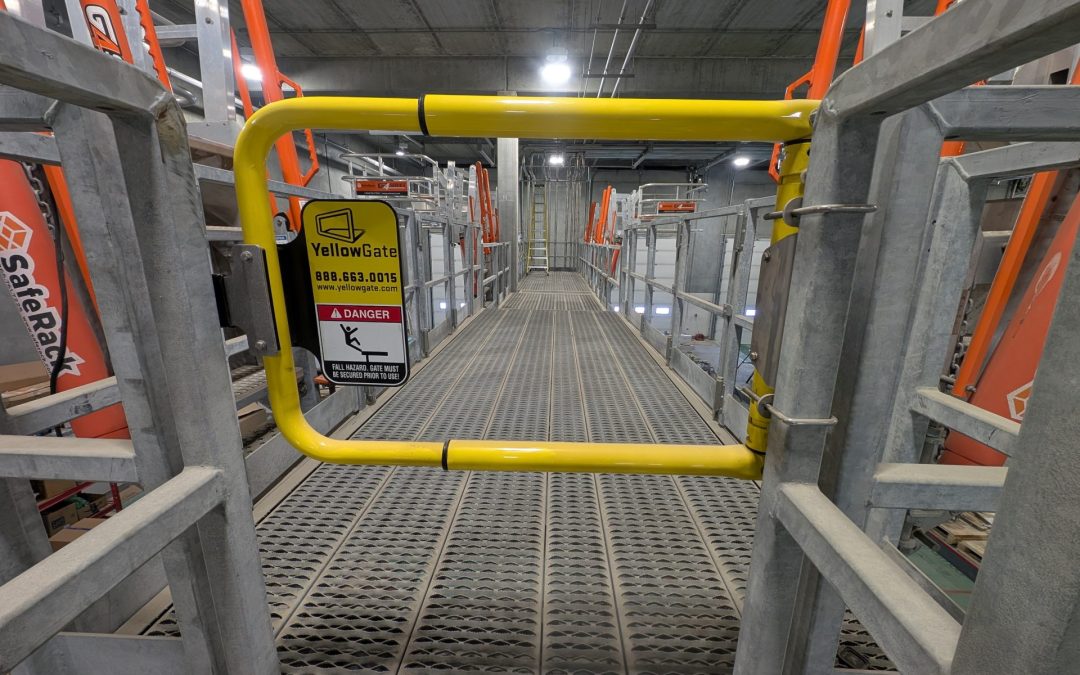
Looking for reliable industrial swing gates that work across every application? YellowGate has revolutionized workplace safety with a universal industrial swing gate that is suitable for virtually every application. These adjustable swing gates eliminate the traditional complexity of safety equipment while delivering superior protection across multiple industrial sectors. Keep reading to learn more about common uses for this product—and how to order YellowGate safety swing gates from Northern Platforms today!
Top Applications for Industrial Swing Gates
Oil and Gas Plants
Oil and gas facilities can be dangerous work sites, especially when operators regularly deal with elevated work platforms, ladders, and other falling hazards. In fact, one of the most significant risks for all workers is unsecured access points on ladders and hatches.
While these risks are significant, ensuring complete safety is easy. Oil and gas facilities count on YellowGate’s industrial swing gates to provide 24/7 protection for all open access points on ladders, stairs, and other areas on their site. For example, the Northern Platforms team installed over 50 safety swing gates at an oil and natural gas facility in central Alberta. This allowed workers to safely navigate the processing plant and ensure they were protected from falling hazardous at every step.
Food Processing Facilities
Food and beverage processing facilities combine elevated work environments with strict hygiene requirements. Workers regularly access significant heights on tanks, conveyor systems, and assembly lines. In these circumstances, food processing facilities can benefit from installing safety swing gates in several locations, including:
Mixing tanks and other processing locations.
Elevated conveyor systems.
Ladders and stairways leading to packaging and bottling assembly lines.
Rooftop Access
No matter what industry you operate in, you or your workers will likely have to access the rooftop at some point. From performing HVAC checks to maintaining important equipment, these regular tasks can be dangerous without proper protection in place. Pair your safety swing gates with portable railing systems for comprehensive rooftop fall protection.
Warehouse Loading Docks
In addition to standard adjustable swing gates, YellowGate offers the XL barrier gate, which offers 6 feet of adjustable traffic control. Suitable for both interior and exterior applications, this products easily protects passageways in your facilities, helping you control dangerous areas or block unauthorized access.
The Universal Solution: YellowGate Industrial Safety Gates
When dealing with conventional safety swing gates, your supplier will need to know several details, including:
The size of each opening where the gate will be installed.
How the gate will be mounted (square tubing vs. pipes).
The direction that the gate will swing.
However, with YellowGate’s innovative industrial safety gates, you don’t have to worry about all these details. Featuring a unique universal mounting system and 16-inch adjustability, these fall protection solutions fit almost every type of opening, regardless of your facility. For complete protection, simply count the number of openings on your site and place your order with Northern Platforms—no need for measuring, mounting considerations, or other time-consuming assessments.
Protect Your Facility Today
Ready to simplify your facility’s fall protection with universal adjustable swing gates? With just one SKU, you can guarantee your workers are protected at every turn. Contact Northern Platforms today for turnkey installation, maintenance programs, and more!
Every construction site faces the challenge of safe, efficient access between different levels, site trailers, and other workplace areas. While many operators have long trusted ordinary ladders and makeshift ramps, these solutions often fall short when it comes to the intense demands of a modern workplace. Looking for an access solution you can count on? Portable stairs offer a superior access that addresses these concerns, all while providing versatility for various construction applications. Let’s discuss the best portable stairs for your construction site.
The Importance of Portable Stairs
Safety is the top priority on any job site. Portable stairs dramatically reduce the risk of falls compared to ladders, especially when workers need to carry tools or materials. Unlike ladders, stairs let workers maintain three points of contact and move more naturally, which means fewer accidents and less fatigue. Plus, portable stairs increase operational efficiency, especially when workers can move quickly and confidently between levels. To top it all off, portable stairs from trusted brands like ErectaStep are automatically OSHA and OH&S compliant, making them an essential addition to your site.
Common Uses for Portable Stairs on Construction Sites
Thanks to their adaptability and durability, portable stairs can have a variety of uses for all construction sites, including:
Temporary access between floors before permanent staircases are built.
Easy access to jobsite trailers and modular office buildings.
Safe entrance and exit alternatives to scaffolding, ladders, and ramps.
3 Key Features to Look For
Durability
When selecting portable stairs, look for strong materials like powder-coated steel or aluminum that can withstand harsh construction environments. Quality stairs should feature:
Heavy-duty construction capable of supporting workers, materials, and other heavy loads.
Corrosion-resistant finishes for all-weather use that won’t degrade over time.
Aggressive non-slip tread surfaces to prevent accidents in wet or muddy conditions.
Versatility & Adjustability
Outdoor construction sites rarely feature level surfaces, which can make installing access solutions difficult. However, high-quality portable stairs easily adapt to uneven ground with adjustable legs and stable work platforms. Plus, their modular construction means they can easily be adapted to different access needs and paired with other ErectaStep products for a comprehensive safety system.
Strong handrails that meet necessary height requirements
Appropriate tread depth and riser height per regulations
Why We Recommend ErectaStep’s Portable Stairs for Your Worksite
When choosing portable stairs for your worksite this year, ErectaStep’s portable stairs are the best choice. Key features of this product include:
Adjustable leg height.
Powder-coated galvanized steel.
7 different sizes, ranging from 28” to 63” (711mm–160mm).
They also come in both OSHA and IBC compliant models:
OSHA (Industrial): Features a 4×4 platform with 50 psf load requirements and handrails with standard balusters.
IBC (Commercial and Residential): Includes a 4×6 platform with heavy-duty load requirements of 100 psf and balusters with 102mm spacing.
Northern Platforms: Your Trusted ErectaStep Supplier
Ready to invest in the best portable stairs for your worksite? As Alberta’s trusted safe access supplier since 2002, Northern Platforms has the solutions you need to make your site safer and more efficient. Need to pair your stairs with a modular catwalk system or a comprehensive rooftop safety system? Our turnkey services will take care of everything from consultation to installation. Get started by contacting us for a quote today!
For workers in the liquid chemicals industry, one of the most crucial parts of their job is having access to safety equipment that makes completing day-to-day tasks easier. While this might sound straightforward, it is more challenging than you think. Completing even the most basic jobs safely and comfortably can be complicated with dangerous built-in systems and consistent equipment design flaws.
That’s why investing in the best safety equipment is so important. It can help improve the efficiency of your operations and ensure that your workers are protected. Products like portable truck access stairs, loading racks, and fall protection systems all work together to ensure your workers’ protection at every turn.
In this post, we’ll explain why you should add a mobile access unit to your operations and how the Northern Platforms team can help you find the right solution.
What are Portable Truck Access Stairs?
Portable truck access stairs, also known as mobile access units or tanker ladders, are used to safely climb on top of tanker trucks and railcars to complete inspections, venting, loading, and unloading. These units are safer alternatives to the preexisting ladders on tanker trucks, which usually have thin rungs and inadequate fall protection. These ladders can be extremely unsafe, especially in Alberta and BC’s cold and wet climates.
Portable vs Permanent Truck Fall Protection: What’s Right for You?
Portable stairs with a platform are ideal for temporary or remote job sites, where investing in a permanent solution doesn’t make sense. Similarly, if your workplace requires a lot of flexibility, portable racks are great for their versatility and mobility. However, here’s what you should remember: investing in permanentfall protection systems like truck loading racks and platforms is smarter in some situations. For example, if your facility has a fixed loading lane or unloading bay where tanker trucks regularly drive in and out, a permanent solution makes the most sense for you.
At Northern Platforms, we stock a variety of permanent and portable fall protection systems. Not sure which solution is right for you? Our experts are ready to help you find the perfect safe access system for your unique needs. Read more about Tanker Truck Fall Protection Options at Northern Platforms. Ask yourself:
Do you load/unload/work on trucks/railcars in many different locations on your site?
Do you deal primarily with vehicles of varying heights, sizes, and types?
Is your worksite temporary or remote?
Are there obstacles or environmental conditions that prevent a permanent installation?
If you answered yes to any of the above questions, keep reading! Next, we’ll discuss SafeRack’s MAUI, the best portable truck access stairs in the business.
Choosing the Best Portable Access Unit: SafeRack’s MAUI
Now that you’ve determined that a mobile tanker ladder is right for you, it’s time to find the perfect unit. That’s where SafeRack’s MAUI comes in. Unlike most mobile tanker truck fall protection systems that require support from the vehicle, the SafeRack MAUI is a self-supporting unit. This means it does not need to rest on the trailer, ensuring stability and preventing the risk of tipping over, even on uneven surfaces. Plus, it comes equipped with a safety cage and no-flat tires. All these features make the MAUI reliable and preferred by all our customers in the liquid chemical business.
SafeRack’s MAUI 10/14 vs MAUI 12/16
The MAUI comes in two different heights.
MAUI 10/14 Mobile Loading Platform
MAUI 12/16 Mobile Loading Platform
Ladder Height
10’ to 14’
12’ to 16’
Vehicle Access Height
9’6” to 14’0” (ATV Model: 11′- 6 ¾” to 15′ – 6 ¾”)
12’0 to 16’0” (ATV Model: 13′-6 ¾” to 17′-6 ¾”)
Load Capacity
2,000 lbs (907 kg)
2,300 lbs (1,043 kg)
Both models are available with perpendicular or parallel configurations. Choose perpendicular for easy spotting with tankers. Parallel is best suited for increased maneuverability in tight spaces. Additionally, the MAUI is available in an ATV model, which is ideal for rugged terrain. Remember that the ATV has slightly different vehicle access heights than the traditional MAUI. If you have questions, contact a Northern Platforms team member for more information.
Choose Northern Platforms for Portable Tanker Ladders and More