A railcar loading rack is more than a platform beside the tracks.
For workers to load, unload, inspect, vent, sample, or connect equipment safely and efficiently, the entire system has to work together. The access route has to align with the railcar. The gangway has to reach the right hatch. The loading arm or hose connection needs to be positioned for the product-transfer process. Workers need stable footing, effective fall protection, adequate lighting, room to move, and a clear way to respond if something goes wrong.
When one part of the system does not match the operation, it can create delays, unsafe workarounds, and recurring maintenance or productivity problems.
A well-planned railcar loading rack brings the major elements together into one coordinated system. Whether a site is building a new rack, expanding capacity, or updating an existing loading area, understanding these elements can help teams make better decisions before equipment is installed.
What Is a Railcar Loading Rack?
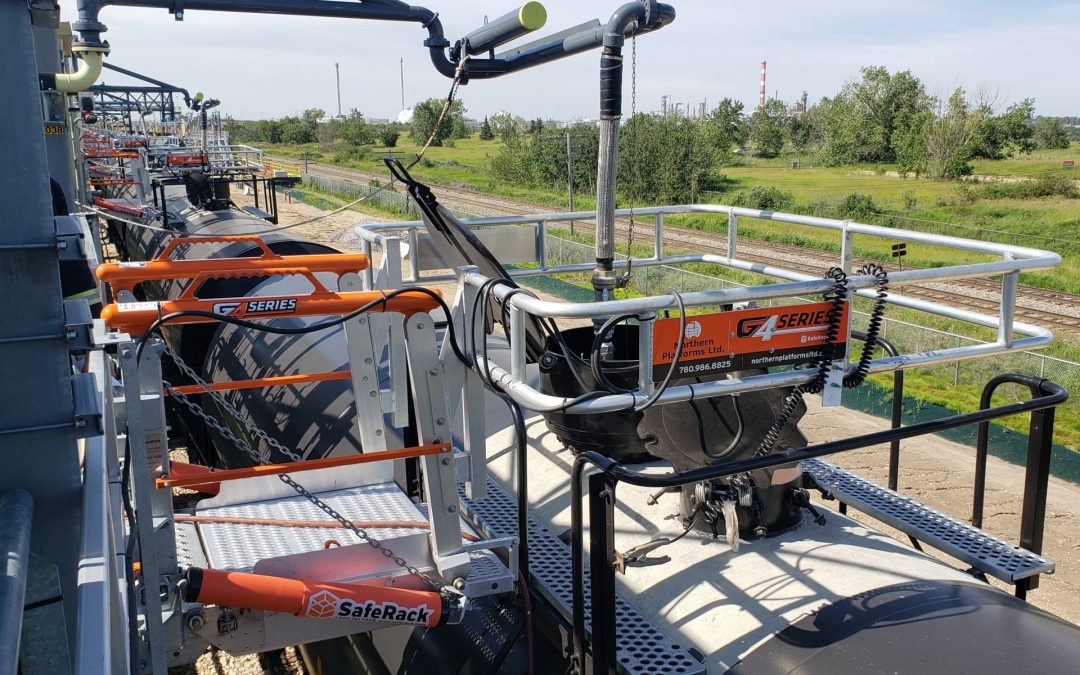
A railcar loading rack is an engineered access and transfer system that helps workers safely reach the top of railcars to complete loading, unloading, inspection, sampling, venting, and related tasks.
The rack usually sits alongside the track and provides an elevated work area at a suitable height for the railcars being serviced. Depending on the operation, it may include a loading platform, stairs, gangways, safety cages, loading arms, pipe supports, cable trays, containment equipment, lighting, shelters, and other site-specific features.
The most effective railcar loading racks are designed around the actual operation—not simply around a standard platform layout.
That means considering:
The types of railcars that arrive at the facility
Hatch locations and access points
Railcar height variation
Product-transfer methods
Number of loading positions required
Operator workflow and traffic patterns
Available footprint and track layout
Weather exposure and site conditions
Future expansion or product changes
A complete system helps workers move from the ground to the work area, complete the required task, and return safely without relying on improvised access.
1. Access Stairs and Entry Points
Every railcar loading operation begins with access to the elevated platform.
Fixed stairs are typically used to connect ground level to the loading rack. The ideal stair configuration depends on the platform elevation, available space, worker traffic, and the way personnel enter and leave the area.
A well-designed entry point should provide a clear route to the platform without forcing workers to navigate around equipment, piping, hose connections, or other obstructions.
Important considerations include:
Stair width and tread design
Handrails for stable access
Slip resistance in wet, icy, dusty, or oily conditions
Landing space at the top and bottom of the stairs
Clear routes for workers carrying tools or PPE
Multiple access points for larger or multi-spot loading racks
Emergency egress requirements
In Western Canadian operations, weather should be part of the design discussion from the beginning. Snow, ice, wind, and changing temperatures can affect how workers use stairs and elevated platforms. A system that works well only in ideal conditions may not provide the same level of access through the full operating year.
2. The Loading Platform
The loading platform is the central working area of the railcar loading rack.
It gives operators a stable surface beside the railcar where they can position themselves before crossing to the top of the car. The platform may support workers performing loading, unloading, sampling, inspection, venting, or other top-of-railcar tasks.
Platform size and layout should reflect the actual work being done. If operators need to handle hoses, connect loading arms, carry equipment, work beside another employee, or access multiple hatches, the platform must provide sufficient space.
A loading platform should be designed with attention to:
Working width and usable walking area
Platform length relative to railcar hatches and loading positions
Surface traction and drainage
Guardrails along exposed edges
Clearance around pipes, cables, loading arms, and structural supports
Space for workers to enter, exit, and move safely
Accessibility for inspection and maintenance
A platform that is too small can create congestion. One that does not line up with the railcar’s working points can force workers to stretch, reach, or reposition unnecessarily. The goal is to create a functional work area that supports repeatable operations.
3. Gangways and Articulating Stairs
A loading platform brings workers alongside the railcar. A gangway or articulating stair provides the controlled crossing from the platform to the railcar.
Gangways are especially important because railcars can vary in height, hatch location, and exact placement along the track. An effective gangway should accommodate the vertical and horizontal distance between the fixed platform and the railcar without creating an awkward or unsafe transition.
Depending on the application, a railcar loading rack may use:
Self-adjusting gangways
Flat-ramp telescoping gangways
Track-mounted gangways
Folding stair gangways
Pneumatic or powered gangway systems
Gangways with integrated safety cages
The right option depends on the railcars being serviced and how consistently they line up with the loading location.
For example, a facility that receives similar railcars at a consistent position may need a different gangway configuration than a site that handles multiple car types or regularly deals with railcar mis-spotting.
Gangways should be selected based on more than the average railcar height. Teams should understand the full operating range, including the lowest and highest hatch locations, potential horizontal offsets, and any recurring positioning issues.
4. Safety Cages and Fall Protection
Workers accessing the top of a railcar are exposed to fall hazards. A complete railcar loading rack should account for the worker’s protection during the transition from the platform to the railcar and while work is being completed near the hatch.
Safety cages are often integrated with gangways to create a protected work area around the point of access. The cage can move with the gangway and help provide a controlled space for loading, unloading, sampling, venting, or inspection work.
Depending on the site and application, fall-protection planning may also include:
Guardrails and handrails
Self-closing swing gates
Overhead fall-protection systems
Personal fall-arrest equipment
Controlled access zones
Safe routes to and from the loading area
Rescue planning and worker training
The right approach depends on the work, the loading-rack layout, the railcar configuration, and the applicable requirements. The most effective systems do not treat fall protection as a separate add-on. They build protection into the platform, gangway, access route, and operator work area.
5. Loading Arms and Transfer Connections
The transfer system is one of the most important components of a railcar loading rack.
Depending on the product being moved, the operation may use loading arms, hoses, dry disconnects, couplers, vapour-recovery equipment, or other transfer connections. These components need to work with the rack layout, railcar configuration, and operating process.
Railcar loading arms can help provide a more controlled, repeatable connection between the facility and the railcar. They may be selected for top or bottom loading, different products, temperature requirements, vapour management needs, and varying railcar configurations.
When planning loading arms and transfer connections, consider:
The product being loaded or unloaded
Whether the system uses top or bottom loading
Required horizontal and vertical reach
Railcar hatch or connection-point location
Hose-management requirements
Manual handling demands on operators
Compatibility with valves, fittings, and couplers
Product temperature, pressure, and chemical characteristics
Spill-control and emergency shut-off needs
Access for inspection and maintenance
The loading arm should not be considered independently from the platform and gangway. Operators need enough room to use it safely, and the system must be positioned to reach the intended connection point without interfering with worker movement.
6. Pipe Racks, Cable Trays, and Equipment Supports
A railcar loading rack often needs to support more than people.
Process piping, loading-arm connections, electrical systems, instrumentation, controls, and communication lines may all need to be routed to the loading location. Properly designed pipe racks, cable trays, and support structures help keep these services organized and out of the operator’s path.
Without planned supports, piping and cables can create clutter, restrict movement, complicate maintenance, and make it harder to access the loading area safely.
Support structures should be planned around:
Required process piping and utility lines
Electrical and control-system routing
Loading-arm support needs
Meter runs and instrumentation
Equipment maintenance access
Worker clearance and platform width
Future additions or modifications
Protection from vehicle traffic or moving equipment
A clean, organized rack layout supports safer movement and makes the loading process easier to understand for new operators, contractors, and maintenance teams.
7. Spill Containment and Drainage Considerations
Railcar loading and unloading operations involve product transfer, which means sites should plan for drips, leaks, spills, and cleanup needs.
Containment requirements will vary by product, process, site, and jurisdiction, but a complete loading-rack design should consider how the area will handle potential releases.
Depending on the application, this may involve:
Track pans or containment systems
Curbs and controlled drainage routes
Spill kits and emergency-response equipment
Drainage planning around the loading area
Space for cleanup and maintenance activities
Equipment placement that reduces the chance of hose or connection damage
Safe access to valves and emergency shut-offs
Containment should not be treated as an afterthought once the rack is installed. The platform layout, track location, transfer equipment, and site drainage all affect how easily a facility can respond to a release.
8. Lighting, Shelters, and Operator Comfort
Loading racks need to function during real operating conditions—not only during daylight and fair weather.
Proper lighting can support safer work during early mornings, evenings, winter months, and low-visibility conditions. Shelters, canopies, or enclosed operator buildings may also be valuable where workers are exposed to rain, snow, wind, heat, or prolonged outdoor tasks.
These features can improve comfort, but they also support consistency. When workers can see connection points clearly, move safely on the platform, and complete tasks without unnecessary weather exposure, they are better positioned to follow procedures and work efficiently.
Consider whether the site needs:
Platform and stair lighting
Lighting around hatches and connection points
Weather protection for operators
Canopies over loading areas
Enclosed control or operator spaces
Space for documentation, controls, communication equipment, or testing tools
Heated or protected areas for cold-weather operations
The right level of weather protection depends on the location, product-transfer process, duration of the work, and expected volume of activity.
9. Emergency Access and Safety Equipment
Every railcar loading rack should be planned with the possibility of an upset condition in mind.
Workers need to know how to exit the area safely, and emergency equipment must be accessible without forcing someone to cross a hazardous route. Depending on the application, the system may need to account for emergency shut-offs, eyewash stations, safety showers, fire-protection equipment, grounding and bonding, communication devices, and emergency egress routes.
Key questions include:
Can operators reach emergency shut-offs quickly?
Is there a clear path off the platform?
Are safety showers and eyewash stations positioned where they can be reached quickly?
Can emergency responders access the loading area?
Is lighting adequate for an emergency situation?
Are workers able to move around loading arms, pipes, and equipment without obstruction?
Is rescue planning considered where personal fall protection is used?
The answers should be incorporated into the rack design, operating procedures, and site training—not left to be resolved after commissioning.
Build a Railcar Loading Rack Around Your Operation
A complete railcar loading rack is not defined by one piece of equipment. It is the combination of access, transfer, fall protection, operator workflow, containment, utilities, and emergency planning that allows the operation to run safely and efficiently.
The right system begins with understanding how your workers load, unload, inspect, and access railcars today—then designing a loading rack that supports those tasks now and into the future.
Northern Platforms helps industrial facilities plan, supply, and install railcar loading systems built around real site conditions. From loading platforms and gangways to loading arms, safety cages, support structures, and complete turnkey loading racks, our team can help you build a safer and more efficient railcar operation.
Planning a new railcar loading rack or updating an existing system? Contact Northern Platforms to discuss a site-specific solution.
RollaStep offers a range of mobile access solutions designed for different work environments, access heights, equipment layouts, and operational needs. From compact rolling ladders to variable-height platforms and cantilevered access systems, the right product depends on the work your team needs to complete.
RollaStep TR Series: Mobile Access for Tight Work Areas
The RollaStep TR Series is a tilt-and-roll rolling ladder designed for facilities that need dependable elevated access without giving up mobility.
Its side rolling wheels allow workers to tilt and move the unit into position, even in tighter work areas. Once positioned, the wide base, full-size handrails, stairs, and work platform provide a more stable working area than a standard ladder.
The TR Series is a practical option when workers need regular access to equipment or storage but do not need a large platform or an adjustable-height system.
Common applications include:
Warehouse and inventory access
Production-line work
Equipment inspections
Loading and unloading tasks
Routine maintenance work
Access to elevated controls or components
Facilities with narrow aisles or limited floor space
The TR Series provides approximately six square feet of platform space, giving one worker room to stand comfortably with tools and small parts. Its full toe board can also help prevent accidental slips and reduce the chance of items falling from the platform.
Choose a TR Series rolling ladder when mobility, compact size, and stable single-worker access are the main priorities.
RollaStep G Series: Adjustable Access for Changing Heights
The RollaStep G Series is designed for applications where the working height changes.
Rather than using several fixed-height ladders or platforms, teams can adjust the G Series platform to suit different equipment, vehicles, and work areas. Its self-levelling stairs and platform remain level as the height changes, helping provide a stable work surface across the adjustment range.
This makes the G Series a strong choice for maintenance departments and industrial teams that work on equipment with different elevations.
Common applications include:
Manufacturing and production facilities
Maintenance departments
Equipment inspection and repair
Fleet and vehicle service
Work around machinery with different access heights
Facilities where one platform must serve several workstations
Indoor and outdoor maintenance tasks
The G Series can be especially useful when a facility has recurring access needs but not enough consistency to justify a separate fixed platform at every location.
Workers can move the unit where it is needed, adjust it to the appropriate height, secure it in place, and complete the task from a stable work area.
Choose a G Series mobile platform when flexibility across changing working heights is more valuable than a fixed-height access solution.
RollaStep C Series: Access Over Railcars, Trucks, and Equipment
The RollaStep C Series is a cantilevered rolling work platform designed to help workers reach above, over, or around obstacles.
This configuration is especially useful when the platform base cannot sit directly beside the work area. The cantilever design allows the work platform to extend beyond the base, helping workers access elevated points on railcars, tanker trucks, tall machinery, process equipment, or other industrial assets.
For example, an operator may need to reach the top of a tanker truck, access a point beyond a curb or pipe run, inspect elevated equipment, or work over a structural obstruction. A standard rolling ladder may not provide the required reach or positioning flexibility.
Common applications include:
Railcar access
Tanker truck access
Tall industrial equipment
Equipment inspection and maintenance
Access around pipes, barriers, or structural obstructions
Work over flatbed trailers or large machinery
Applications where the unit base must remain clear of the access point
The C Series is well-suited to facilities that need mobile access but also require horizontal reach beyond the footprint of the platform base.
Choose a C Series cantilever platform when your workers need to access equipment that is elevated, obstructed, or positioned beyond where a standard rolling ladder can safely reach.
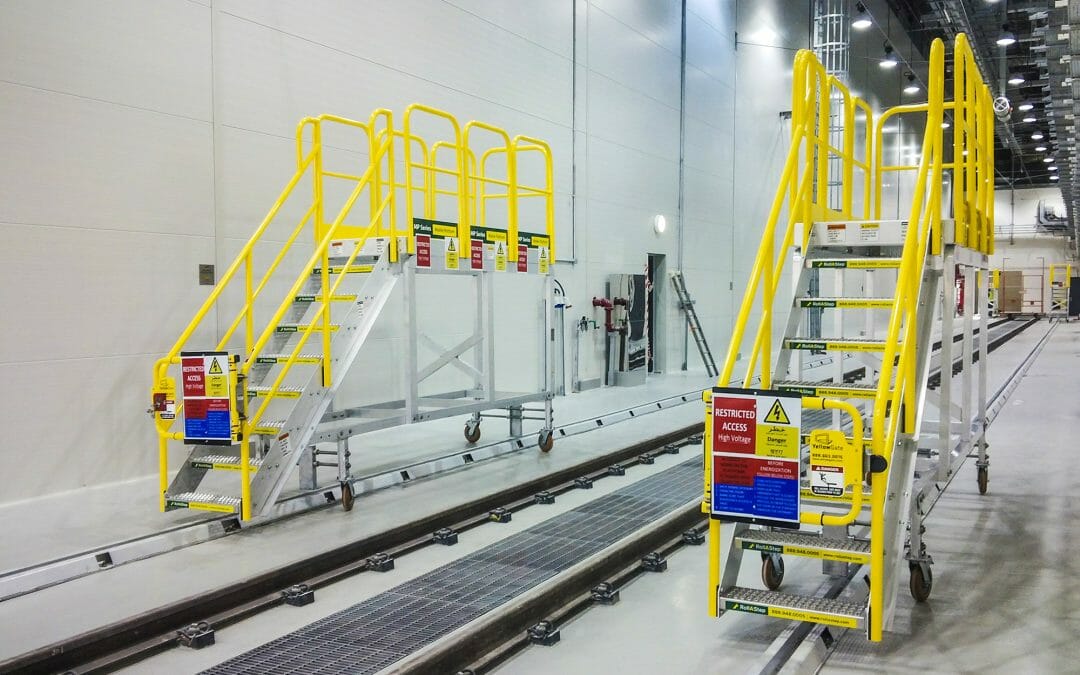
RollaStep MP Series: Larger Mobile Work Areas for Demanding Tasks
The RollaStep MP Series is designed for work that requires more space, more stability, or room for more than one person.
It combines the mobility of a rolling stair unit with a larger work area similar to a fixed platform. The MP Series includes a 9-foot by 3-foot platform, providing space for multiple operators, tools, parts, and equipment.
This is an important distinction. Some tasks can be completed safely from a compact rolling ladder, but others require a more substantial working area. Maintenance crews may need room to remove equipment panels, work with larger parts, use test instruments, or complete repairs alongside another technician.
Common applications include:
Multi-person maintenance tasks
Equipment repairs and inspections
Work involving tools, parts, or test equipment
Flatbed trailer access
Tarping, tie-down, and load-securing work
Large machinery maintenance
Production-line service work
Applications where workers need extended time at elevation
The MP Series is available in multiple step configurations and includes removable handrail options that can help operators access certain work areas over obstructions or beside flatbed trailers.
Choose an MP Series mobile work platform when the job requires more than a compact access point. It is the better option when workers need a larger, stable workspace to complete demanding tasks efficiently.
How to Choose Between RollaStep Product Lines
If your team needs to…
Consider
Move a compact access unit through tight work areas
TR Series
Access elevated equipment at different heights
G Series
Reach over or above railcars, tankers, or obstructions
C Series
Create a large, stable work area for tools, parts, or multiple workers
MP Series
The right selection depends on the work environment, task frequency, access height, platform mobility requirements, clearance limitations, and amount of usable work space required.
For some facilities, one mobile platform can serve several tasks. For others, a maintenance department may benefit from different units for different applications—for example, a G Series platform for changing equipment heights and an MP Series platform for larger repair work.
Choose Northern Platforms as Your RollaStep Supplier
Mobile work platforms can improve safety, efficiency, and consistency across a wide range of industrial tasks. However, the best option is not always the tallest platform or the most mobile unit. It is the one that gives workers the right combination of reach, stability, workspace, and flexibility for the job.
Northern Platforms can help you evaluate the working heights, equipment layout, access frequency, site conditions, and job requirements at your facility to identify the most practical RollaStep solution.
Looking to upgrade an existing loading arm? Start with how the arm is actually being used.
There is no single list of loading arm accessories that works for every application. A bottom-loading truck arm may need an API coupler and parking adaptor, while a top-loading railcar arm may need a completely different connection and storage setup.
This guide breaks down some key loading arm upgrades by loading method and operating need. If you are looking for specific products, you can also explore loading arm accessories available on our website or contact Northern Platforms for more information.
What is Considered a Loading Arm Upgrade?
“Loading arm accessory” is a broad term. Not everything added to a loading system is technically an accessory, and not every replacement part is an upgrade.
In general, the equipment you may be looking for falls into a few categories.
Connection equipment: Couplers, disconnects, and other components used where the loading arm connects to the truck, railcar or transfer system.
Loading-system safety equipment: Equipment such as grounding verification, overfill protection, emergency shutdown or vapour-control systems may work with the loading arm without being physically mounted to it.
Temperature-control options: Heat tracing, insulation and other configurations may be used where a transferred product has specific temperature requirements.
Replacement parts: Swivels, seals, and other components may need to be replaced because of wear or failure. Replacing a worn component is maintenance—not necessarily an upgrade.
These distinctions matter when you are looking for parts. Before Northern Platforms can recommend an option, the team needs to understand whether you want to add a capability, change the configuration or simply restore the existing arm to working condition.
How to Choose Loading Arm Upgrades
Start With Your Loading Method
The easiest way to narrow down loading arm upgrades is to start with the type of loading system you already have—or the system you are planning.
For example, are you:
Top loading through an open hatch?
Top loading through a closed or tight-fill connection?
Bottom loading through a vehicle adaptor?
Loading a truck?
Loading a railcar?
Planning a new system?
Modifying an existing one?
These differences have a major impact on the accessories that make sense.
An API bottom-loading coupler, for example, is associated with a specific type of bottom-loading connection. It is not something you would simply add to a top splash-loading railcar arm.
The same goes for factors such as pipe size, product, pressure and temperature. Loading arms are generally selected around the application rather than treated as one-size-fits-all equipment.
Let’s discuss some popular upgrades for top-loading (both splash and tight fill) and bottom-loading arms. If you are still deciding on the basic configuration, see Northern Platforms’ top-loading arms and bottom-loading arms before comparing individual upgrades.
Top Splash-Loading Arm Upgrades
Top splash loading typically involves positioning the loading arm through an open hatch and transferring product through a drop tube or similar outlet arrangement.
Because there is no sealed API-style connection to the vehicle, the most useful upgrades are different from those used in bottom loading. Some examples include:
Drop tubes: Carrie product from the loading arm down into the truck or railcar.
Splash-control components: Used when more control over the product discharge is needed.
Overfill protection: Helps detect when the receiving vessel is approaching its fill limit so the loading process can be stopped before an overfill occurs.
Vapour recovery: Some top-loading applications may also include vapour-recovery or vapour-return equipment. For a more detailed discussion, see Vapour Recovery During Tanker Truck Loading.
Upgrades for Closed or Tight-Fill Top Loading
Closed top loading has different requirements because the arm connects through a sealed or tight-fill connection rather than simply entering an open hatch. Some common loading arm accessories for this type of loading system include:
Tight-fill connections and couplers: Create a sealed connection between the loading arm and the receiving vessel to support a closed product-transfer system.
Dry disconnect couplers: A dry disconnect may be useful in applications where controlling product release during connection and disconnection is important. Northern Platforms offers products such as the OPW Kamvalok Dry Disconnect.
Breakaway couplings: Provide a designed separation point in the transfer system if excessive force is applied to the connection, helping limit damage to the loading equipment.
Vapour return/recovery: A closed-loading arrangement may include a vapour-return connection or separate vapour-recovery equipment. Depending on the system, this could involve another arm or equipment elsewhere in the loading station. It should be evaluated as part of the complete transfer system rather than selected as a standalone accessory.
Bottom-Loading Arm Upgrades
Bottom loading generally involves connecting the loading arm directly to an adaptor on the vehicle.
For that reason, some of the most important loading arm upgrades involve the connection itself, including:
API bottom-loading couplers: Connect the loading arm to a compatible vehicle adaptor and are commonly used in bottom-loading truck applications.
Dry disconnect couplers: Help control product release during connection and disconnection in applications where a dry-break style connection is appropriate.
Breakaway couplings: Provide a designed separation point in the transfer system if excessive force is applied to the connection, helping limit damage to the loading equipment.
Grounding and overfill protection: May be integrated into the broader loading system to verify grounding and help prevent loading beyond the receiving vehicle’s intended capacity. These systems may not be mounted directly to the loading arm and should be reviewed as part of the complete loading setup.
Consider Heated or Insulated Options
For temperature-sensitive products, the loading arm itself may require a different configuration. Possible options may include:
Heat tracing
Insulation
Steam jacketing
Heated piping
Temperature-compatible seals
The right option depends on the product and required operating temperature, as well as ambient conditions, transfer frequency and piping design.
Keep in mind: Insulation, heating equipment and other added components can change the weight and movement of the loading arm. On a spring-counterbalanced arm, which can affect how easily the arm moves and how far it can reach.
Explore Overfill Protection, Grounding and Other Safety Equipment
Some equipment commonly discussed as “loading arm accessories” is really part of the wider loading system.
This may include:
Grounding and bonding verification
Overfill protection
Emergency shutdown
Breakaway protection
Vapour recovery
Vapour monitoring
Other loading-control systems
When you are planning one of these upgrades, look at how the equipment fits into the complete loading operation rather than assuming it is a bolt-on accessory.
Can an Existing Loading Arm Be Upgraded?
Yes, in some situations, an existing loading arm can be upgraded or refurbished; however, this depends on the condition of your existing system, your site’s requirements and more. If you are interested in refurbishing your existing top or bottom-loading arm, talk to the team at Northern Platforms. We’ll review several key details, including:
Manufacturer and model
Age and condition
Loading method
Transferred product
Existing connection
And more
This review determines whether the work involves adding an accessory, reconfiguring the arm, replacing a worn component or replacing the complete loading arm.
Not sure which loading arm upgrade fits your operation? Let the Northern Platforms team help. Tell us whether you are top or bottom loading, what you are transferring, your pressure and temperature, the existing loading-arm manufacturer and model, and what you want to change.
Ready to get started? Request more information through our website, call our office, or explore loading arm accessories available now.
When selecting fall protection equipment for an industrial site, one of the first decisions is whether workers should be protected by a passive system that helps prevent a fall or an active system designed to arrest a fall after it begins.
That distinction matters in applications such as railcar fall protection,tanker truck fall protection and flatbed fall protection, where workers may need frequent access to elevated work areas. Depending on the site, the solution could involve guardrails, gangways and safety cages, or an active system that uses equipment such as a fall arrest harness.
At Northern Platforms, we typically start by asking whether the fall hazard can be prevented before moving to a system designed to catch the worker. Below, we explain the difference between passive and active fall protection, where each approach may be appropriate and what Alberta site safety managers should consider when choosing a system.
What Is Passive Fall Protection?
Passive fall protection—also commonly described as fall prevention—uses physical barriers or a contained work area to keep a worker separated from an exposed edge. Some examples of passive fall protection include:
A gangway with a safety cage that surrounds the worker’s elevated work area
A rolling platform equipped with handrails
In both cases, the fall protection equipment is built into the access system. The worker enters a guarded area rather than relying entirely on a personal connection to stop a fall.
What Is Active Fall Protection?
Active fall protection requires the worker to wear, connect to or otherwise use personal protective equipment. These are also often called fall arrest systems, which could include a full-body harness, connecting device, lifeline or self-retracting device, suitable anchor and other components selected for the application. Active fall protection can also include fall restraint systems, which limit the worker’s movement so they cannot pass over the exposed edge
For circumstances covered by section 139 of Alberta’s Occupational Health and Safety Code, the sequence is a guardrail first, travel restraint where a guardrail is not reasonably practicable, and personal fall arrest where travel restraint is not reasonably practicable. That does not make one system better than others. Instead, it reinforces the need to evaluate the application before selecting equipment.
The Key Difference: Preventing vs. Stopping a Fall
As is clear, these two fall protection systems are different. Think about it this way: passive protection is intended to protect the worker from falling, while fall arrests protect the worker once a fall begins.
That difference affects more than the equipment list. It changes how a site must consider:
The area in which the worker can move
Fall clearance and nearby structures
Connection and disconnection procedures
Emergency egress
Rescue after an arrested fall
Hazardous products or processes beneath and around the worker
A guarded platform or safety cage does not eliminate every possible hazard. It can, however, create a defined work area that separates the operator from exposed sides without requiring the operator to manage a personal connection throughout the task.
Our Expert Insight: Don’t Just Arrest Falls, Prevent Them
When a customer asks about a fall arrest system, our first question is often: Can the fall be prevented instead?
Where practical, Northern Platforms prefers to first consider whether the site can create a protected work area using passive fall protection equipment such as guardrails, gangways or safety cages. The goal is to keep the worker from falling in the first place rather than making fall arrest—and the rescue that may follow—the starting point.
Consider this situation: A worker is accessing the top of an anhydrous-ammonia railcar. If a release occurs and the worker falls into a fall arrest harness, the situation is no longer only about stopping the fall. The site also has to consider how the worker will be rescued while a hazardous release is occurring.
Now imagine the same worker standing inside a properly configured gangway-and-safety-cage system. Depending on the layout and nature of the emergency, the worker may be able to move away from the hazard without first needing to be recovered from suspension or disconnected from a fall arrest system.
While this is a hypothetical example, it highlights one important point: When comparing passive and active fall protection, site managers should consider more than how the system performs during normal work. Emergency egress, hazardous materials and rescue requirements can all influence which approach is appropriate.
Talk to Northern Platforms for Fall Protection Equipment
The right fall protection system starts with understanding the work being done, the equipment being accessed and the hazards at the site—not with choosing a product first.
Northern Platforms can help you evaluate options for creating a safer elevated work area, including gangways, safety cages, guarded mobile platforms and other fall protection equipment. Where active fall protection may be required, the application can also be reviewed to determine what type of solution should be considered.
LPG loading is not a single-connection process. When liquefied petroleum gas moves between a storage system and a tanker truck or railcar, the operation needs to manage both the liquid product and the vapour in the vessel. That is why many LPG loading systems use two loading arms: one for liquid transfer and one for vapour return.
The liquid arm moves LPG into or out of the truck or railcar. The vapour-return arm provides a controlled path for vapour as the liquid level changes. Together, the two arms support a more organized, repeatable transfer process.
For facilities planning a new LPG loading area or updating an existing system, understanding the role of each arm can make it easier to evaluate the required layout, reach, connections, worker access, and safety features.
LPG Transfer Is Not a Single-Connection Process
LPG is typically transported and transferred as a pressurized liquid. However, the vessel also contains vapour.
When LPG is loaded into a truck or railcar, it displaces vapour inside the vessel. That vapour needs to be managed through the loading process. Likewise, when product is unloaded, the vessel may require vapour management to support the transfer process and maintain appropriate operating conditions.
As a result, a complete LPG loading system needs to consider two connected paths:
The liquid-product path
The vapour-return path
These two paths should be planned together. If the liquid arm reaches the truck or railcar but the vapour connection is difficult to access, the system can become inefficient and awkward for the operator to use.
The best LPG loading systems create a clear, controlled workflow from the first connection through product transfer, vapour handling, disconnection, and loading-arm stowage.
The Product Arm: Moving Liquid LPG
The product arm is responsible for transferring liquid LPG between the facility system and the truck or railcar.
It must be designed for the specific product, expected pressure, flow rate, connection type, and operating conditions at the site. The arm also needs sufficient vertical and horizontal movement to reach the liquid connection without being forced, stretched, or positioned awkwardly by the operator.
When planning an LPG product arm, consider:
The LPG product or blend being handled
Expected operating pressure and temperature
Required flow rate and loading volume
Liquid connection size and coupling type
Truck or railcar connection location
Minimum and maximum connection height
Required horizontal reach
Vehicle-position variation
Available clearance around the loading point
Drain, purge, and isolation requirements
The product arm should create a controlled connection that fits the actual vehicle configuration—not only the ideal loading position.
For example, if trucks regularly stop slightly forward or behind the intended position, the arm needs enough practical reach to make the connection without requiring constant repositioning. The same is true for railcars with varying connection locations or hatch positions.
The Vapour-Return Arm: Managing Displaced Vapour
The vapour-return arm manages vapour during the LPG transfer process.
As liquid LPG enters a tank, the vapour inside the vessel needs a controlled path back to the facility’s vapour system. The vapour-return arm connects the vehicle or railcar to that return path.
This helps the loading system manage the transfer process more effectively while keeping liquid and vapour connections organized.
A vapour-return arm should be planned around:
The location of the vapour connection
Required connection size and coupling type
The full range of truck or railcar heights
Required horizontal reach
Vapour-return piping and routing
Isolation and shut-off points
Purge, drain, and relief considerations
Operator access during connection and disconnection
Clearance from the liquid product arm and other equipment
The vapour arm needs to reach its connection point as reliably as the product arm. If operators have to pull one arm around another, step over hoses, or work around congested piping to make the connection, the loading area may not support a safe and efficient workflow.
Why the Two Arms Are Usually Mounted Together
LPG loading arms are often arranged as a matched liquid-and-vapour set mounted on a common standpost or support structure.
This layout helps keep the two connections organized and allows the arms to move in a coordinated way toward the truck or railcar. It also makes the operator’s workflow more consistent: both connections are available from the same general loading position, rather than requiring personnel to move between separate transfer points.
Mounting the arms together can help:
Keep liquid and vapour connections clearly organized
Reduce clutter around the vehicle
Support a more repeatable connection sequence
Simplify arm stowage when the system is not in use
Keep loading equipment out of normal vehicle and pedestrian traffic routes
Provide a more compact loading-area layout
Make it easier to plan access to valves, couplings, and controls
The loading-arm support structure also needs to be positioned with enough clearance for the arms to move, connect, disconnect, and return to their parked position without interfering with operators, vehicles, platforms, pipe racks, or other equipment.
Features That Support a Controlled LPG Connection
The loading arms themselves are only part of the system. The right components and accessories help operators make, monitor, and break connections more safely and efficiently.
Depending on the application, an LPG loading-arm system may include:
Isolation and shut-off valves
Breakaway couplings
Dry disconnects
Emergency-release equipment
Purge and drain connections
Relief or vent arrangements
Couplings matched to the vessel connection
Grounding and bonding equipment
Arm supports and parking locks
Clearly marked operating controls
Protection from vehicle impact
Emergency shut-off stations
The right combination depends on the product, vehicle configuration, site layout, and facility procedures. The important point is that operators should be able to make the liquid and vapour connections, monitor the transfer, respond to an upset condition, and stow the arms without navigating a cluttered or poorly planned work area.
vapour connections.
Questions to Answer Before Specifying an LPG Arm Set
Before designing or purchasing an LPG loading-arm system, ask:
What LPG product or blend will the system handle?
Is the site loading, unloading, or completing both functions?
Where are the liquid and vapour connections located on the truck or railcar?
What are the required flow rates, pressures, and connection sizes?
What is the full range of truck and railcar heights?
How much forward or backward vehicle-position variation occurs?
Does the loading operation require bottom, side, rear, or top access?
How will operators approach, connect, monitor, disconnect, and park the arms?
What isolation, breakaway, purge, drain, or relief features are required?
Is there enough clearance for arm movement, vehicle traffic, and worker access?
Does the work area require platforms, gangways, safety cages, or additional fall protection?
How will the arms be inspected and maintained over time?
Answering these questions early can help prevent the loading-arm system from becoming difficult to operate, maintain, or adapt as the facility changes.
Choose Northern Platforms for LPG Loading Arms
Northern Platforms helps industrial facilities plan LPG loading-arm systems for truck, railcar, and bulk-transfer applications. From liquid and vapour loading arms to access platforms, gangways, safety cages, and complete loading-rack integration, our team can help develop a solution that fits your operation.
Planning an LPG loading system or upgrading an existing transfer area? Contact Northern Platforms to discuss your vehicle types, connection points, operating range, and site requirements.
In industrial facilities, valves, pumps, piping, and other process equipment are essential to day-to-day operations—but they are not always easy to reach.
A valve may sit above grade behind a pipe run. A pump may require frequent inspection in a crowded mechanical area. A technician may need to climb over piping, work around uneven elevations, or rely on temporary ladders to complete a routine task. These access challenges can slow maintenance, create unnecessary exposure to fall hazards, and make otherwise simple work harder than it needs to be.
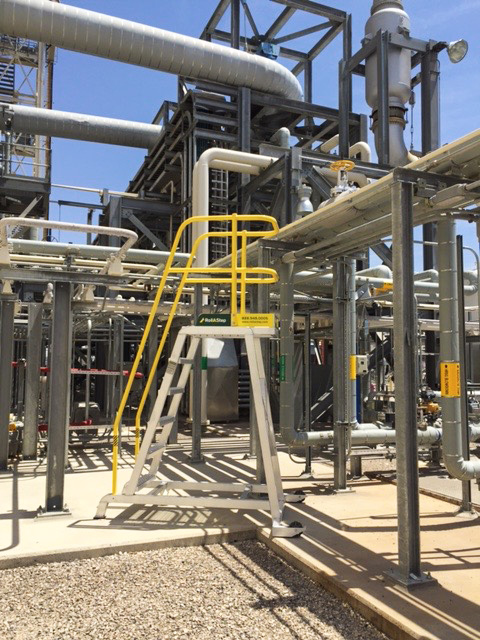
A properly designed valve access platform, pump access platform, or modular crossover system gives workers a stable, repeatable route to the equipment they need to service. More importantly, it supports faster, more consistent maintenance without forcing crews to improvise access every time work is required.
Why Process Equipment Access Matters
Process equipment is rarely installed in an empty, open space. In many plants, terminals, pipeline facilities, and industrial sites, valves and pumps are surrounded by infrastructure such as:
Pipe racks and elevated lines
Cable trays and conduit
Instrumentation and control equipment
Curbs, containment areas, and drainage features
Structural steel and equipment skids
Other assets that require ongoing service access
As a site grows or equipment is modified, the original access route may no longer make sense. Workers may find themselves stepping over obstructions, carrying tools up ladders, climbing onto equipment, or taking longer routes around the work area.
Those workarounds can create problems beyond worker safety. They can add time to inspections, make preventive maintenance less efficient, increase fatigue, and delay repairs when equipment needs attention quickly.
Safe access should be treated as part of the operating system—not as an afterthought once the process equipment is already in place.
Common Access Problems Around Valves and Pumps
Every facility is different, but several issues come up repeatedly when teams assess access around elevated or obstructed process equipment.
Inconsistent Access Routes
If one technician uses a fixed ladder, another uses a portable ladder, and a third climbs from a nearby structure, the facility does not have a consistent access solution. Different approaches make it harder to standardize safe work procedures and can increase the chance of poor decisions under time pressure.
A dedicated access platform or stair system gives workers a clear route to follow every time.
Limited Working Space
Reaching the equipment is only one part of the job. Workers also need enough room to inspect a gauge, operate a valve, remove a component, use tools, carry parts, and maintain stable footing while doing so.
A platform that is too narrow, poorly located, or unable to accommodate the task can still leave crews struggling to work safely and efficiently. The best access solutions account for the working area around the equipment, not just the path leading to it.
Obstacles in the Travel Path
Pipes, ducts, cable trays, conveyors, equipment skids, and structural members can force workers to take awkward routes. In some situations, employees may have to step over low obstacles or duck below elevated ones. In others, they may need to climb around a system that should be crossed safely.
Crossover platforms and crossover stairs can create a designated route over equipment and infrastructure, reducing the need to navigate hazards in an improvised way.
Temporary Equipment Becoming Permanent
Portable ladders and temporary work platforms have their place. However, when a maintenance task happens regularly, a temporary method may no longer be the most practical choice.
If workers access the same pump, valve bank, or process area every week or every month, a purpose-built access solution can reduce repeated setup time and provide a more consistent working environment.
Changing Facility Layouts
Access needs often change after an expansion, retrofit, process upgrade, or equipment replacement. A platform that worked for the original layout may no longer provide the right clearance, elevation, or route.
Modular access platforms are particularly useful in these situations because they can be configured around the actual work area and adjusted as the site evolves.
What a Good Valve or Pump Access Platform Should Provide
The right platform depends on the equipment, the available footprint, the frequency of access, and the work being completed. Still, most effective industrial access systems have several things in common.
A Clear Route to the Work Area
Workers should be able to reach the equipment without climbing over obstructions or choosing between multiple makeshift paths. Stairs, landings, crossovers, and walkways should direct traffic safely from the access point to the work location.
This can be especially valuable in busy process areas where workers carry tools, test equipment, replacement parts, or personal protective equipment.
Stable, Slip-Resistant Walking Surfaces
Industrial access systems should provide a stable footing in the conditions workers actually face. That can include outdoor weather, moisture, snow, ice, process residue, dust, or oil.
Surface selection, drainage, tread design, and platform placement all matter. A route that is usable only in ideal conditions is not a dependable maintenance-access solution.
Adequate Space to Work
A platform should be designed around the task, not merely the equipment. Consider whether the worker needs room to:
Turn a valve wheel or operate a lever
Open access panels or remove covers
Use hand tools or testing equipment
Carry a replacement part
Work with a second technician
Maintain access during emergency or unplanned repairs
This is where a site-specific platform design can make a meaningful difference. The goal is not just to create a place to stand. It is to support the work that has to happen there.
Appropriate Guarding and Fall Protection
Guardrails, handrails, self-closing gates, and other protective features should be selected based on the platform layout, elevation, openings, and surrounding hazards. Where a platform is exposed to an open edge or a fall hazard, the access design needs to address that risk directly.
Workplace requirements vary by jurisdiction and by site conditions, but the general principle is consistent: access systems should be designed with hazard assessment and worker protection in mind.
The most effective approach is to consider collective protection—such as guardrails and controlled access routes—early in the design, rather than assuming personal fall-arrest equipment will solve every access problem.
Clearance for Equipment and Operations
A platform must work around the process, not interfere with it. Before designing an access solution, consider:
Required clearance around valves, actuators, pumps, and instruments
Access to panels, drains, vents, and inspection points
Piping movement, insulation, and future modifications
Lift-out or removal paths for serviceable components
Vehicle, forklift, or personnel traffic below and around the platform
Emergency egress and access for maintenance crews
A good design improves access without creating a new obstruction.
Questions to Ask Before Designing an Access Solution
Before selecting a valve access platform or pump access system, take time to assess how the work is actually completed.
Ask:
Which valves, pumps, or assets require regular access?
How often do workers service, inspect, or operate that equipment?
What tools, materials, and personal protective equipment do they need to carry?
Where are workers currently climbing, stepping over obstacles, or using temporary equipment?
Is access needed by one worker, or by multiple people at the same time?
Are there hazards below, beside, or above the intended platform location?
Does the area need a crossover route over piping, cable trays, or other obstructions?
Could future equipment changes affect the platform location or required clearance?
Is there enough space for safe entry, exit, and emergency access?
These questions shift the conversation from “Where can we put a platform?” to “What does the maintenance team need in order to work safely and efficiently?”
Improve Maintenance Access Before It Becomes a Bottleneck
Need better access around valves, pumps, piping, or process equipment? Contact Northern Platforms to discuss a fixed, modular, portable, or custom industrial access solution.