Promoting safe access is the cornerstone of all industrial sites. From routine inspections to maintenance, loading, repairs, and equipment operation, workers need reliable ways to reach the areas where work actually happens.
But safe access does not look the same in every facility. Some sites need permanent platforms built around fixed equipment. Others need mobile platforms that can move between work areas. Understanding the difference between these platform types is key to choosing the right solution for your application. In this article, we’ll break down the differences between modular, mobile, and fixed industrial work platforms, including where each option is commonly used and how they support safer, more efficient work.
What Are Industrial Access Platforms?
Industrial access platforms are engineered systems that provide safe, elevated work areas for inspection, maintenance, and operations tasks. They typically combine:
A work deck or platform
Stairs or ladders for access
Guardrails, toe boards, and gates for fall protection
Generally speaking, industrial access platforms fall into three major categories: fixed, modular, and mobile. Let’s break down some key details about all these systems.
Mobile Access Platforms
Mobile access platforms are rolling or movable platforms that can easily be repositioned to where they’re needed and locked in place during use. Typically, you’ll find mobile platforms in applications where:
The work moves around the site (e.g., maintenance on multiple pumps, valves, or vehicles)
Equipment of similar height is spread across a large area
You need temporary access during shutdowns, turnarounds, or project phases
Installing a permanent structure is not practical or cost‑effective
Some examples from Northern Platforms include:
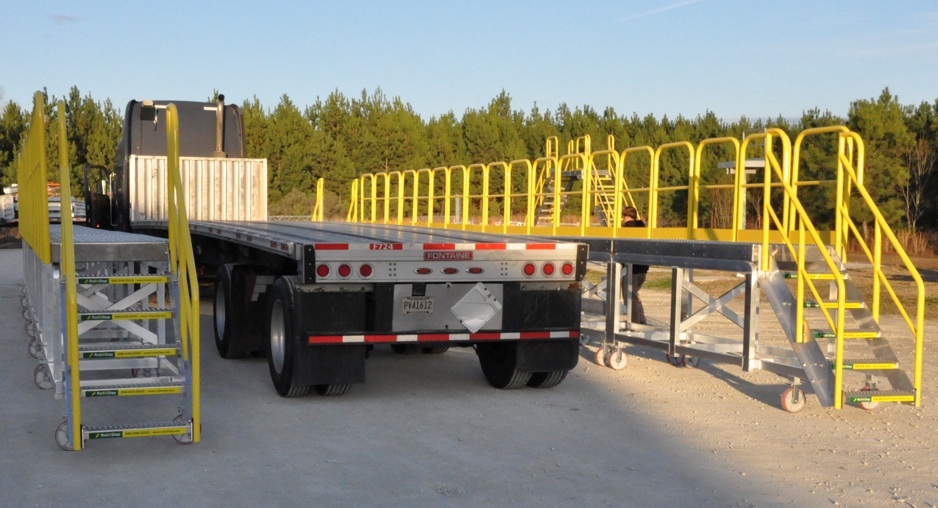
RollaStep MP Series mobile work platforms, which combine the stability of a fixed platform with the mobility of a rolling stair. Ideal for flatbed truck loading and unloading.
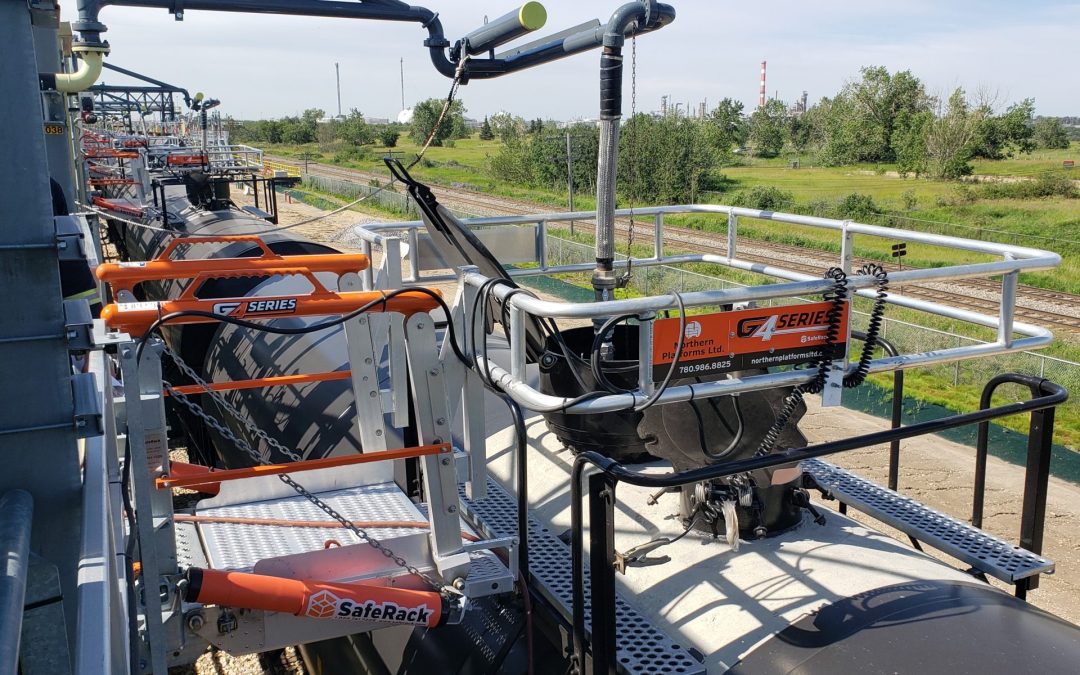
SafeRack MAUI Mobile Truck Loading Platform is a mobile tank truck access platform designed for safe loading access. It includes a stable base, telescoping ladder, and safety cage, with optional powered movement for easier positioning.
While mobile platforms can be useful, they should be avoided for high-traffic sites with consistent loading and unloading operations. In these situations, opt for a permanent/fixed loading rack.
Modular Access Platforms
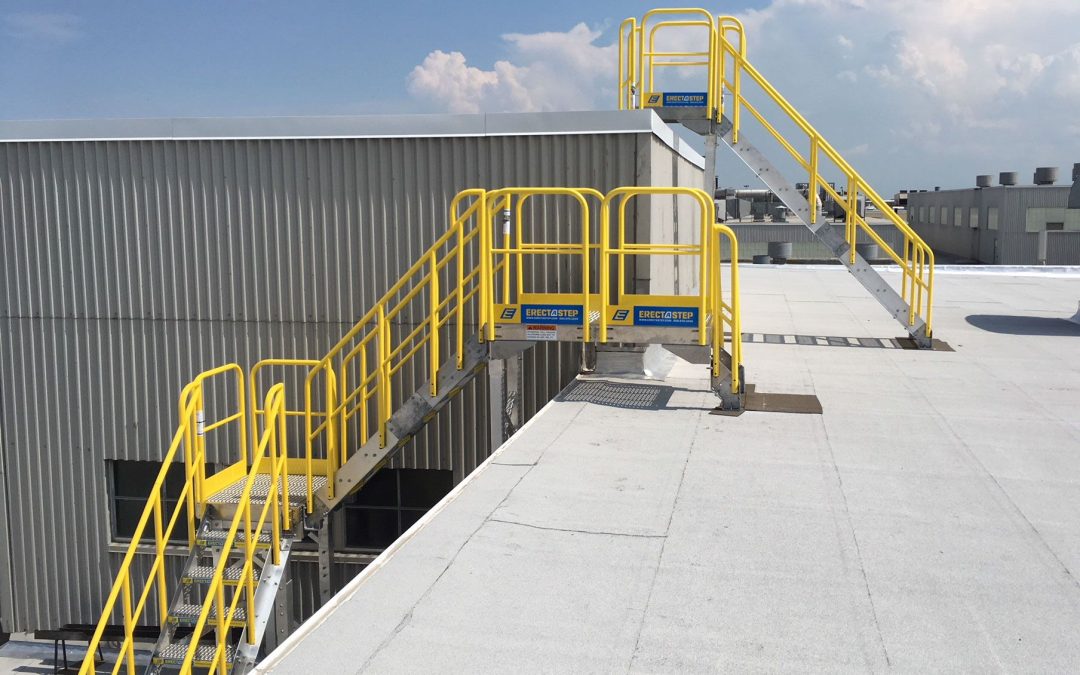
Modular access platforms are built from standardized, pre-engineered components, like stairs, platforms, handrails, ladders, and supports, that bolt together easily. Generally, modular access platforms are ideal for:
Sites where access needs evolve over time
Projects on tight schedules that can’t wait for custom fabrication
Facilities that prefer bolt-together, no-welding installations for safety and speed
Applications where reconfiguration and expansion are expected
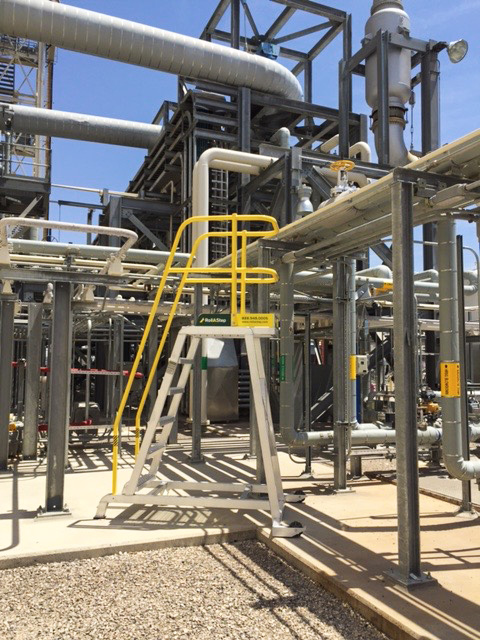
Systems like ErectaStep use a small set of standard components (universal platforms, stairs, ladders, tower supports, handrails) that can be combined into almost any configuration: crossovers, valve platforms, mezzanine access, ladder platforms, and more.
In practice, modular systems cover the majority of common industrial use cases, especially for valve access, pipeline crossovers, metering stations, industrial catwalks, rooftop access, and more. However, they are generally not used for truck and railcar loading and unloading.
Fixed Access Platforms
Fixed access platforms are permanently installed structures tied into the building, steelwork, or foundations. They don’t move and are engineered for long-term service in a defined location. Fixed platforms make sense when:
The access need is permanent and clearly defined (e.g., top of a tank, a mezzanine, or a fixed conveyor)
Loads are high or frequent, and continuous anchoring is required
Integration with existing building structure or process equipment is critical
The site must satisfy specific code or insurer requirements for permanent access
Northern Platforms has extensive experience building permanent loading platforms for a variety of applications. For further details about these projects, contact our office.
Industrial Access Platforms from Northern Platforms
Northern Platforms supplies and supports all three categories:
Mobile access platforms: Rolling work platforms and cantilever platforms for safe, mobile access to warehouse shelves, flatbed trailers, and other equipment
Modular access platforms: ErectaStep modular stairs and platforms for crossovers, valve access, metering stations, assembly lines, and more.
Fixed access platforms and loading systems: Truck and rail loading platforms integrating platforms, gangways, loading arms, and fall protection as complete systems.
Not sure what platform is best for your application? Our team specializes in assessing operations and proposing solutions that solve unique issues. For customers based in Alberta, we offer free site visits.
Railcar loading and unloading is no place for guesswork when it comes to working at height. Between changing railcar spots, varying hatch locations, and busy railyards, you need fall protection that keeps operators safe without slowing your operation down. One of the most common questions for rail sites in Western Canada is whether to invest in permanent railcar fall protection systems, rely on temporary or mobile options, or use a combination of both.
Why Railcar Fall Protection Matters
Working on top of railcars exposes operators to significant fall risks, especially during loading, unloading, venting, and inspection. Without the right access and fall protection, it’s easy for “quick checks” to turn into serious incidents.
A complete railcar fall protection strategy typically includes:
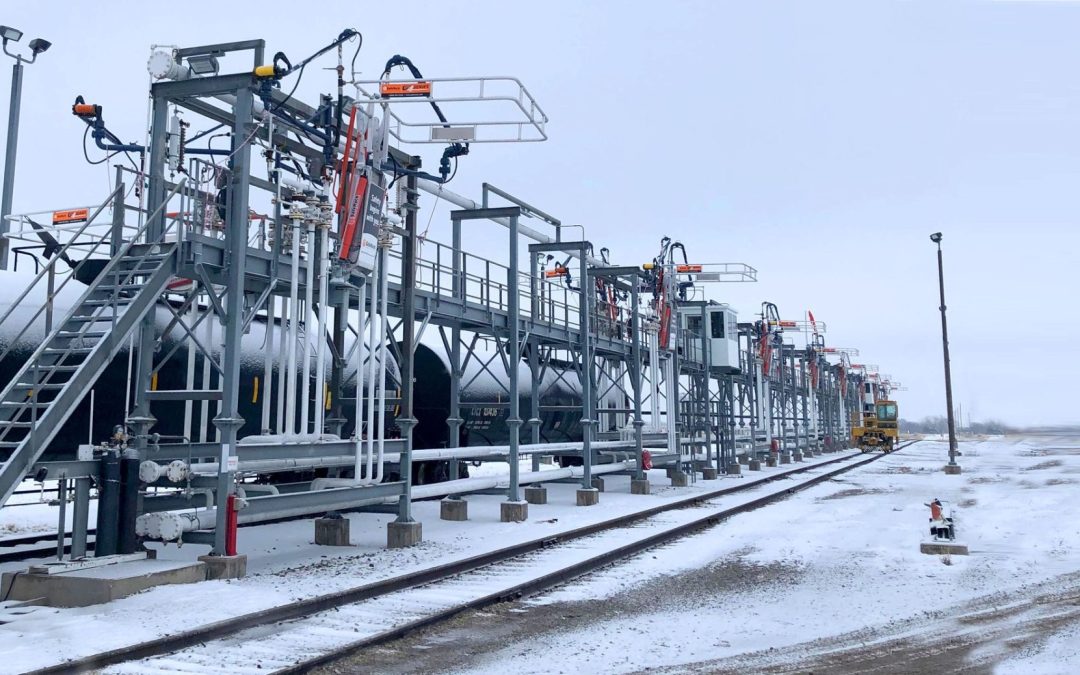
Permanent railcar fall protection systems are fixed structures designed into your facility from the start—or added later as part of a major upgrade. These can include single-spot or multi-spot loading platforms with integrated gangways, safety cages, and fall protection built directly into the rack.
Permanent systems are a strong fit when:
You load and unload from the same track locations every day
Your product mix and railcar types are relatively consistent
You want a long-term, engineered solution with minimal reconfiguration
Key advantages of permanent railcar fall protection include:
Consistency. Operators use the same access and fall protection setup each time, which supports training and safe habits.
High throughput. Multi-spot platforms can handle several railcars simultaneously, improving productivity.
Durability. Engineered structures are built for long-term use in harsh Canadian climates, with minimal day-to-day adjustment.
Integrated design. Loading arms, spill containment, and fall protection can be planned together as one system.
For high-volume, fixed-spot rail operations, a permanent platform with integrated gangways and safety cages is often the backbone of the safety plan.
Temporary and Mobile Railcar Fall Protection
On the other hand, temporary or mobile railcar fall protection solutions are designed to move with your operation. Instead of committing to a fixed structure at a single location, mobile systems can be repositioned wherever they’re needed.
These systems are ideal for:
Facilities with multiple tracks or sporadic railcar spots
Sites that see changing railcar types or leasing patterns
Operations that need safe access during shutdowns, outages, or maintenance projects
Locations where a permanent structure isn’t feasible or allowed
Rather than relying on ladders or improvised access, mobile platforms provide a purpose-built, compliant way to get operators safely to the top of the car.
Highlight: SafeRack MAUI Railcar Mobile Access Unit
Northern Platforms supplies SafeRack’s MAUI Railcar Mobile Access Unit—a portable fall protection solution designed specifically for railcar work across multiple locations on your site. This unit combines mobility, stability, and integrated fall protection in one system.
Key features include:
Self-supporting design with a 500 lb load capacity
No-flat tires for reliable movement across railyard surfaces
Double-locking winch for smooth, controlled height adjustment
4-rail safety cage that raises handrail height to 42″ around the hatch area
Slip-resistant walk surface for secure footing in all seasons
Parallel or perpendicular configurations to suit tight spots and different track layouts
Adjustable ladder heights (10′–14′ and 12′–16′ models) to fit varying railcar heights
For operations that need railcar fall protection in more than one spot or that can’t justify a permanent platform on every track, the MAUI provides a practical, compliant way to keep people safe without sacrificing efficiency.
Expert Railcar Fall Protection from Northern Platforms
Ready to explore your railcar fall protection options? The Northern Platforms team is here to help! Explore our products through our website or contact us today for more details!
Choosing the right elevated access system comes down to one key question: is your access need temporary, mobile, or permanent? Industrial facilities rely on safe, compliant access solutions, but not every worksite requires fixed infrastructure. In some cases, portable or rolling stairs provide the flexibility crews need. In others, a permanent access platform delivers greater stability and long-term value.
Wondering whether permanent or portable stairs are right for you? In this blog post we’ll discuss key features and break down the differences between these solutions. Keep reading!
What are Industrial Portable Stairs?
Industrial portable stairs are mobile access systems designed to provide safe, temporary elevation access in warehouses, construction sites, maintenance facilities, and loading areas. Depending on the configuration, they could include:
Non-slip treads
Handrails or full guardrail systems
A top platform for secure transitions
Locking casters or wheels
Heavy-duty aluminum or steel construction
Typically, portable stairs fall for industrial operations fall into two key categories.
Stairs for Temporary Buildings
Temporary modular stairs are designed to provide stable, structured access without requiring full structural installation. These systems are commonly used for:
Jobsite trailers
Temporary buildings
Elevated equipment access
Project-based application
They are typically assembled on-site and can be relocated or reconfigured as operational needs change. While not permanently anchored to the facility structure, they provide a secure, durable solution for mid- to long-term temporary access requirements.
Mobile or Rolling Stairs
Mobile rolling stairs, or portable stairs on wheels, are designed for frequent repositioning within a facility. Equipped with locking casters, these systems allow crews to move the stairs between work areas quickly and safely.
They are commonly used in:
Warehouses
Maintenance departments
Manufacturing facilities
Distribution centers
Rolling stairs prioritize flexibility and ease of movement, making them ideal when elevation points change regularly.
Interested in learning more about the rolling stair options that are currently available at the Northern Platforms? Read our complete guide or call our office for more information.
What are Permanent Access Platforms?
On the other hand, permanent access platforms are fixed structures installed at designated access points. While they can be modular and adaptable, the primary function of these systems is to provide consistent and reliable access to specific areas on your site. Certain options, like the modular work platforms from ErectaStep, can be custom-configured for the specific needs of your site.
How They Compare
Now that you have a clear understanding of your options, you might be wondering how these solutions compare. Use this table to understand the key differences between portable stairs and more permanent options:
Feature
Portable Stairs
Rolling Stairs
Permanent Platforms
Primary Function
Provide stable access for temporary or semi-permanent structures.
Provide flexible access that can be moved between locations
Deliver fixed, long-term access to designated elevated areas
Best For
Mid- to long-term projects requiring consistent access.
Completely customizable and modular. Available in multiple configurations.
Key Takeaway: Which Option is Right for You?
Still not sure which safe access solution is best for your site? Finding the right system is easy when you consider how it will be used within your operation.
If your access point needs to move between work areas throughout the day → Rolling portable stairs are likely the most practical choice.
If you require structured access for a jobsite trailer, temporary building, or project-based application → Temporary portable stairs provide stable, semi-permanent access without full structural installation.
If workers access the same elevated location multiple times per shift → A permanent access platform will typically offer greater stability and compliance consistency.
Make the Right Choice with Northern Platforms
No matter which option you choose, the Northern Platforms team is here to help. We work with facilities across Alberta and British Columbia to design, install, and maintain safety systems that meet real-world standards. When you partner with us, we’ll go above and beyond to understand your site, your needs, and any roadblocks.
With hundreds of fatal accidents occurring in railyards every single year, proper safety equipment isn’t just a purchase–it’s a life-saving priority. With several small additions to your operation, you can ensure your workers, environment, and surrounding communities are completely protected. Keep reading for our 2025 recommendations for essential railcar safety equipment.
Why Railcar Safety Equipment is Important
Without proper equipment, railcars pose significant safety risks. For example, take a 2013 incident in Quebec. When left unsupervised overnight, a freight train began to roll. While this freight train was seemingly secured with both hand brakes and air brakes, both these systems failed. This incident resulted in several box cars and tank cars derailing, which caused crude oil spills, fires, building damage, and 47 fatal injuries to surrounding civilians.
This incident clearly underlines the importance of railcar wheel chocks, derails and other essential physical railcar safety equipment. Now, as determined by the Transportation Safety Board of Canada, Canadian railways must use additional physical protections to help prevent runaway equipment.
Essential Railcar Loading Equipment
Ready to transform your operations? Here are some essential railcar safety products–all in stock at Northern Platforms today!
Railcar Wheel Chocks
Railcar wheel chocks help secure the wheels of your railcar while it is being loaded or unloaded. Metal spurs bite into the railway, offering maximum security and safety for workers. At Northern Platforms, we stock a variety of railcar wheel chocks, including:
In some emergency situations, your best option is to derail your railcar and prevent catastrophic incidents. That’s where derails come in. These devices lift the wheel’s flange off the track, effectively allowing the wheels of the car to bite into a soft surface and slide to a stop. Derails help prevent:
One car rolling into another car.
Unauthorized rolling locomotives from crashing into stationary cars.
Loose cars from rolling onto the main line.
Blue Flags
In Alberta, blue flags are mandatory. These safety signs indicate to approaching operators that railcars are being loaded or unloaded in the area and to signal that there are workers in the area. Blue flags must be placed on the railway or on a traincar that is easily visible to approaching operators.
Switch Cube Indicators
Switch cube indicators are common at switches and are often the result of human error. For example, inexperienced operators might not know to accurately read the switch points. Illuminated switch cubes are an ideal piece of equipment that helps clearly indicate which direction the track is going. Many of these cubes are equipped with solar panels, making them energy-efficient and long-lasting.
Railcar Sockets
Tank car sockets are available in both steel and bronze configurations, with hex or 8-point designs ranging from 1-5/16″ to 1-7/8″. Steel sockets handle up to 1,500 ft./lbs. of maximum torque, while bronze versions are spark-resistant and rated for 500 ft./lbs.. These tools work with T-wrenches to provide proper leverage for opening and closing dome lid nuts without damaging gaskets or threads.
Brake Sticks
An essential piece of worker equipment, brake sticks help operators work railcar brakes without the use of a ladder. Depending on your needs, there are several different types of brake sticks available, including:
Telescoping brake sticks with or without magnetic handles
Light-weight fixed-length brake sticks
Heavy-duty brake sticks
Railcar Mover
Need to move your railcar an inch for the perfect position? These units are impossible to move without locomotive power–unless you have a railcar mover. These simple pieces of equipment allow single workers to move a fully-loaded railcar small distances, allowing them to perfectly align other equipment or loading operations.
Spill Containment Pans
Accidents happen, even in perfect operating conditions. When dealing with oil, chemicals, or other hazardous cargo, spill containment track pans are an essential fail-safe to help prevent environmental damage. Our product features a modular design that can easily be modified to contain everything from small drips to catastrophic leaks.
Ready to Enhance Your Railcar Safety?
Railcar wheel chocks, sockets, movers…what piece of safety equipment will you add to your operations? No matter what you decide, the Northern Platforms team is here to help! Explore our product catalogue online or contact our sales team today! Let us help you make your railyard safer, more compliant, and more efficient in 2025.
Top Applications for Industrial Swing Gates
Oil and Gas Plants
Oil and gas facilities can be dangerous work sites, especially when operators regularly deal with elevated work platforms, ladders, and other falling hazards. In fact, one of the most significant risks for all workers is unsecured access points on ladders and hatches.
While these risks are significant, ensuring complete safety is easy. Oil and gas facilities count on YellowGate’s industrial swing gates to provide 24/7 protection for all open access points on ladders, stairs, and other areas on their site. For example, the Northern Platforms team installed over 50 safety swing gates at an oil and natural gas facility in central Alberta. This allowed workers to safely navigate the processing plant and ensure they were protected from falling hazardous at every step.
Food Processing Facilities
Food and beverage processing facilities combine elevated work environments with strict hygiene requirements. Workers regularly access significant heights on tanks, conveyor systems, and assembly lines. In these circumstances, food processing facilities can benefit from installing safety swing gates in several locations, including:
Mixing tanks and other processing locations.
Elevated conveyor systems.
Ladders and stairways leading to packaging and bottling assembly lines.
Rooftop Access
No matter what industry you operate in, you or your workers will likely have to access the rooftop at some point. From performing HVAC checks to maintaining important equipment, these regular tasks can be dangerous without proper protection in place. Pair your safety swing gates with portable railing systems for comprehensive rooftop fall protection.
Warehouse Loading Docks
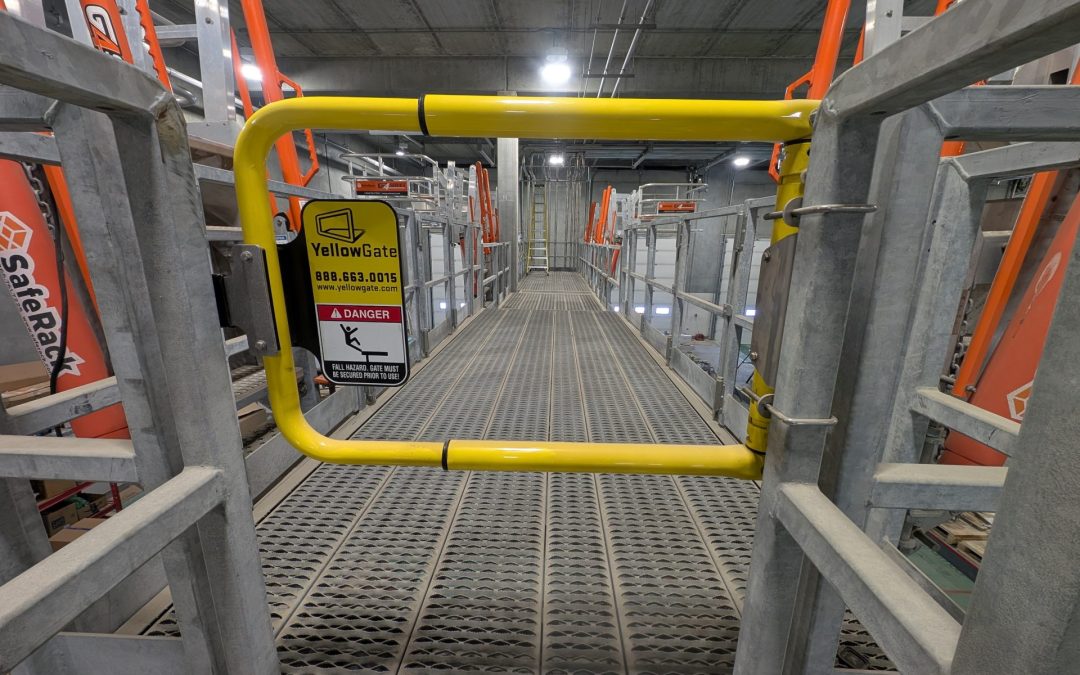
In addition to standard adjustable swing gates, YellowGate offers the XL barrier gate, which offers 6 feet of adjustable traffic control. Suitable for both interior and exterior applications, this products easily protects passageways in your facilities, helping you control dangerous areas or block unauthorized access.
The Universal Solution: YellowGate Industrial Safety Gates
When dealing with conventional safety swing gates, your supplier will need to know several details, including:
The size of each opening where the gate will be installed.
How the gate will be mounted (square tubing vs. pipes).
The direction that the gate will swing.
However, with YellowGate’s innovative industrial safety gates, you don’t have to worry about all these details. Featuring a unique universal mounting system and 16-inch adjustability, these fall protection solutions fit almost every type of opening, regardless of your facility. For complete protection, simply count the number of openings on your site and place your order with Northern Platforms—no need for measuring, mounting considerations, or other time-consuming assessments.
Protect Your Facility Today
Ready to simplify your facility’s fall protection with universal adjustable swing gates? With just one SKU, you can guarantee your workers are protected at every turn. Contact Northern Platforms today for turnkey installation, maintenance programs, and more!
Looking for reliable industrial swing gates that work across every application? YellowGate has revolutionized workplace safety with a universal industrial swing gate that is suitable for virtually every application. These adjustable swing gates eliminate the traditional complexity of safety equipment while delivering superior protection across multiple industrial sectors. Keep reading to learn more about common uses for this product—and how to order YellowGate safety swing gates from Northern Platforms today!
Top Applications for Industrial Swing Gates
Oil and Gas Plants
Oil and gas facilities can be dangerous work sites, especially when operators regularly deal with elevated work platforms, ladders, and other falling hazards. In fact, one of the most significant risks for all workers is unsecured access points on ladders and hatches.
While these risks are significant, ensuring complete safety is easy. Oil and gas facilities count on YellowGate’s industrial swing gates to provide 24/7 protection for all open access points on ladders, stairs, and other areas on their site. For example, the Northern Platforms team installed over 50 safety swing gates at an oil and natural gas facility in central Alberta. This allowed workers to safely navigate the processing plant and ensure they were protected from falling hazardous at every step.
Food Processing Facilities
Food and beverage processing facilities combine elevated work environments with strict hygiene requirements. Workers regularly access significant heights on tanks, conveyor systems, and assembly lines. In these circumstances, food processing facilities can benefit from installing safety swing gates in several locations, including:
Mixing tanks and other processing locations.
Elevated conveyor systems.
Ladders and stairways leading to packaging and bottling assembly lines.
Rooftop Access
No matter what industry you operate in, you or your workers will likely have to access the rooftop at some point. From performing HVAC checks to maintaining important equipment, these regular tasks can be dangerous without proper protection in place. Pair your safety swing gates with portable railing systems for comprehensive rooftop fall protection.
Warehouse Loading Docks
In addition to standard adjustable swing gates, YellowGate offers the XL barrier gate, which offers 6 feet of adjustable traffic control. Suitable for both interior and exterior applications, this products easily protects passageways in your facilities, helping you control dangerous areas or block unauthorized access.
The Universal Solution: YellowGate Industrial Safety Gates
When dealing with conventional safety swing gates, your supplier will need to know several details, including:
The size of each opening where the gate will be installed.
How the gate will be mounted (square tubing vs. pipes).
The direction that the gate will swing.
However, with YellowGate’s innovative industrial safety gates, you don’t have to worry about all these details. Featuring a unique universal mounting system and 16-inch adjustability, these fall protection solutions fit almost every type of opening, regardless of your facility. For complete protection, simply count the number of openings on your site and place your order with Northern Platforms—no need for measuring, mounting considerations, or other time-consuming assessments.
Protect Your Facility Today
Ready to simplify your facility’s fall protection with universal adjustable swing gates? With just one SKU, you can guarantee your workers are protected at every turn. Contact Northern Platforms today for turnkey installation, maintenance programs, and more!
While flatbeds might not look as dangerous as tanker trucks or railcars, the truth is that working on these trailers regularly puts operators at risk of fatal falls. Plus, this risk is substantially increased without proper fall protection systems that adapt to the needs of the modern workplace. Enter: mobile fall protection for flatbed trailers. These simple and reliable systems turn life-threatening hazards into manageable solutions. Ready to learn how this product can transform your operations? Keep reading!
What are Mobile Fall Protection Platforms?
Combining safety, versatility, and adaptability, mobile fall protection platforms are an ideal addition to any operation that regularly deals with flatbed trailers. This equipment is designed to provide a secure working surface and fall protection for workers. It typically features large work surfaces, safety handrails, and wheels, allowing them to be positioned alongside trailers where needed.
Benefits of Mobile Platforms for Flatbed Fall Protection
Mobility: The most obvious advantage of this system is that mobile platforms move with your workers, unlike fixed systems. These systems are often equipped with 360-degree casters, making it easy for a single worker to move and position this system.
Versatility: From traditional flatbed trailers to step decks and lowboys, mobile platforms can be customized for any application. Mobile platforms are more than fall protection systems—they’re adaptable solutions with multiple uses. Once loading or unloading is complete, they can be used as standalone work platforms, access solutions, and more. Plus, mobile platforms can often be customized with modular handrails, enclosure panels, and more.
Passive Protection: While active fall protection systems like fall arrests require worker compliance, mobile platforms provide consistent support without any additional effort. With proper guardrails, operators are protected 24/7.
Introducing: RollAStep’s MP Series
Looking for your go-to flatbed fall safety solution? Look no further–RollaStep’s MP Series is one of the best products on the market. Combining the stability of a fixed work platform with the versatility of a movable platform, this fall protection system features:
9’ x 3’ work platforms to accommodate numerous operators.
360-degree swivelling and locking casters.
Removable handrails for ultimate versatility.
No-flat tires.
Aggressive no-slip surface.
Extra wide no-slip tread.
Technical Specifications
RollAStep’s MP series comes in several different sizes to accommodate the different circumstances of your site. Here are the technical specifications of each model:
Top Notch Products: We’re Western Canada’s leading supplier of RollaStep, ErectaStep, and SafeRack products. These brands are backed by decades of expertise and offer some of the bestselling fall protection products in all of North America.
One Stop Shop: Our Leduc warehouse is fully stocked and ready to serve you. On top of mobile platforms, we offer comprehensive solutions for truck and railcar loading, modular work platforms for warehouses, and more! No matter your needs, let Northern Platforms take care of it all.
On-Site Assessments: Whenever possible, the Northern Platforms team will schedule a comprehensive on-site assessment to identify your needs and recommend the ideal solution. If you are located in Alberta, give our team a call and we’ll have someone on site within a few business days.