Guardrails help protect workers at elevated work areas—but only when the barrier remains continuous.
Every time a guardrail system includes an opening for a ladder, stairway, platform entrance, rooftop hatch, or catwalk transition, it creates a potential fall-protection gap. If that opening is protected only by a chain, a removable barrier, or a gate that workers must remember to close manually, the area may not provide the consistent protection the work requires.
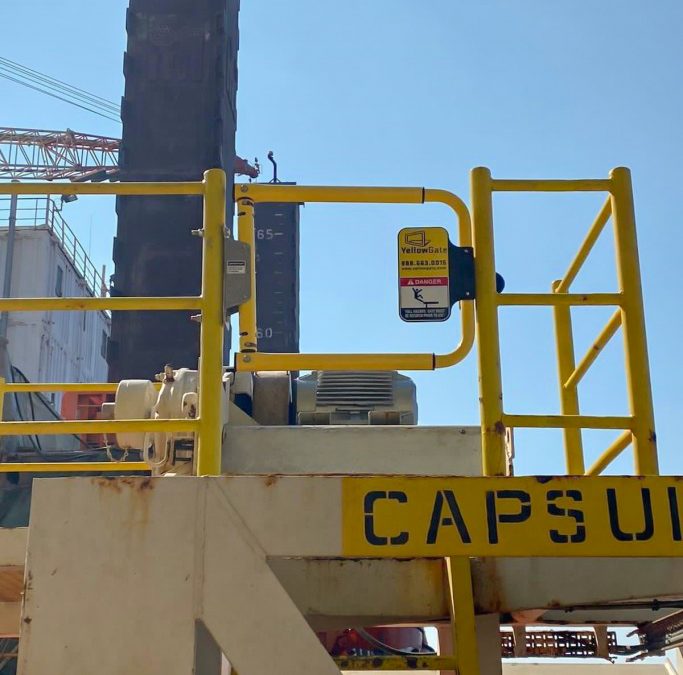
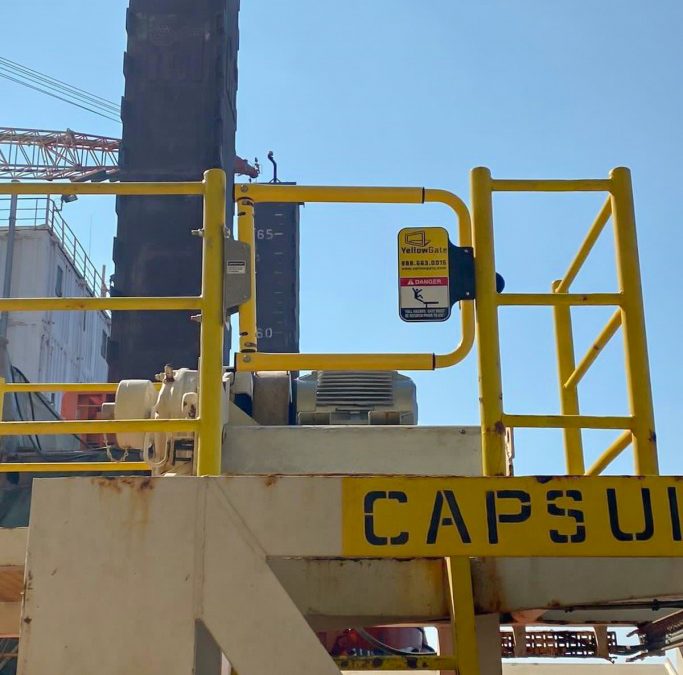
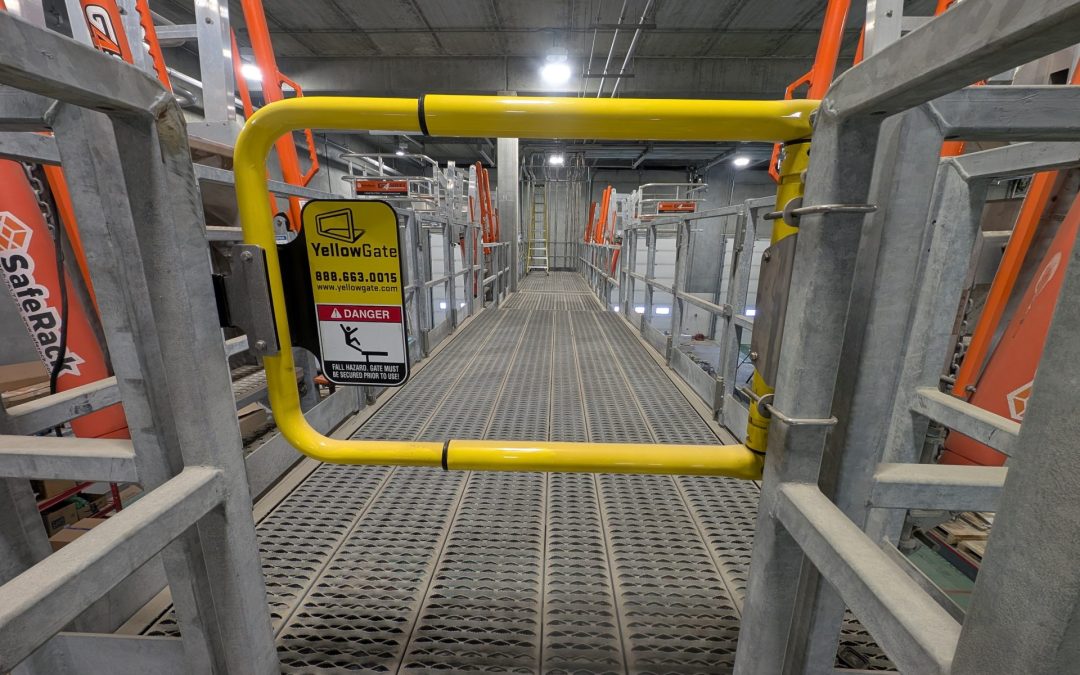
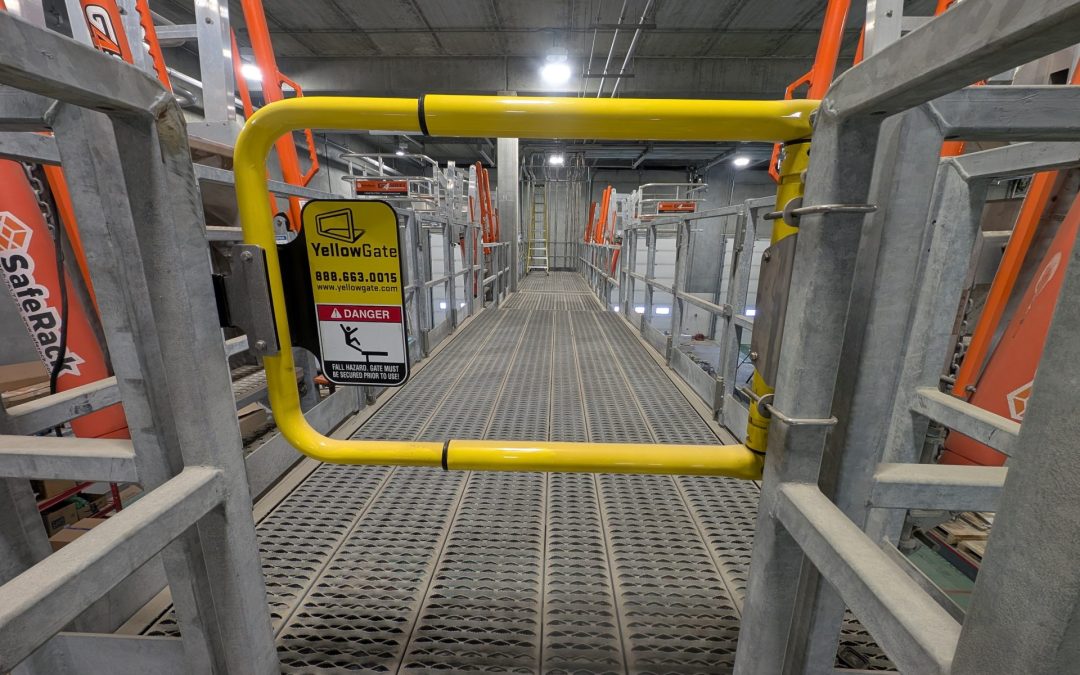
A self-closing safety gate creates a barrier across an opening while still allowing workers to move through it. Once a worker passes through, the gate returns to its closed position, helping maintain protection at the edge of the platform, mezzanine, roof, or elevated work area.
The key is knowing where a safety swing gate makes sense—and when the opening needs a larger safe-access solution.
Start With Every Break in the Guardrail Line
Walk through your facility and look for places where a guardrail stops to allow people through.
These openings often exist because workers need access to elevated equipment, storage areas, loading platforms, rooftops, catwalks, and maintenance locations. They may be part of the original facility design, or they may have been created later as equipment, traffic patterns, and work processes changed.
Common warning signs include:
A chain stretched across a ladder or platform opening
A removable railing section
A manually operated gate that is frequently left open
A gap in the guardrail with no closure
Workers stepping around a barrier or using an unofficial route
An access point that has become congested by piping, tools, stored materials, or equipment
A platform entrance that no longer fits the way workers use the area
A safety swing gate can be a practical improvement when workers need regular access through a guardrail opening and the barrier must be restored automatically after they pass through.
Ladder Openings
The top of a fixed ladder is one of the most common places for a safety swing gate.
Fixed ladders may lead to rooftops, platforms, mezzanines, tanks, catwalks, equipment landings, and elevated maintenance areas. When workers step off the ladder, they often pass through an opening in the guardrail system.
Without an appropriate barrier, that opening can remain exposed after the worker moves away from the ladder.
A self-closing safety gate can help maintain protection at the top of the ladder while still allowing workers to enter and exit the elevated area.
When reviewing a ladder opening, consider:
Does the gate close automatically after the worker passes through?
Is there a clear landing area at the top of the ladder?
Is the transition from ladder to platform stable and easy to use?
Can workers safely move through the opening while carrying tools or PPE?
Are nearby pipes, cables, or equipment restricting the route?
Does the surrounding guardrail system provide continuous protection?
A gate can protect the opening, but the ladder transition still needs to provide safe footing, adequate clearance, and a practical route to the work area.
Stairway Entrances to Elevated Platforms
Stairway entrances are another common location for safety swing gates.
Workers may use fixed stairs to access an elevated platform, catwalk, production area, equipment landing, mezzanine, or maintenance location. Where the stairway meets the platform, the guardrail system usually includes an opening.
That opening needs to remain protected when workers are not actively moving through it.
Safety swing gates can help provide a controlled barrier at the top of the stairs. They are especially useful where employees frequently enter and exit elevated areas throughout the day.
A safety swing gate may be a good fit when:
Workers access the platform regularly
The opening is currently protected by a chain or manual gate
The platform edge is exposed to a fall hazard
The route is used by maintenance teams, operators, or inspectors
The area has clear space for the gate to swing and close properly
The surrounding handrails and guardrails are in good condition
Before selecting a gate, review the direction of worker travel and the available clearance. The gate should improve the access route, not create a new obstruction for personnel moving through the opening.
Mezzanine Personnel Access Points
Mezzanines can add valuable working and storage space in warehouses, distribution centres, manufacturing plants, and industrial facilities. They also create elevated edges and access openings that need to be managed carefully.
Personnel often reach a mezzanine through stairs or fixed ladders. These access points may have a gap in the guardrail system where workers step onto the elevated level.
A self-closing safety swing gate can help close that opening after workers enter the mezzanine.
Safety gates are typically most suitable for personnel access points. Material-handling openings are different. If a mezzanine is used to move pallets, large containers, equipment, or other materials between levels, the opening may need a purpose-built material-handling solution rather than a standard swing gate.
Consider a safety swing gate at a mezzanine when:
Workers regularly access the level by stairs or ladder
The opening is intended for personnel, not large material transfer
A chain or temporary barrier is currently used
The mezzanine includes exposed edges or open sides
Workers carry tools or light materials through the access point
The gate can be installed without interfering with the stair landing or surrounding traffic
A proper mezzanine access solution should account for how people and materials move separately. A gate can help protect workers at a personnel opening, while material-transfer areas may require a different approach.
Catwalk and Crossover Entrances
Catwalks, crossover platforms, and elevated walkways help workers move safely around industrial facilities. They may provide access over piping, conveyors, ductwork, process equipment, production lines, or other obstacles.
Every entrance to a catwalk or crossover creates a transition in the guardrail system.
A safety swing gate can help maintain the protective barrier at the point where workers step onto the elevated route. This can be particularly valuable in areas with regular maintenance traffic, repeated inspections, or operator routes that lead to equipment above grade.
Review catwalk and crossover entrances when:
Workers step from stairs or a platform onto an elevated walkway
A guardrail is interrupted by an access opening
Personnel carry tools or equipment to maintenance locations
The route crosses over pipes, conveyors, or process equipment
Workers need to move between elevated work areas
Existing chains or manual barriers are regularly left open
The approach to the opening is narrow, slippery, or obstructed
A safety gate should be paired with a stable access route. If workers still need to step over equipment, squeeze around piping, or navigate an uneven transition after entering the gate, the larger access system may need attention.
Rooftop Hatches and Roof Access Ladders
Rooftops are active maintenance areas for HVAC technicians, facility staff, contractors, electricians, and other trades. Workers may need to reach rooftop units, fans, ductwork, vents, solar equipment, communications systems, and other mechanical assets.
The roof access point is an important place to review.
When a worker climbs through a roof hatch or steps off a fixed ladder, they may pass through an opening in the rooftop guardrail system. A self-closing safety gate can help maintain protection around the hatch or access point after the worker enters the roof area.
A rooftop safety swing gate may be appropriate when:
A fixed ladder leads to a roof access point
A roof hatch opens into an area protected by guardrails
Workers frequently access rooftop equipment
The roof entry point is near an exposed edge or opening
The access area needs a controlled barrier around the entry point
The gate can be installed without interfering with hatch operation or roof access
A gate alone does not create a complete rooftop safety system. Facilities may also need guardrails, hatch protection, rooftop walkways, crossover stairs, and protected maintenance platforms to provide a safe route to the equipment workers need to service.
Truck and Railcar Loading Platform Entrances
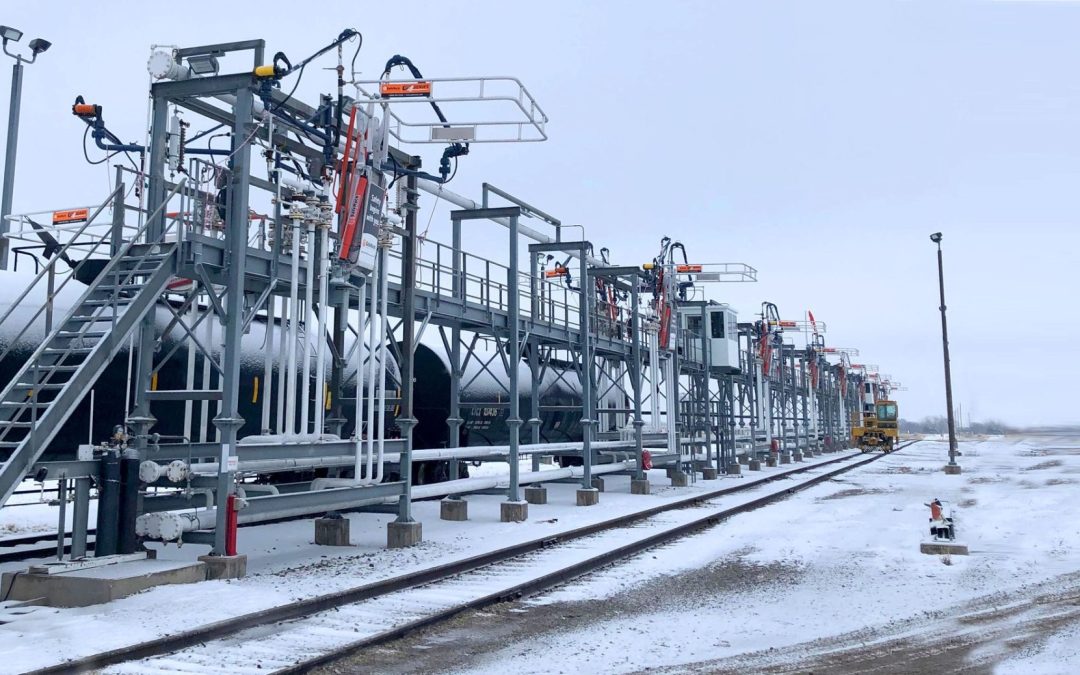
Truck and railcar loading platforms often include elevated stairs, guardrails, gangways, safety cages, loading arms, and other access equipment.
The entrance to the platform should receive the same attention as the working area itself.
If a stairway leads to an elevated loading platform, the guardrail opening at the top of the stairs needs a reliable barrier. A self-closing safety swing gate can help maintain protection while allowing operators to access the loading area.
Safety gates may be useful at loading-platform entrances where:
Workers access the platform repeatedly during a shift
The platform is elevated beside a truck or railcar
The opening is currently protected by a chain or manually closed barrier
Workers need to carry tools, samples, PPE, or documentation onto the platform
The gate can be positioned without blocking the normal operator route
The platform includes gangways, loading arms, safety cages, or other equipment that requires clear access
A loading platform is a complete system. The gate should work with stairs, guardrails, gangways, safety cages, loading equipment, emergency egress routes, and the actual tasks operators perform.
Northern Platforms: Your YellowGate Supplier
Safety swing gates are a practical solution for many ladder openings, stairway entrances, mezzanine access points, catwalk transitions, rooftop hatches, and loading-platform entrances.
By closing gaps in guardrail systems automatically, they help facilities maintain a more consistent level of protection while allowing workers to move through elevated areas as needed.
YellowGate self-closing safety swing gates are designed to provide adjustable, versatile protection for a range of industrial openings. Northern Platforms can help assess your facility’s access points and recommend safety gates, guardrails, platforms, crossovers, and other safe-access solutions that fit the way your team works.
At an industrial facility with nearly 100 unguarded openings, safety chains had become the standard method for restricting access to fall hazards. While chains can provide a basic barrier, they depend on workers remembering to re-secure them after passing through. On a site with dozens of access points, that leaves too much room for inconsistency.
The client wanted a more dependable, passive fall protection solution: self-closing safety swing gates that automatically return to a closed position after use.
The Challenge: Protecting Nearly 100 Openings Efficiently
The challenge was not simply choosing a gate. It was managing installation across nearly 100 openings without creating an extensive measurement and custom-fabrication process.
With conventional custom gates, every opening may need to be measured, specified, and matched to its mounting conditions before installation can begin. For a large facility, that can add substantial planning time and create delays before the safety upgrade is even underway.
The client needed a practical way to replace safety chains at scale while still accounting for the occasional non-standard opening.
The Solution: YellowGate Self-Closing Swing Gates
Northern Platforms recommended YellowGate industrial safety swing gates with a universal mounting kit. YellowGate gates are designed as adjustable, self-closing barriers for ladderways, platforms, mezzanines, stair openings, and other unprotected access points.
The universal mounting kit was especially valuable for this installation. Rather than requiring the client to identify and measure every mounting configuration beforehand, the kit accommodated common site conditions and allowed the installation team to adapt as they worked through the facility.
This approach enabled Northern Platforms to install YellowGate safety swing gates across nearly 100 openings without a separate measurement and specification process for each location. Where an opening fell outside the standard configuration, a custom solution could be considered to maintain complete protection.
The Result: More Consistent Passive Protection
By replacing safety chains with self-closing swing gates, the facility reduced its reliance on worker action to maintain a safe barrier.
Key project benefits included:
Protection for nearly 100 industrial access openings.
Less time spent measuring and planning individual gate installations.
Faster installation using adjustable gates and a universal mounting approach.
A barrier that automatically returns to its closed position after workers pass through.
A scalable approach that addressed standard openings efficiently while leaving room for custom solutions where required.
Why Self-Closing Gates Are Different From Chains
A safety chain only works when it is properly connected. If it is left open, the opening may be unprotected until someone notices and corrects it.
A self-closing swing gate provides a more reliable form of passive fall protection. Once a worker moves through the opening, the gate closes behind them without requiring a separate step. That makes it a strong option for facilities that want to improve consistency at ladderways, elevated platforms, mezzanines, and other access points where fall hazards exist.
Need to Secure Multiple Openings?
When a site has dozens of unprotected openings, a custom solution for every location is not always the most efficient first step. YellowGate self-closing safety swing gates can help facilities protect common opening configurations quickly, while Northern Platforms can assess and develop fit-for-purpose solutions for unique locations.
Contact Northern Platforms to discuss YellowGate safety swing gates, fall protection requirements, and installation options for your facility.
Safety swing gates protect openings in guardrails and elevated access systems while still allowing workers to pass through. This guide answers practical questions about general industrial gates and the YellowGate products available from Northern Platforms, including sizing, measurement, mounting, installation, Alberta requirements, outdoor use, inspection and ordering.
For detailed product specs and information, check out our YellowGate page or call the Northern Platforms Office.
General Safety Swing Gate Questions
What is a safety swing gate?
A safety swing gate is a movable barrier used to protect an intentional opening in a guardrail or elevated safe-access system. It allows workers to enter or leave an area without leaving the opening permanently exposed.
Common locations include fixed-ladder openings, stair access points, catwalks, work platforms, loading racks, rooftops and mezzanines. For a broader overview of how gates fit into access systems, see how swing gates complete safe-access systems.
What is a self-closing safety gate?
A self-closing safety gate returns to its protected position after a worker passes through the opening. The worker pushes the gate open, but a spring or other closing mechanism returns it without requiring a separate manual action.
This reduces user error of remembering to reconnect a chain or close a manual barrier. We’ve covered these differences in more detail in our comparison of self-closing safety gates and alternative barriers.
How does a safety swing gate work?
A safety swing gate opens when a worker pushes through it and closes automatically after the worker passes. In normal operation:
The worker pushes the gate away from its closed position.
The gate swings aside to provide access.
Its closing mechanism returns it toward the guarded position.
The access opening is protected again without a separate manual step.
Where are safety swing gates used?
Safety swing gates are used at intentional openings in guardrails, handrails and elevated access systems. Typical applications include ladderways, stairs, catwalks, mezzanines, rooftops, loading racks, work platforms and machinery-access platforms.
Safety swing gates help protect access points where a worker could step or fall through an intentional opening. Examples include stepping backward into a ladderway, entering an exposed platform edge, falling through an unprotected stair opening or leaving an access point exposed after passing through it.
A gate is normally one component of a larger system. Surrounding guardrails, platforms, stairs, gangways, procedures and other fall-protection measures must also be suitable for the work.
Are safety swing gates considered passive fall protection?
A properly guarded access opening can form part of a passive fall-protection system because workers receive protection without connecting personal fall-arrest equipment. The physical barrier remains in place and functions as workers move through the area.
The complete passive system may also include guardrails, handrails, platforms, stairs, gangways and safety cages. For a broader comparison, link this answer to the planned Active vs. Passive Fall Protection article once published.
What is the difference between a safety swing gate and a safety chain?
A self-closing safety gate returns to its guarded position automatically, while a chain generally depends on a worker reconnecting it manually. A chain can be left disconnected, secured incorrectly or allowed to sag across an opening.
Self-closing safety gates are required for certain openings, but not every access point is governed by the same rule. The obligation depends on the jurisdiction, opening type, installation date and complete fall-protection arrangement.
For example, Alberta’s Occupational Health and Safety Code contains a specific requirement for certain ladderway floor openings and fixed-ladder platforms. Other stairs, platforms, rooftops and loading areas must be assessed under the provisions that apply to those conditions.
Can a chain be used instead of a self-closing safety gate?
Generally, chains are not considered acceptable protection to protect exposed openings. However, the requirements depend on your local jurisdiction and regulations.
YellowGate Sizing and Product Selection
What opening sizes does a YellowGate safety swing gate fit?
YellowGate can currently accommodate opening sizes from 21″ to 37″ [53cm – 94cm].
How do I measure an opening for a safety swing gate?
Measure the clear opening at the location where the gate will actually be mounted. Do not measure only the distance between distant guardrail posts if a bracket, wall, rail profile or obstruction changes the usable width at the mounting point.
Can one YellowGate model fit several opening sizes?
Yes. YellowGate uses telescoping upper and lower arms that can be adjusted in the field to fit openings within the model’s supported range.
What should I do if my opening is wider than the standard YellowGate range?
Use a wide-opening barrier product or a custom solution rather than extending the standard gate beyond its approved range. Potential options include YellowGate XL.
What is the difference between YellowGate and YellowGate XL?
Standard YellowGate is a self-closing swing gate for smaller openings, while YellowGate XL is a vertically operated barrier for significantly wider openings. YellowGate XL is adjustable from 6 to 12 feet and approximately 42 inches high, with controlled vertical movement and an optional powered configuration. XL is commonly considered for loading docks, traffic routes, mezzanine openings and other wide spans rather than standard ladderway openings.
YellowGate Mounting and Installation
What surfaces can YellowGate mount to?
YellowGate safety swing gates can be mounted to walls, square stock, angle iron and round rails or pipes.
What is included in the YellowGate universal mounting kit?
Your universal mounting kit from YellowGate includes two square U-bolts, two round U-bolts, a mounting bracket, washers and hex nuts. It also includes hardware for perpendicular configuration, including a spacer, bolts, washers, cap nuts and separate perpendicular-mount springs.
Appropriate anchors or fasteners may still be required for a wall, flat surface or non-standard structure.
Can YellowGate be mounted parallel or perpendicular to the opening?
Yes, the current YellowGate model supports both parallel and perpendicular mounting. Parallel mounting is the preset out-of-box configuration; perpendicular mounting requires changes to the hinge orientation, spacer and springs.
Which direction should a safety swing gate open?
A safety swing gate should open in the direction determined by the opening, worker movement, available clearance and applicable requirements. The selected direction must not create a new obstruction, interfere with a ladder or stairway, strike nearby equipment or leave the opening inadequately protected.
Can the YellowGate swing direction be changed?
Yes, your YellowGate can be adjusted in the field to swing inward or outward.
Does YellowGate require cutting, welding or drilling?
The current standard YellowGate is designed to be installed and adjusted without cutting, welding, or field drilling.
Does YellowGate arrive preassembled?
Yes, the newest YellowGate model arrives preassembled and ready to install. However, some small adjustment may be necessary depending on your site conditions.
Can Northern Platforms install YellowGate safety gates?
Yes. Northern Platforms provides equipment selection and turnkey installation services, including site discussions, scope development, conceptual layouts, cost estimates and project execution. For a YellowGate project, this can include reviewing openings, supplying standard gates, installing them on site and identifying locations that need another product or a custom solution.
Looking to elevate your industrial safety program in 2026? With multiple fall protection and access control suppliers on the market, it can be tough to choose the right partner. But when it comes to industrial safety gates and railing systems built for real-world operations, there’s one company that stands out: YellowGate. Keep reading to explore some of their best-selling products, all available to order from Northern Platforms today!
YellowGate: Protection at Every Level
A part of the SixAxis product family, YellowGate has been a trusted name in the access control and safety space for many years. Known for their adjustable, pre-engineered aluminum systems, YellowGate products are built to address fall hazards, traffic control, and access points in warehouses, manufacturing plants, and distribution centers.
Top YellowGate Products for 2026
YellowGate sells several products, including:
Safety Swing Gates
This product is what YellowGate is known for. Their self-closing swing gates are an essential addition to any worksite and are often used at the top of ladders, on catwalks, by mezzanines, and even around dangerous machinery. Key features of this product include:
Universal mounting system: These safety swing gates can accommodate both perpendicular and parallel mounting. They can easily be mounted anywhere, including walls, square stock, angle iron, round rails, and pipes.
One gate fits all: Dealing with ladder openings of various sizes? No need to invest in multiple solutions–this industrial safety gate can be used on openings ranging from 61cm to 94cm.
Easy installation: YellowGate’s safety swing gates come preassembled, making installation a breeze. Simply remove your gate from the packaging, choose your mounting location, and experience complete protection.
Interested in learning more about this product? Read some of our previous blog posts:
Looking for something a little larger? The YellowGate XL might be perfect for you. Much like the smaller model, this barrier gate is highly adaptable and offers over 100cm of adjustability. Popular uses for this product include traffic control, forklift protection, and mezzanine edge control. In addition to its adjustability, the benefits of this product include:
No receiver required: Due to load requirements, the XL YellowGate does not receive a receiver on the opposite end. This makes installation extremely simple and minimizes clutter in your facility.
Built to last: Made from powder-coated aluminum, this product is suitable for both internal and external use.
Easy operation: Compared to other options on the market, this gate is extremely lightweight. Power-assisted options are also available.
Safety Railing Systems
Looking for an easy-to-install rooftop fall protection solution? The final product you should consider in 2026 is the YellowGate RS.
Modular design: YellowGate RS can adapt and shift with your worksite. Simply use 7 pieces to create endless configurations.
Non-pentrating: This handrail system uses a unique non-pentrating design, making it ideal for temporary jobs or sites with strict regulations.
Code compliant: There are often local or federal regulations regarding the heights of handrails on job sites. The YellowGate RS meets or exceeds these standards.
Regardless of which product you choose, you can’t go wrong with YellowGate. To recap, the main benefits of this brand include:
Easy Installation: All YellowGate products are designed for fast installation with minimal tools. Pre-assembled components and universal mounting systems reduce downtime and eliminate the need for welding, hot work permits, or custom fabrication.
Code-Compliant: All YellowGate products are designed to comply with North American regulations, including OSHA guidelines in the United States and OH&S standards in Canada.
In Stock Now: One of the biggest benefits of choosing Northern Platforms as your YellowGate suppliers is this: all YellowGate products are currently available and ready to ship from our Leduc warehouse. If your site is located in Alberta, we can design, supply, and install these products within days. Do you have a project with a tight timeline or a safety issue that needs to be addressed immediately? Contact the Northern Platforms team right now to receive timely support.
Northern Platforms: Western Canada’s Trusted YellowGate Supplier
Ready to level up your operation with YellowGate products? As a trusted YellowGate supplier, Northern Platforms has these products in stock and ready to ship from our Leduc warehouse today! From easy-to-install safety swing gates to adaptable rooftop fall protection systems, we’ve got all the products you need to create a safe, efficient, and code-compliant site. In addition to YellowGate, we also stock and supply safe access solutions from ErectaStep and SafeRack. For more information, explore our products or request a quote through our website today.
Industrial facilities often require workers to navigate standard and wide-span openings at ladder openings, loading docks, mezzanine platforms, high-traffic corridors, and more. In these areas, comprehensive fall protection is absolutely crucial. If you’re looking to protect openings at your facility, Northern Platforms has you covered! OSHA/OH&S-certified industrial swing gates are available in numerous models and sizes. Below, we’ll discuss standard and XL industrial swing gate systems available in our warehouse now. Keep reading to find out which system best suits your facility!
Standard Industrial Swing Gates
One of the best-selling products at Northern Platforms, industrial swing gates are a worthwhile addition to facilities, no matter the industry. This product helps protect your workers from fall hazards, including doorways, equipment passages, ladder openings, and more. With a broad field‑adjustment range and universal mounting hardware, these safety swing gates fit most standard openings and can be configured to swing left or right to match traffic flow. Additional features include a self‑closing design, high‑visibility finishes, and corrosion‑resistant construction.
Case Study: Safety Swing Gates & Alberta Oil and Gas Operations
Safety swing gates are an easy and efficient addition to all industrial worksites. For example, an Alberta oil and gas facility partnered with Northern Platforms to scale fall protection and access control using YellowGate safety swing gates across their site. This project covered roughly 60 openings spanning loading areas, equipment access points, and material transfer zones, demanding a fast‑install, width‑flexible solution that met OSHA/OH&S requirements. By using YellowGate’s standard safety swing gates, Northern Platforms was able to address every opening with a single solution featuring:
Universal mounting to pipe, tube, or other areas.
Left or right swing direction, depending on the situation.
Field adjustability for openings of various sizes.
Complete turnkey delivery from site assessment to supply to installation.
The outcome was simple: dependable fall protection and safer daily operations, without costly custom fabrication or prolonged shutdowns. You can find more information about this project on the YellowGate website or by contacting Northern Platforms.
Need help mapping openings and selecting the right gate? Northern Platforms can assess your site and deliver a compliant, easy‑to‑install swing gate system that scales with your facility.
XL Barrier Gates
Looking for an industrial swing gate for larger openings? The YellowGate XL barrier gate might be right for you. Specifically designed for wide-span areas, this product can be used for loading dock fall protection, traffic control on railyards, and more. Key features of this product include:
Adjustable range: Built to accommodate gaps between 6’ [1829mm] to 12’ [3658mm].
Easy to install design: With no opposite side receiver required, you can reduce installation times and keep your facility clean.
Lightweight: With adjustable tension springs, you can fine-tune your gate for easy lifting and lowering.
Durable construction: Powder-coated aluminum makes this gate suitable for both external and internal applications.
OH&S compliant: If you are using this product for fall protection purposes, the YellowGate XL meets relevant regulations.
Optional add-ons: Add electrical power assist to your barrier gate if needed.
As a proud Western Canadian YellowGate supplier, Northern Platforms has YellowGate XL barrier gates in stock and ready to ship now! With just one SKU, you can easily and quickly protect multiple openings in your facility. Contact us today for more information about this product or to place your order now.
Safety Swing Gates: Available from Northern Platforms Now
Since 2007, Northern Platforms has been Western Canada’s premier distributor of safe access and fall protection solutions. We are pleased to partner with numerous industry-leading manufacturers, including YellowGate, SafeRack, ErectaStep, and more! In addition to our expansive inventory, we offer several turnkey solutions, including preventative maintenance support and equipment installation services. If you’d like to learn more about our industrial swing gate options, contact Northern Platforms today!
With hundreds of fatal accidents occurring in railyards every single year, proper safety equipment isn’t just a purchase–it’s a life-saving priority. With several small additions to your operation, you can ensure your workers, environment, and surrounding communities are completely protected. Keep reading for our 2025 recommendations for essential railcar safety equipment.
Why Railcar Safety Equipment is Important
Without proper equipment, railcars pose significant safety risks. For example, take a 2013 incident in Quebec. When left unsupervised overnight, a freight train began to roll. While this freight train was seemingly secured with both hand brakes and air brakes, both these systems failed. This incident resulted in several box cars and tank cars derailing, which caused crude oil spills, fires, building damage, and 47 fatal injuries to surrounding civilians.
This incident clearly underlines the importance of railcar wheel chocks, derails and other essential physical railcar safety equipment. Now, as determined by the Transportation Safety Board of Canada, Canadian railways must use additional physical protections to help prevent runaway equipment.
Essential Railcar Loading Equipment
Ready to transform your operations? Here are some essential railcar safety products–all in stock at Northern Platforms today!
Railcar Wheel Chocks
Railcar wheel chocks help secure the wheels of your railcar while it is being loaded or unloaded. Metal spurs bite into the railway, offering maximum security and safety for workers. At Northern Platforms, we stock a variety of railcar wheel chocks, including:
In some emergency situations, your best option is to derail your railcar and prevent catastrophic incidents. That’s where derails come in. These devices lift the wheel’s flange off the track, effectively allowing the wheels of the car to bite into a soft surface and slide to a stop. Derails help prevent:
One car rolling into another car.
Unauthorized rolling locomotives from crashing into stationary cars.
Loose cars from rolling onto the main line.
Blue Flags
In Alberta, blue flags are mandatory. These safety signs indicate to approaching operators that railcars are being loaded or unloaded in the area and to signal that there are workers in the area. Blue flags must be placed on the railway or on a traincar that is easily visible to approaching operators.
Switch Cube Indicators
Switch cube indicators are common at switches and are often the result of human error. For example, inexperienced operators might not know to accurately read the switch points. Illuminated switch cubes are an ideal piece of equipment that helps clearly indicate which direction the track is going. Many of these cubes are equipped with solar panels, making them energy-efficient and long-lasting.
Railcar Sockets
Tank car sockets are available in both steel and bronze configurations, with hex or 8-point designs ranging from 1-5/16″ to 1-7/8″. Steel sockets handle up to 1,500 ft./lbs. of maximum torque, while bronze versions are spark-resistant and rated for 500 ft./lbs.. These tools work with T-wrenches to provide proper leverage for opening and closing dome lid nuts without damaging gaskets or threads.
Brake Sticks
An essential piece of worker equipment, brake sticks help operators work railcar brakes without the use of a ladder. Depending on your needs, there are several different types of brake sticks available, including:
Telescoping brake sticks with or without magnetic handles
Light-weight fixed-length brake sticks
Heavy-duty brake sticks
Railcar Mover
Need to move your railcar an inch for the perfect position? These units are impossible to move without locomotive power–unless you have a railcar mover. These simple pieces of equipment allow single workers to move a fully-loaded railcar small distances, allowing them to perfectly align other equipment or loading operations.
Spill Containment Pans
Accidents happen, even in perfect operating conditions. When dealing with oil, chemicals, or other hazardous cargo, spill containment track pans are an essential fail-safe to help prevent environmental damage. Our product features a modular design that can easily be modified to contain everything from small drips to catastrophic leaks.
Ready to Enhance Your Railcar Safety?
Railcar wheel chocks, sockets, movers…what piece of safety equipment will you add to your operations? No matter what you decide, the Northern Platforms team is here to help! Explore our product catalogue online or contact our sales team today! Let us help you make your railyard safer, more compliant, and more efficient in 2025.
Top Applications for Industrial Swing Gates
Oil and Gas Plants
Oil and gas facilities can be dangerous work sites, especially when operators regularly deal with elevated work platforms, ladders, and other falling hazards. In fact, one of the most significant risks for all workers is unsecured access points on ladders and hatches.
While these risks are significant, ensuring complete safety is easy. Oil and gas facilities count on YellowGate’s industrial swing gates to provide 24/7 protection for all open access points on ladders, stairs, and other areas on their site. For example, the Northern Platforms team installed over 50 safety swing gates at an oil and natural gas facility in central Alberta. This allowed workers to safely navigate the processing plant and ensure they were protected from falling hazardous at every step.
Food Processing Facilities
Food and beverage processing facilities combine elevated work environments with strict hygiene requirements. Workers regularly access significant heights on tanks, conveyor systems, and assembly lines. In these circumstances, food processing facilities can benefit from installing safety swing gates in several locations, including:
Mixing tanks and other processing locations.
Elevated conveyor systems.
Ladders and stairways leading to packaging and bottling assembly lines.
Rooftop Access
No matter what industry you operate in, you or your workers will likely have to access the rooftop at some point. From performing HVAC checks to maintaining important equipment, these regular tasks can be dangerous without proper protection in place. Pair your safety swing gates with portable railing systems for comprehensive rooftop fall protection.
Warehouse Loading Docks
In addition to standard adjustable swing gates, YellowGate offers the XL barrier gate, which offers 6 feet of adjustable traffic control. Suitable for both interior and exterior applications, this products easily protects passageways in your facilities, helping you control dangerous areas or block unauthorized access.
The Universal Solution: YellowGate Industrial Safety Gates
When dealing with conventional safety swing gates, your supplier will need to know several details, including:
The size of each opening where the gate will be installed.
How the gate will be mounted (square tubing vs. pipes).
The direction that the gate will swing.
However, with YellowGate’s innovative industrial safety gates, you don’t have to worry about all these details. Featuring a unique universal mounting system and 16-inch adjustability, these fall protection solutions fit almost every type of opening, regardless of your facility. For complete protection, simply count the number of openings on your site and place your order with Northern Platforms—no need for measuring, mounting considerations, or other time-consuming assessments.
Protect Your Facility Today
Ready to simplify your facility’s fall protection with universal adjustable swing gates? With just one SKU, you can guarantee your workers are protected at every turn. Contact Northern Platforms today for turnkey installation, maintenance programs, and more!