Truck loading platforms are the foundation of many operations across Alberta. But is your equipment really improving efficiency and safety on your site? We’ve previously discussed how the Northern Platforms team can assess your current system for overall efficiency and safety requirements. But did you know that we also offer preventative maintenance? Keep reading to learn more about this key service offering.
Truck Loading Platform Assessments
A robust truck loading platform system integrates multiple components working together to eliminate fall hazards and streamline operations:
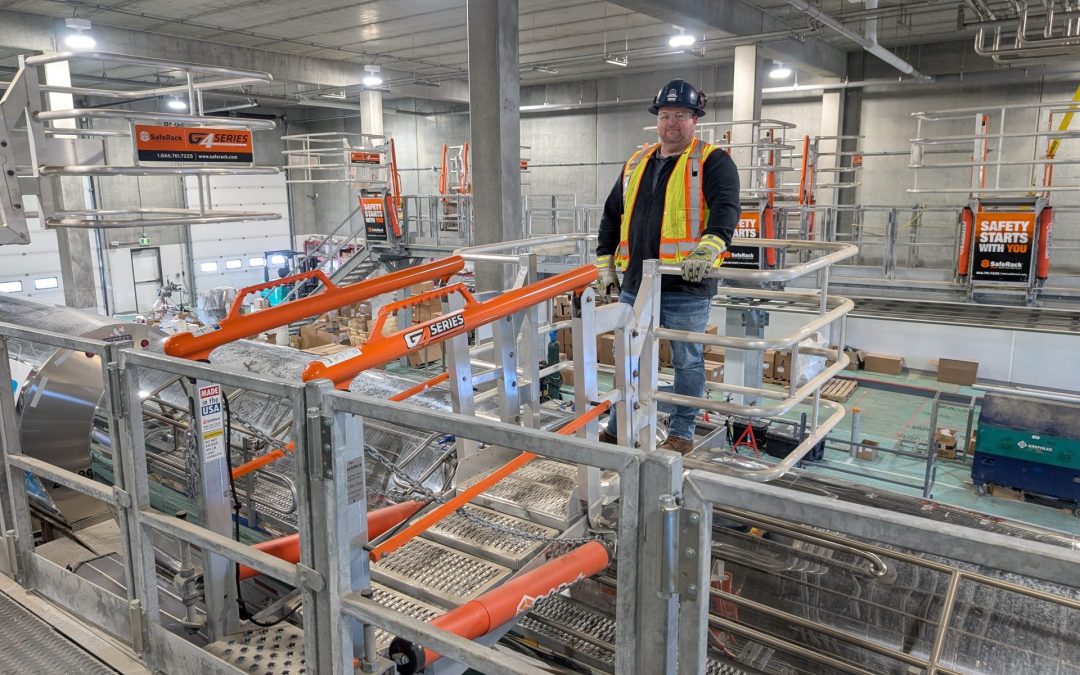
Safe access equipment: Safety cages, gangways, and loading arms that provide secure pathways to elevated work areas
Engineered platforms: Rolling platforms and fixed truck loading platforms designed for specific trailer types and loading configurations
Site-fit controls: Solutions matched to your cargo properties, traffic flow, space constraints, and operational requirements
Preventative Maintenance for Truck Loading Platforms
In addition to our assessment services, the Northern Platforms team offers comprehensive preventative maintenance packages for all kinds of systems, including truck loading platforms. Most equipment manufacturers include scheduled maintenance requirements in their IOM manuals. These maintenance requirements are often a condition of warranty coverage for your truck loading platform. Our preventative maintenance programs include:
Visual inspection of welds, structural connections, and load-bearing components
Lubrication of pivot points, hinges, and moving assemblies
Hardware torque checks to ensure bolts and fasteners remain secure
Functionality testing of safety mechanisms, gates, and locking systems
Documentation of inspection findings and maintenance actions
The Key Benefit of Preventive Maintenance
Preventative maintenance matters because it catches problems when they’re small and inexpensive to fix—not when they’ve escalated into major component failures. For example, consider a loading arm with a minor seal leak. Caught early during a routine inspection by Northern Platforms, a seal kit replacement only costs $400 to $900 in parts and labour.
But if that leak is ignored, it can have a profound impact on your loading arm–often leading to swivel joint failures or other major issues. Replacing your loading arm can cost up to $10,000.
When you break it down like this, the answer is clear: preventative maintenance pays for itself 10 times over.
Why Choose Northern Platforms
Everything Northern Platforms supplies, we can install. This turnkey approach delivers several advantages over separating equipment procurement from installation and maintenance:
Warranty Protection: When the same company supplies and installs your truck loading platform, warranty coverage is iron-clad. There’s no ambiguity about whether installation errors voided manufacturer protections, and your installation will keep track of mandatory maintenance schedules.
Faster Timelines: A single point of contact means fewer scheduling delays, streamlined communication, and faster commissioning. In other words, your truck loading platform is operational sooner and serviced faster.
Correct Specification: Installation teams familiar with the equipment catch specification errors during site surveys, preventing costly rework or incompatible components.
One Stop Shop: Having Northern Platforms handle both supply and installation means accountability is crystal clear. If something needs attention, you know exactly who to call.
Contact Us Today!
Are you looking for a safety equipment supplier that does it all? Northern Platforms is the company for you. We bring decades of experience in installing and maintaining truck loading platforms across Western Canada, ensuring your systems perform safely, reliably, and cost-effectively for years to come. Call us to learn more and schedule your free site assessment today!
Articulating stairs, or self-adjusting gangways, bridge loading platforms to tanker trucks and railcars. These systems are essential for operations around Alberta and BC, especially when handling mixed fleets or frequent vehicle mis-spotting. However, selecting the right system isn’t simply about choosing between SAS, SFR, and FRT configurations. A successful installation requires careful measurement, specification validation, and alignment with your site’s operational realities. This buyer’s guide walks you through the process of selecting a gangway, from initial site assessment through final specifications. Keep reading to learn more!
How to Choose the Right Articulating Stairs: Step-by-Step
Many existing operations would benefit from adding articulating stairs to their site. However, choosing the right model can be tough–especially if you don’t know what to watch out for. Let’s walk through it, step by step.
Step 1: Take Accurate Measurements
Accurate measurements are the foundation of your system. Before you start shopping, make sure you have these details on hand:
Lowest hatch height
Highest hatch height
Horizontal reach (especially if you experience frequent mis-spotting)
Size limitations of existing platforms
Step 2: Assess Your Operations
Your site’s daily realities also play a crucial role in finding the right system. We recommend documenting the vehicles that consistently use your loading bay:
Truck types: Box trucks, tankers, hoppers—each trailer type has different hatch heights and loading profiles.
Railcar types: Covered hoppers (which need FRT-style telescoping access), liquid tankers, and flat cars also need different accommodations.
Height consistency: Do all vehicles in a category arrive at roughly the same height, or is there significant variation between loads?
If heights are consistent, a Simple Flat Ramp (SFR) is cost-effective and low-maintenance. If heights vary by load, load condition, or suspension state, a Self-Adjusting Stair (SAS) with self-levelling is worth the investment.
Additionally, you should track how often vehicles park off-center or at the wrong hatch locations. Monitor frequency, re-spotting time, and any associated safety risks. If mis-spotting is rare and re-spotting is quick, opt for a stationary gangway. If it’s frequent (more than once per shift), a track-mounted gangway can help significantly increase the efficiency of your site.
Step 3: Decide on Key Features & Specifications
Now that you have a clear sense of your site’s size and needs, you can finalize additional features of your articulating stair system, including:
Gangway width and load ratings
Safety cage design
Power and control systems
Materials
Compatibility with existing systems, including loading arms.
Questions to Ask Before Buying
In order to find the ideal system for your site, ask yourself these questions:
What is the height range of vehicles at your loading bays? Do these heights vary? Measure from the platform deck to typical hatch heights for both trucks and railcars. Include minimum and maximum heights to ensure adequate adjustment range.
How frequently do vehicles mis-spot? If re-positioning happens more often than not, track-mounted or FRT configurations will save significant time and frustration.
What are your platform space constraints? Existing platforms may limit gangway width, cage depth, or track length. Northern Platforms can engineer solutions to fit tight spaces.
Do you need multiple gangways? High-volume facilities may require multiple articulating stair systems. Northern Platforms can design coordinated installations for maximum efficiency.
How to Choose the Right Articulating Stairs
Once you’ve answered all the questions above, you should have a clear understanding of your top priorities. Use these insights to make an informed decision about your articulating stairs. Still not sure which option is right for you? Use this table to help make your decision:
Your Situation
Recommended System
Why It Works
Mixed truck heights, frequent vehicle changes
SAS (Self-Adjusting Stairs)
Self-levels to any height; stairs provide a solid foundation
Liquid railcar loading with mis-spotting issues
FRT (Flat Ramp Telescoping)
Can reach offset hatches; eliminates re-spots
Hopper cars or trucks with consistent heights
SFR (Simple Flat Ramp)
Simple, stable, low-maintenance solution for predictable applications
Multiple vehicle types and unpredictable positioning
SAS with track mounting
Combines height adjustment with a flexible track
LPG, asphalt, or chemical loading requiring quick access
SAS with power assist
Fast deployment and retraction; reduces manual handling
Why Choose Northern Platforms
Northern Platforms is Western Canada’s leading supplier of safe access solutions, including SafeRack articulating stairs and gangway systems. We offer:
Expert site assessment: Our team conducts thorough measurements and site evaluations, ensuring specifications match your operational realities.
Turnkey installation: From design through final safety testing, we handle the complete build and integration process.
Preventive maintenance and support: Our maintenance contracts minimize downtime and extend system lifespan, critical for high-cycle operations and harsh Western Canadian conditions.
Local presence: Based in Alberta, we can be on your site within hours.
Contact Us Today!
Ready to get started? Northern Platforms is here to help. Call our office or request a quote through our website now.
Albertan and BC operations regularly deal with high pressures, intense temperatures, and other rough conditions. Are your fittings and loading arms up to the task? Keep reading to learn more about one of the best fittings on the market—and how the Northern Platforms team can help improve your railcar loading system today.
What are Hiltap Fittings?
When industrial operations demand the highest level of safety and reliability, Hiltap fittings deliver. Manufactured by OPW, these specialized quick couplings handle the most challenging liquid and gas transfer applications with ease. They are specifically designed to handle high and low pressures and temperatures.
Benefits of Hiltap Fittings
Hiltap fittings are loved by many of our customers. Here are some of the advantages of this fitting:
Innovative Designs: This fitting features a metal-to-metal wedge seal design that locks under pressure. Don’t worry about the risks of accidental disconnections—this design offers complete protection in every circumstance.
Built for High Pressure and Intense Temperatures: If you regularly deal with high pressures or intense temperatures, you probably already know that many fittings on the market are not designed to handle these circumstances. But if you opt for Hiltap fittings on your railcar loading arms, you can rest assured that they will operate safely and efficiently through wide pressure and temperature ranges.
Complete Regulatory Compliance: Safety and compliance are a must for all truck and railcar loading systems—which is why all Hiltap fittings come with comprehensive compliance documentation, including Canadian Registration Numbers.
Common Applications Hiltap Fittings
Many Albertan industries benefit from the technology and quality of OPW’s Hiltap fittings, including:
Oil and gas: Ideal for high-pressure applications and sour gas handling.
Chemical and petrochemical: Ensures secure and safe transfer of hazardous materials.
Natural gas liquids (NGLs): Pressurized railcars require a loading system and fitting that complies with strict local and national regulations.
Other industries: These fittings are also regularly used for aerospace, nuclear, and cryogenic applications, due to their pressure and temperature handling capabilities.
Popular Hiltap Fittings
At Northern Platforms, we can equip your railcar loading system with several different types of hiltap fittings. Here are some of the options that we currently offer to customers:
3TL Transfer Loading Series: One of the bestselling fittings that Northern Platforms offers, this all-purpose solution provides leak-proof sealing while also maintaining unrestricted flow. Enjoy a quick connection, dry disconnects, and safe venting of any residual pressure.
3U Series: These fittings are specifically designed to replace conventional medium-pressure unions/couplings. This fitting is ideal for smaller transfers that deal with significant temperature cycling.
LQC (Locking Quick Connect) Series: Do you regularly deal with pressurized railcars or tanks? This coupling is guaranteed to never disconnect under line pressure. Opt for this design for operations involving oils, NGLs, acids, and other hazardous materials.
Contact Northern Platforms for Hiltap Fittings and Railcar Loading Systems Today!
Which Hiltap fitting will you add to your operation? With over 20 years of industry experience, the Northern Platforms team can walk you through our options and provide product recommendations tailored to your situation. Plus, if you are looking to upgrade other elements of your railcar loading system, we’ve got you covered. As Western Canada’s leading provider of fall protection and safe access equipment, we have everything you need to design, build, and create the perfect solution. Explore our product offerings online or contact our sales team for more information! Let us help make your operations safer and more efficient today.
An essential part of many Albertan industries, tanker trucks transport essential chemicals, food products, and water on a daily basis. However, without proper fall protection, these essential trailers can become dangerous work sites. In this blog post, we’ll discuss the basics of a truck loading platform—including how they are used, what industries rely on them, and the elements that make up the ideal system. Keep reading to learn more!
What is a Truck Loading Platform?
A truck loading platform is a specialized access system designed to provide safe, elevated access to the tops of tanker trucks and trailers during loading and unloading operations. These platforms typically consist of a sturdy steel or aluminum structure with integrated stairs, handrails, and safety features that allow workers to safely reach truck hatches, connection points, and inspection areas. By utilizing these systems, workers are protected from the significant safety risks of vehicle-mounted ladders.
Common Industrial Uses for Truck Loading Platforms
In today’s industrial world, tanker trucks are used to transport a wide variety of items. Here are some common industries that use tanker truck loading platforms daily.
Chemicals and Refined Fuels
As Alberta’s leading sector, oil and gas facilities rely on loading platforms to safely load and unload the hazardous materials they deal with on a daily basis.
Uses: In addition to basic access, operators will use a truck loading rack to connect loading arms, vent overfills, and monitor transfer operations.
Special Considerations: When dealing with harsh chemicals, pay close attention to the materials of your loading system. Opt for a strong and corrosion-resistant material like stainless steel.
Food and Beverage Operations
Food and beverage facilities across Canada require truck loading platforms that meet the highest sanitary standards while maintaining worker safety during liquid ingredient transfers.
Uses: Typically, workers in the food and beverage industry use loading platforms to inspect hatch seals for contamination prevention, connect food-grade hoses and loading arms, collect quality control samples, and monitor transfer operations of milk, juices, cooking oils, and liquid sweeteners.
Special Considerations: Food-grade materials and seals are a must for food and beverage operations. Northern Platforms has extensive experience building systems that meet or exceed the stringent sanitary regulations in this industry.
Bulk Water Stations
Remote locations and Northern communities depend on water filling trucks to access clean drinking water. However, without adequate fall protection, operators face a large risk of catastrophic injury.
Uses: Operators use these platforms to safely access the tops of water tanker trucks and provide potable water to local residents.
Special Considerations: Many Northern Canadian communities rely on truck fill stations. However, these areas also deal with harsh temperatures which demand systems that function up to -40°C. With over two decades of experience working with cold temperatures, Northern Platforms regularly builds systems that are built for the climate.
A platform to provide a solid foundation and stable work surface for workers.
Gangways are used to connect the main platform to the vehicle and protect operators from falling. Northern Platforms stocks three different gangway options which are suitable for a variety of applications. We recommend adding a safety cage to end of your gangway for complete protection.
Finally, pair your platform with a loading arm for smooth loading and unloading operations. These systems are sturdier and safer than hoses and can significantly increase the efficiency of your operation.
How Northern Platforms Can Help
With over 20 years of experience designing, building, and installing custom truck loading platforms, Northern Platforms is your trusted partner for all things fall protection. We have experience building tanker truck loading platforms for a variety of industries, including oil and gas operations, food and beverage facilities, municipal water filling stations, and more. Here’s how our process works:
On-site Consultation: Our convenient Central Alberta location means that we can be on your site within a couple of hours. Once we arrive, we’ll conduct a thorough evaluation to understand your operational requirements, safety challenges, and more.
Truck Loading Platform Design: Next, we’ll draw on decades of collective experience to design a tanker truck loading system that integrates seamlessly into your site. Our designs consider everything from material compatibility to local safety regulations. We’ll also provide a cost estimate at this stage.
Turnkey Installation: Avoid the headache of working with multiple contractors—Northern Platforms can take care of it all. With our turnkey installation services, we’ll ensure that your platform, gangway, and loading arm work together.
Request a Quote Today!
Ready to upgrade your truck loading platform? Call Northern Platforms today! Let’s work together to make your site safer and more efficient.
Overflow spills, static fires…these are just some of the risks of unsafe fuel tanker loading systems. But did you know that you can easily prevent these dangers by investing in the proper equipment? In this guide, we’ll explore practical solutions to common fuel tanker loading mistakes. With a couple of simple products from Northern Platforms, your oil and gas operation will be safer and more efficient.
1. Overflow Spills
Depending on the scope, oil and gas spills can range from inconvenient to catastrophic. Even when operators are careful, a loading arm or hose can be accidentally dislodged, causing environmental damage and worker harm in seconds.
The Solution: Dry Disconnects
OPW’s dry disconnect couplings eliminate residual product spills by automatically sealing both sides of the connection. By using one simple solution, operators don’t have to worry about shutting valves or dealing with unions. Instead, you can ensure complete spill protection by upgrading to these couplings on all your loading arms.
2. Static Ignition Fires
Operators must be careful of static buildup when loading a fuel tanker, which can cause dangerous fires. One of the main ways static builds up is through turbulence and agitation inside the fuel tank during loading, especially when using traditional top-loading methods. These systems often cause splashing and sloshing, quickly increasing the amount of static electricity generated.
The Solution: Bottom Loading Arms
The best way to minimize liquid agitation and turbulence is to use bottom-loading arms. These fuel tanker loading systems are closer to the ground and help introduce fuel into the tank with minimal agitation.
3. Falls From Height
Falls are a leading cause of injury at loading sites, especially when workers need to access the tops of trucks or railcars for venting, inspection, or loading. Most Canadian regulations require fall protection for anyone working at heights of 4 meters or more or where a fall could cause serious injury. Icy surfaces, unstable work platforms, and other unsafe operations can turn routine loading tasks into serious fall hazards, leading to costly injuries and downtime.
The Solution: Fall Protection Systems
Safety swing gates, guardrails, gangways, and safety cages are all easy fall protection solutions that protect your workers from falling hazards. These passive fall protection systems are always in place, meaning your workers will always be protected even when distracted or busy. Plus, when you design a system with Northern Platforms, we’ll seamlessly integrate these fall protection products into your loading operations, minimizing disruption.
4. Equipment Failure Leaks
Does your site rely on hoses for loading and unloading your fuel tankers? While these systems have been trusted for many years, they have some significant drawbacks. Hoses can twist, break down, and leak over time, significantly slowing your operations. In the worst-case scenario, you might be on the hook for costly clean-ups or equipment replacements.
The Solution: Loading Arms
Are you tired of lugging hoses around your site? It might be time to invest in a loading arm. With high-quality fabrication and top-notch engineering, loading arms ensure a tight and safe connection throughout the transfer cycle. Available in truck, rail, and specialty configurations–with options for vapor recovery–these arms deliver leak-proof performance, simplify maintenance, and protect both workers and the environment.
Choose Northern Platforms for Comprehensive Fuel Tanker Loading Systems
While mistakes happen, there are still easy ways to prevent common fuel loading accidents. With a couple of products from Northern Platforms, you can take a proactive approach to protecting against fuel spills, static fires, and more. Ready to upgrade your safety protocols? Contact the Northern Platforms team today! With just one site assessment, our experts will analyze your workflow, recommend solutions, and improve your site. Partner with our team by calling us today!
Did you know that falls from flatbed trailers are among the most common–and preventable–workplace injuries? Even though most flatbeds are only about 5 feet high, workers often end up 8 feet or more above the ground when climbing on loads to secure or tarp them. Falling from this height can lead to significant injury, so safety regulations require proper fall protection for these jobs. Looking for the right truck loading fall protection for your operation? You can keep your team safe and speed up your loading process with the right choice. Let’s discuss what you should consider when choosing a flatbed fall protection system–and how Northern Platforms can help.
3 Things to Consider When Selecting a Fall Protection System
1. What Types of Trucks Are You Dealing With?
There are several types of flatbed trailers, and your fall protection system should adapt to your needs. At Northern Platforms, we design custom solutions for:
Regular Flatbeds: The most common trailer type, ideal for standard cargo like steel beams and machinery.
Lowboys: Lowered decks make these trailers ideal for oversized loads, like excavators or other construction equipment. Lowboys require adjustable guardrails to match height changes.
Step Deck: Two-level trailers designed to carry tall cargo. Like lowboys, fall protection for these trailers needs dual-layer railings or mobile platforms.
If your site handles multiple trailer types, our experienced team can engineer a versatile and adaptable solution that includes components to fit every truck.
2. What Kind of Work Are You/Your Operators Doing?
When choosing the right truck loading fall protection, consider the tasks your workers routinely perform. This will help determine the best fall protection approach.
For example, are they strapping and securing loads? Manually performing this work has a high chance of a fall, especially with unstable cargo like pipes or lumber. Our expert team recommends RollaStep’s MP Mobile Platforms for this type of work. These platforms provide a stable elevated work surface with safety guardrails, which helps workers secure loads without climbing on top of the flatbed trailer while loading.On the other hand, if your workers are manually tarping loads, consider the SafeRack TF Tarping System, which allows a single operator to tarp a full flatbed in only 15 minutes. Thanks to this innovative technology, workers are completely safe from falling risks, since they no longer need to climb on top of the trailer to complete their jobs.
3. What are the OH&S requirements of your jurisdiction?
In Canada, fall protection laws vary by province. However, most jurisdictions require fall protection for any worker working “at height,” defined as working 6ft or above. Even though flatbeds are generally only 5 feet tall, tarping or securing loads often puts workers 8 feet or above, which is above legal limits. Non-compliance can lead to fines, lawsuits, or work stoppages. At Northern Platforms, we guarantee 100% compliance by designing systems that exceed Alberta OH&S standards.
Flatbed Fall Protection Systems Available Now At Northern Platforms
At Northern Platforms, we offer two industry-leading solutions to help keep your team safe while loading and unloading trucks:
RollaStep MP Mobile Platforms
Stability: Heavy-duty steel frame with anti-slip treads.
Mobility: 360° swivel casters for easy repositioning.
Versatility: Adjustable height (5–8 feet) to match lowboys, step decks, and regular flatbeds.
SafeRack TF Tarping System
Speed: 15-minute tarping reduces labour costs and delays.
ROI: Cuts liability risks and increases operational efficiency.
Contact Us Today!
With over 20 years of truck fall protection systems expertise, Northern Platforms provides cutting-edge solutions that help protect your workers and streamline your operations. Whether you need mobile platforms for load securing or automated tarping systems, we’ll deliver a custom, compliant solution. Ready to get started? Contact us today for a free site assessment and quote! Call us at 780-986-8825.

















![The Complete Buyer’s Guide to Articulating Stairs [2025]](https://northernplatformsltd.ca/wp-content/uploads/2025/05/self-adjusting-stairs-and-gangway-canada.jpg)