Looking to upgrade an existing loading arm? Start with how the arm is actually being used.
There is no single list of loading arm accessories that works for every application. A bottom-loading truck arm may need an API coupler and parking adaptor, while a top-loading railcar arm may need a completely different connection and storage setup.
This guide breaks down some key loading arm upgrades by loading method and operating need. If you are looking for specific products, you can also explore loading arm accessories available on our website or contact Northern Platforms for more information.
What is Considered a Loading Arm Upgrade?
“Loading arm accessory” is a broad term. Not everything added to a loading system is technically an accessory, and not every replacement part is an upgrade.
In general, the equipment you may be looking for falls into a few categories.
Connection equipment: Couplers, disconnects, and other components used where the loading arm connects to the truck, railcar or transfer system.
Loading-system safety equipment: Equipment such as grounding verification, overfill protection, emergency shutdown or vapour-control systems may work with the loading arm without being physically mounted to it.
Temperature-control options: Heat tracing, insulation and other configurations may be used where a transferred product has specific temperature requirements.
Replacement parts: Swivels, seals, and other components may need to be replaced because of wear or failure. Replacing a worn component is maintenance—not necessarily an upgrade.
These distinctions matter when you are looking for parts. Before Northern Platforms can recommend an option, the team needs to understand whether you want to add a capability, change the configuration or simply restore the existing arm to working condition.
How to Choose Loading Arm Upgrades
Start With Your Loading Method
The easiest way to narrow down loading arm upgrades is to start with the type of loading system you already have—or the system you are planning.
For example, are you:
Top loading through an open hatch?
Top loading through a closed or tight-fill connection?
Bottom loading through a vehicle adaptor?
Loading a truck?
Loading a railcar?
Planning a new system?
Modifying an existing one?
These differences have a major impact on the accessories that make sense.
An API bottom-loading coupler, for example, is associated with a specific type of bottom-loading connection. It is not something you would simply add to a top splash-loading railcar arm.
The same goes for factors such as pipe size, product, pressure and temperature. Loading arms are generally selected around the application rather than treated as one-size-fits-all equipment.
Let’s discuss some popular upgrades for top-loading (both splash and tight fill) and bottom-loading arms. If you are still deciding on the basic configuration, see Northern Platforms’ top-loading arms and bottom-loading arms before comparing individual upgrades.
Top Splash-Loading Arm Upgrades
Top splash loading typically involves positioning the loading arm through an open hatch and transferring product through a drop tube or similar outlet arrangement.
Because there is no sealed API-style connection to the vehicle, the most useful upgrades are different from those used in bottom loading. Some examples include:
Drop tubes: Carrie product from the loading arm down into the truck or railcar.
Splash-control components: Used when more control over the product discharge is needed.
Overfill protection: Helps detect when the receiving vessel is approaching its fill limit so the loading process can be stopped before an overfill occurs.
Vapour recovery: Some top-loading applications may also include vapour-recovery or vapour-return equipment. For a more detailed discussion, see Vapour Recovery During Tanker Truck Loading.
Upgrades for Closed or Tight-Fill Top Loading
Closed top loading has different requirements because the arm connects through a sealed or tight-fill connection rather than simply entering an open hatch. Some common loading arm accessories for this type of loading system include:
Tight-fill connections and couplers: Create a sealed connection between the loading arm and the receiving vessel to support a closed product-transfer system.
Dry disconnect couplers: A dry disconnect may be useful in applications where controlling product release during connection and disconnection is important. Northern Platforms offers products such as the OPW Kamvalok Dry Disconnect.
Breakaway couplings: Provide a designed separation point in the transfer system if excessive force is applied to the connection, helping limit damage to the loading equipment.
Vapour return/recovery: A closed-loading arrangement may include a vapour-return connection or separate vapour-recovery equipment. Depending on the system, this could involve another arm or equipment elsewhere in the loading station. It should be evaluated as part of the complete transfer system rather than selected as a standalone accessory.
Bottom-Loading Arm Upgrades
Bottom loading generally involves connecting the loading arm directly to an adaptor on the vehicle.
For that reason, some of the most important loading arm upgrades involve the connection itself, including:
API bottom-loading couplers: Connect the loading arm to a compatible vehicle adaptor and are commonly used in bottom-loading truck applications.
Dry disconnect couplers: Help control product release during connection and disconnection in applications where a dry-break style connection is appropriate.
Breakaway couplings: Provide a designed separation point in the transfer system if excessive force is applied to the connection, helping limit damage to the loading equipment.
Grounding and overfill protection: May be integrated into the broader loading system to verify grounding and help prevent loading beyond the receiving vehicle’s intended capacity. These systems may not be mounted directly to the loading arm and should be reviewed as part of the complete loading setup.
Consider Heated or Insulated Options
For temperature-sensitive products, the loading arm itself may require a different configuration. Possible options may include:
Heat tracing
Insulation
Steam jacketing
Heated piping
Temperature-compatible seals
The right option depends on the product and required operating temperature, as well as ambient conditions, transfer frequency and piping design.
Keep in mind: Insulation, heating equipment and other added components can change the weight and movement of the loading arm. On a spring-counterbalanced arm, which can affect how easily the arm moves and how far it can reach.
Explore Overfill Protection, Grounding and Other Safety Equipment
Some equipment commonly discussed as “loading arm accessories” is really part of the wider loading system.
This may include:
Grounding and bonding verification
Overfill protection
Emergency shutdown
Breakaway protection
Vapour recovery
Vapour monitoring
Other loading-control systems
When you are planning one of these upgrades, look at how the equipment fits into the complete loading operation rather than assuming it is a bolt-on accessory.
Can an Existing Loading Arm Be Upgraded?
Yes, in some situations, an existing loading arm can be upgraded or refurbished; however, this depends on the condition of your existing system, your site’s requirements and more. If you are interested in refurbishing your existing top or bottom-loading arm, talk to the team at Northern Platforms. We’ll review several key details, including:
Manufacturer and model
Age and condition
Loading method
Transferred product
Existing connection
And more
This review determines whether the work involves adding an accessory, reconfiguring the arm, replacing a worn component or replacing the complete loading arm.
Not sure which loading arm upgrade fits your operation? Let the Northern Platforms team help. Tell us whether you are top or bottom loading, what you are transferring, your pressure and temperature, the existing loading-arm manufacturer and model, and what you want to change.
Ready to get started? Request more information through our website, call our office, or explore loading arm accessories available now.
When it comes to fuel tanker unloading equipment, dry disconnects have become essential for modern loading and unloading operations. These systems automatically shut as soon as your hose or loading arm is disconnected, which helps prevent spills and increases the overall safety of your site. At Northern Platforms, we specialize in turnkey fuel tanker loading and unloading equipment that integrates seamlessly into your site. In this guide, we’ll walk you through how dry disconnects work, the key equipment you need, and why they are a smart investment for your operation.
What are Dry Disconnects?
Dry disconnect couplings automatically shut off product flow when disconnected, helping to eliminate even the smallest spills. Unlike traditional couplings that release residual product into containment areas, dry disconnects retain any remaining fuel inside the connector itself. This means:
No fuel spills onto the ground
No product drips onto equipment or personnel
No vapour releases during disconnection
No cleanup required between unloading cycles
The retained product typically remains in the coupler and is removed during the next connection, or it can be drained safely during maintenance.
Dry Disconnect Options Available at Northern Platforms
Northern Platforms stocks two proven dry disconnect solutions for fuel tanker unloading:
OPW Kamvalok Dry Disconnect
The OPW Kamvalok is an industry-leading dry disconnect system designed specifically for critical and high-value products. Key features include:
Locking handle maintains position to prevent unintended coupler opening or closing
Automatic closure in both directions—both coupler and adapter shut off simultaneously
Optimized for low pressure drop and maximum flow rates
Available in 1½”, 2″, and 3″ sizes to match your system requirements
Material choices: Aluminum or 316 stainless steel construction
Best for: High-volume operations, critical products, facilities requiring maximum reliability and minimal maintenance
Drylok Dry Disconnect Coupler/Adaptor
The Drylok system offers an alternative dry disconnect solution engineered for dependable performance in demanding fuel tanker unloading environments. Key features include:
Designed for optimal flow and pressure performance
Durable construction suitable for high-frequency cycling
Compatible with standard tanker receptacles
Available in multiple sizes and pressure ratings
Best for: Standard fuel tanker operations, retrofit applications, cost-conscious facilities seeking proven reliability
Why Choose Northern Platforms
At Northern Platforms, we’ll partner with you from initial assessment through installation, commissioning, and ongoing support. The result? Fuel tanker unloading equipment that seamlessly integrates into your operation. Here’s why Western Canadian companies choose us:
Single-source accountability: One partner for loading arms, vapour recovery hardware, gangways, and loading platforms, and more.
Proven equipment: We work with industry-leading manufacturers like Emco Wheaton, OPW, and SafeRack.
Custom solutions: Systems designed for your specific fleet, site layout, and operational requirements.
Installation and training: Complete commissioning services and operator training for long-term success
Maintenance support: Ongoing service to keep your system running at peak efficiency
Our experience across diverse industries—from petroleum terminals to chemical facilities—means we understand the unique challenges of different loading applications and can design the right solution for your operation.
Call Us Now!
Ready to invest in fuel tanker unloading equipment? Contact Northern Platforms to schedule your site visit today!
An essential part of many Albertan industries, tanker trucks transport essential chemicals, food products, and water on a daily basis. However, without proper fall protection, these essential trailers can become dangerous work sites. In this blog post, we’ll discuss the basics of a truck loading platform—including how they are used, what industries rely on them, and the elements that make up the ideal system. Keep reading to learn more!
What is a Truck Loading Platform?
A truck loading platform is a specialized access system designed to provide safe, elevated access to the tops of tanker trucks and trailers during loading and unloading operations. These platforms typically consist of a sturdy steel or aluminum structure with integrated stairs, handrails, and safety features that allow workers to safely reach truck hatches, connection points, and inspection areas. By utilizing these systems, workers are protected from the significant safety risks of vehicle-mounted ladders.
Common Industrial Uses for Truck Loading Platforms
In today’s industrial world, tanker trucks are used to transport a wide variety of items. Here are some common industries that use tanker truck loading platforms daily.
Chemicals and Refined Fuels
As Alberta’s leading sector, oil and gas facilities rely on loading platforms to safely load and unload the hazardous materials they deal with on a daily basis.
Uses: In addition to basic access, operators will use a truck loading rack to connect loading arms, vent overfills, and monitor transfer operations.
Special Considerations: When dealing with harsh chemicals, pay close attention to the materials of your loading system. Opt for a strong and corrosion-resistant material like stainless steel.
Food and Beverage Operations
Food and beverage facilities across Canada require truck loading platforms that meet the highest sanitary standards while maintaining worker safety during liquid ingredient transfers.
Uses: Typically, workers in the food and beverage industry use loading platforms to inspect hatch seals for contamination prevention, connect food-grade hoses and loading arms, collect quality control samples, and monitor transfer operations of milk, juices, cooking oils, and liquid sweeteners.
Special Considerations: Food-grade materials and seals are a must for food and beverage operations. Northern Platforms has extensive experience building systems that meet or exceed the stringent sanitary regulations in this industry.
Bulk Water Stations
Remote locations and Northern communities depend on water filling trucks to access clean drinking water. However, without adequate fall protection, operators face a large risk of catastrophic injury.
Uses: Operators use these platforms to safely access the tops of water tanker trucks and provide potable water to local residents.
Special Considerations: Many Northern Canadian communities rely on truck fill stations. However, these areas also deal with harsh temperatures which demand systems that function up to -40°C. With over two decades of experience working with cold temperatures, Northern Platforms regularly builds systems that are built for the climate.
A platform to provide a solid foundation and stable work surface for workers.
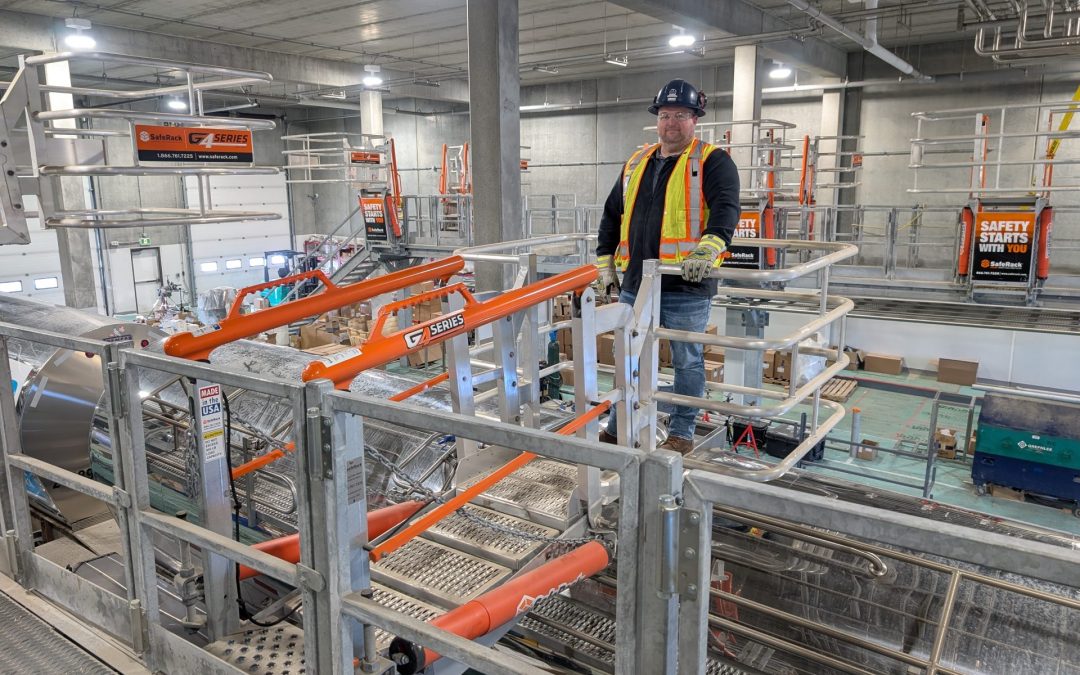
Gangways are used to connect the main platform to the vehicle and protect operators from falling. Northern Platforms stocks three different gangway options which are suitable for a variety of applications. We recommend adding a safety cage to end of your gangway for complete protection.
Finally, pair your platform with a loading arm for smooth loading and unloading operations. These systems are sturdier and safer than hoses and can significantly increase the efficiency of your operation.
How Northern Platforms Can Help
With over 20 years of experience designing, building, and installing custom truck loading platforms, Northern Platforms is your trusted partner for all things fall protection. We have experience building tanker truck loading platforms for a variety of industries, including oil and gas operations, food and beverage facilities, municipal water filling stations, and more. Here’s how our process works:
On-site Consultation: Our convenient Central Alberta location means that we can be on your site within a couple of hours. Once we arrive, we’ll conduct a thorough evaluation to understand your operational requirements, safety challenges, and more.
Truck Loading Platform Design: Next, we’ll draw on decades of collective experience to design a tanker truck loading system that integrates seamlessly into your site. Our designs consider everything from material compatibility to local safety regulations. We’ll also provide a cost estimate at this stage.
Turnkey Installation: Avoid the headache of working with multiple contractors—Northern Platforms can take care of it all. With our turnkey installation services, we’ll ensure that your platform, gangway, and loading arm work together.
Request a Quote Today!
Ready to upgrade your truck loading platform? Call Northern Platforms today! Let’s work together to make your site safer and more efficient.