Falls from height remain one of the most serious hazards in truck and railcar loading operations, especially when fall protection equipment is not used properly. At Northern Platforms, we specialize in designing and installing systems that go above and beyond to protect workers and eliminate this risk. Keep reading to learn more about the SavkoLock Mechanica Gangway Lockdown system and how it can improve your site’s safety today.
The Problem: Unsafe Gangway Movement
Fall protection, like gangways and safety cages, is essential for all industrial sites. But here’s the truth: despite proper design and specifications, these systems can still create worker safety risks.
For example, consider this situation: In dry bulk and other multi-hatch truck operations, gangway systems often have to be moved or repositioned during loading, unloading, or inspection. In the proper procedure, the operator completes their task on top of the vehicle, walks back to the loading platform, tracks the gangway to the next hatch, lowers it to the new position, and climbs back on top of the vehicle.
Unfortunately, many operators skip these steps. Instead of returning to the platform, they attempt to lift and reposition the gangway while still standing on top of the vehicle. This unauthorized maneuver is a leading cause of accidental falls in loading bays.
The Solution: SavkoLock Mechanical Gangway Lockdown
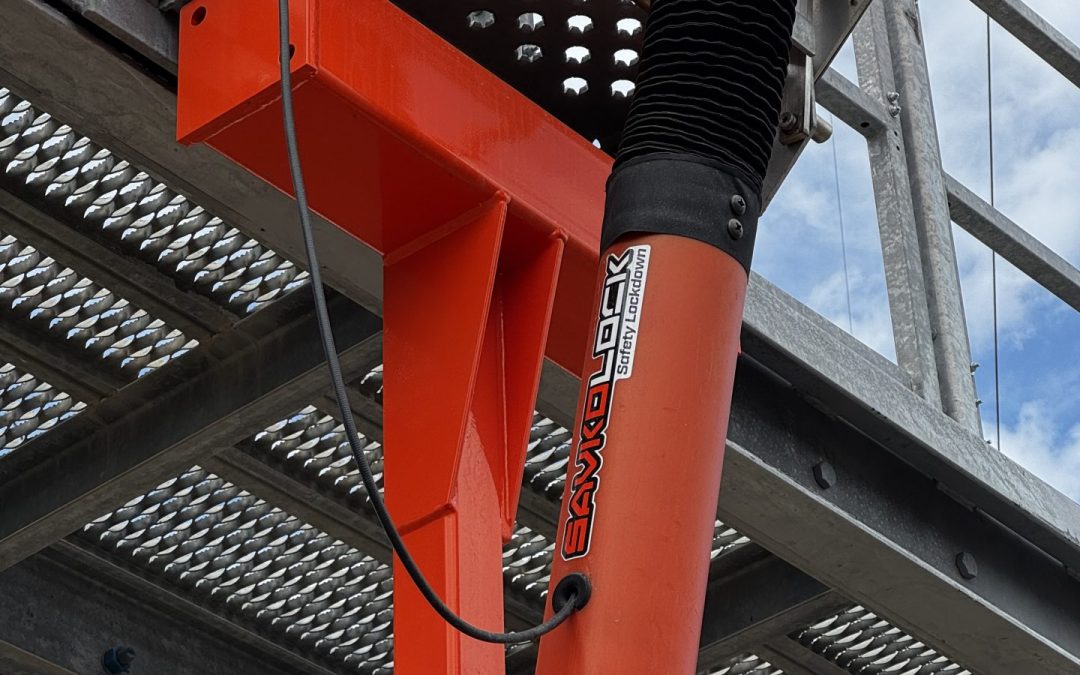
As we’ve outlined, the above situation poses a significant falling hazard for workers. That’s why Northern Platforms and SafeRack created the SavkoLock Mechanical Gangway Lockdown system.
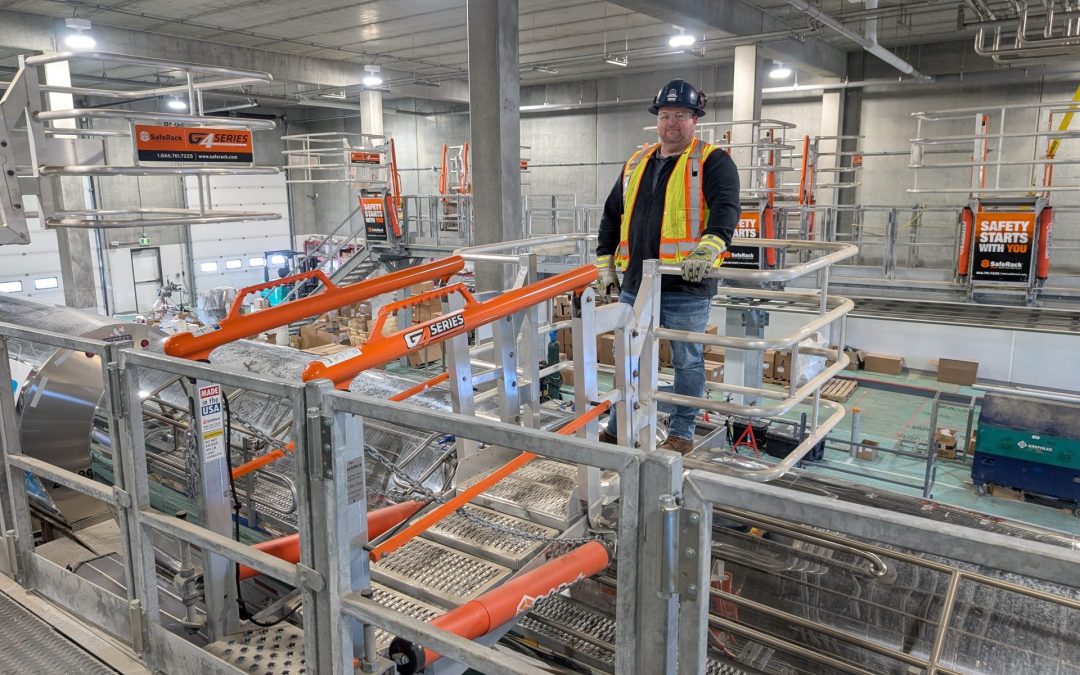
The function of this system is simple: When the gangway is lowered onto the vehicle, it automatically engages and locks the gangway in the deployed position. While locked, the gangway cannot be lifted, shifted, or adjusted from on top of the vehicle. Once the operator completes their task, they must return to the loading platform and use a foot pedal to release the lock. Since the pedal is located on the platform rather than the truck, the SavkoLock effectively discourages unsafe gangway procedures and ensures proper, comprehensive fall protection.
The SavkoLock was developed through close collaboration between SafeRack and the General Manager of Northern Platforms, Rob Sawchuk. This product demonstrates our unwavering commitment to worker safety in all situations, even the coldest Canadian temperatures.
SavkoLock Product Details
Included T-Frame support structure and mounting brackets, cabling and connections, and protective covers.
Suitable for use in ambient temperatures up to -40°C.
Assemblies available for 24”, 36”, and 48” G4 gangways.
Can be purchased with new gangway systems or retrofitted onto existing G4 gangways from SafeRack.
Easily interchangeable with the previous SafeRack SafeLok solution.
Do you have additional questions about this gangway lockdown system? Contact Northern Platforms through our website or at (780) 986-8825 for more information!
Additional Fall Protection Upgrades Available from Northern Platforms
As Western Canada’s leading experts in truck and railcar fall protection and SafeRack’s Platinum Partner of the Year for 2025, Northern Platforms helps improve the safety of industrial sites every single day. In addition to the SavkoLock, we also stock and supply a variety of other SafeRack products, including:
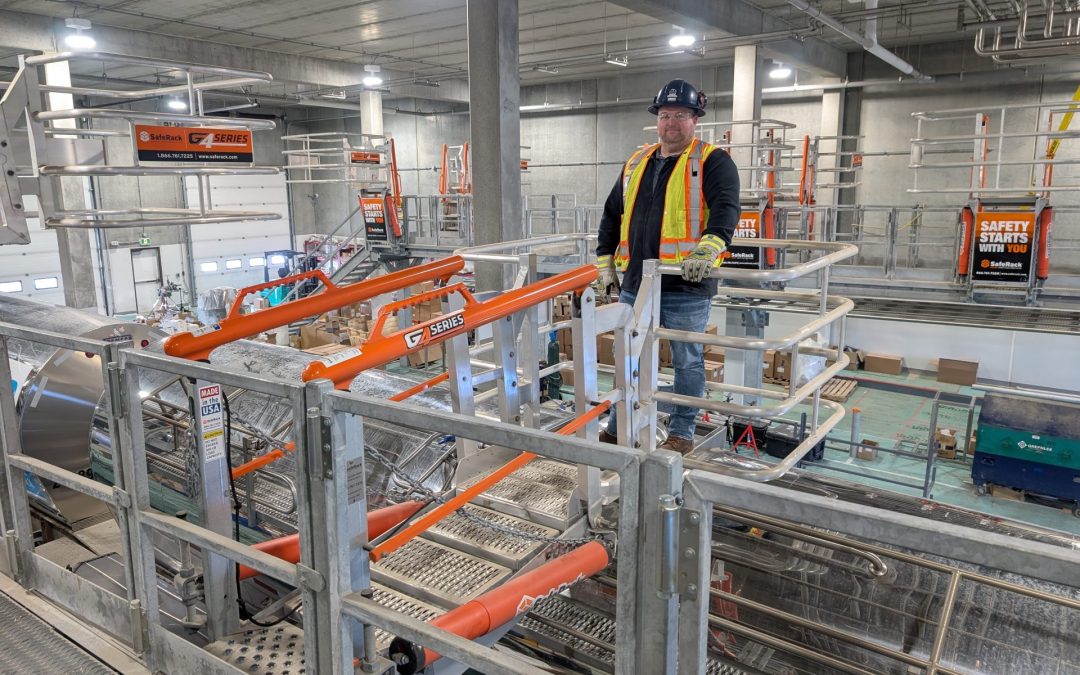
Safety cages: These systems attach to the front of the gangway and enclose the working area around the hatch when it is lowered. Importantly, safety cages create a guardrail barrier between the operator and the edge of the car. They come in 2-rail, 4-rail, or custom designs.
Safety swing gates: Every unsecured elevated opening on a truck or railcar loading platform poses a risk to workers. Safety swing gates are an easy-to-install solution that mounts to existing guardrail systems. Crucially, they are self-closing, which means that no opening is ever left unguarded.
We also offer preventative maintenance programs for gangways and loading arms that are conducted in strict alignment with OEM manufacturer specifications. Post-inspection, every customer receives a colour-coded report (green, yellow, red) that clearly identifies the condition of each component and prioritizes any required action.
Contact Us Today for Truck and Railcar Fall Protection
Whether you are interested in a brand-new railcar fall protection or simply retrofitting existing systems for better worker safety, Northern Platforms can help. Explore our products, request a quote, or call our office to get started!
From crude oil, ethanol, chemicals, LPG, and everything in between, railcars move an enormous volume of product across Western Canada every day. But not every tank car is built the same, and not every loading system should be either. In other words, the equipment, safety controls, and regulatory requirements for a pressurized LPG railcar look very different from what you need for a non-pressurized option.
At Northern Platforms, we help industrial operators across Western Canada design and install turnkey loading solutions engineered for their specific application. We have experience with both pressurized and non-pressurized systems. Keep reading to learn more about how these systems are different and how we can help.
Understanding Tank Car Types
Before diving into equipment, it helps to understand the fundamental distinction between the two main categories of tank cars.
Non-Pressurized (General Service) Tank Cars
Non-pressurized tank cars, marked as TC-117 in Canada, are general service vessels designed to carry materials at pressures typically below 25 psi. These cars transport a wide range of products, including:
Agricultural commodities
Diesel fuel and petroleum products
Crude oil and ethanol
Food-grade liquids
Non-hazardous chemicals
These cars typically feature visible fittings and valves at the top, and may also include a bottom outlet valve for unloading. Their design is more straightforward, and loading operations are generally less complex than those of pressurized systems.
Pressurized Tank Cars
Pressurized tank cars, designated by TC-105 and TC-112 in Canada, are purpose-built vessels used to transport liquefied compressed gases under pressure, typically above 40 psi. Products commonly transported in pressurized tank cars include:
LPG (liquefied petroleum gas) — propane and butane
Anhydrous ammonia
Chlorine
Other liquefied gases and high-hazard materials
These cars feature heavy-duty protective housings over their fittings, steel jackets, and thermal protection systems designed to prevent catastrophic failure in the event of a fire or accident. The key reason LPG must be transported in pressurized cars? Propane and butane exist as liquids only when kept under pressure. The moment that pressure is compromised, the liquid can flash back into a gas.
Loading Systems for Non-Pressurized Tank Cars
Non-pressurized loading operations are the more common of the two configurations. The products involved, such as crude oil, ethanol, diesel, and chemicals, are typically at or near atmospheric pressure, which makes the loading system design more forgiving.
Transfer Equipment
For non-pressurized service, operators can choose from a range of transfer options, including standard top-loading arms, bottom-loading systems, or reinforced flexible hoses. The primary engineering priorities for non-pressurized loading are flow rate, material compatibility, and reach.
Vapor Management
Depending on the product, non-pressurized loading may allow for open venting or vapour balancing rather than full closed-loop vapour recovery. Environmental regulations still govern allowable emissions, but the system architecture is significantly less complex than what’s required for LPG.
Platform and Access
Regardless of what product you are transferring, worker access to the top of a non-pressurized tank car still requires a proper loading platform, gangway, and fall protection. These railcar loading platforms are typically purpose-built to accommodate the types of locomotives you deal with most frequently.
Regulatory Requirements
Non-pressurized loading operations are subject to Transport Canada’s Transportation of Dangerous Goods Act and relevant provincial OHS regulations. Alberta’s OHS Code and WorkSafeBC both require fall protection for workers at heights of three metres or more. Other regulations and requirements vary depending on the type of product that you are dealing with.
Loading Systems for Pressurized Tank Cars
Loading LPG into a pressurized railcar isn’t simply a matter of connecting a hose and opening a valve. The high-pressure, volatile nature of LPG demands a system built from the ground up for these conditions.
Transfer Equipment
The LPG loading arm is the heart of any pressurized railcar loading station. The best systems for railcar applications include:
High-pressure construction: Carbon steel or stainless steel rated for LPG service pressures
Counterbalanced swivel joints: Allow smooth, ergonomic movement so a single operator can position the arm without strain
Leak-resistant sealing systems: Engineered to prevent drips, leaks, and emissions at connection points
Integrated vapour recovery ports: Support a closed-loop system to capture displaced vapours during loading
Emergency breakaway safety couplers: Automatically disconnect and seal in the event of an unexpected railcar rollaway
NFPA 58-compliant design: Meets the Liquefied Petroleum Gas Code for safe LPG handling
Pressurized LPG loading requires a fully closed-loop vapour recovery system. As liquid LPG is pumped into the tank car, displaced vapours must be captured and routed back into the storage system. This prevents both environmental emissions and dangerous vapour accumulation around the loading platform.
A properly specified LPG loading arm integrates vapour recovery capability directly into the transfer system, maintaining a sealed circuit from storage tank to railcar throughout the entire loading cycle.
Platform and Worker Access
As with non-pressurized operations, a proper loading platform, gangway, and fall protection system are required. For LPG, this also includes a safety cage surrounding the operator at the top of the railcar during connection and disconnection.
Emergency Controls
Automatic emergency shutoff valves are mandatory for pressurized LPG service under NFPA 58. These valves immediately halt product flow in the event of a detected leak, fire, or unexpected railcar movement. In addition, a grounding and bonding system is required to eliminate static discharge risk.
Regulatory Requirements
Any facility loading LPG must comply with NFPA 58, the Liquefied Petroleum Gas Code. In Canada, the Transportation of Dangerous Goods (TDG) Act and the Liquefied Petroleum Gases Bulk Storage Regulations may also apply.
Top Loading and LPG Loading Arms from Northern Platforms
Whether you’re loading general service products or high-pressure LPG, Northern Platforms is your single source for railcar loading arms across Western Canada. As an authorized distributor of OPW Engineered Systems, we carry the full line of top-loading arm configurations, and we have the application expertise to match the right arm to your product, your railcar type, and your site.
Our loading arm inventory includes:
Boom-Style (Supported and Unsupported) Loading Arms: Available in 2″, 3″, 4″, and 6″ sizes in carbon steel, stainless steel, or aluminum. Built for variable-reach applications and ideal for both LPG and general service railcar loading. Folds back against the platform for compact storage.
Bullhorn (Dual Connection) Loading Arms: The preferred configuration for pressurized LPG railcars, providing dual product connections from a single standpost to accommodate two liquid lines and a vapour recovery line.
Scissor Style Loading Arms: Designed for tanker truck loading applications with a secondary arm that rotates 360° in the horizontal plane, offering a spotting allowance nearly twice its length.
Fixed Reach Style Loading Arms: A simplified three-swivel design for straightforward top-loading applications. Available with an optional outboard valve to reduce drips and leaks on viscous products.
Custom Insulation Packages: For temperature-sensitive loading applications like molten sulphur, fully removable and reusable, available in top and bottom designs.
We’ve been supplying and installing railcar loading systems across Alberta and BC for over 20 years. Whether you need a single replacement arm or a complete turnkey loading station, our team will make sure you get the right equipment for your application.
Get a Quote from Northern Platforms
Ready to add a new railcar loading arm to your site or upgrade your complete loading station? Our team will assess your site, recommend the right configuration, and provide a transparent quote.
Northern Platforms recently partnered with the Western Milk Pool to complete a fit-for-purpose truck loading platform for a unique dairy processing facility located in Blackfalds, Alberta. Learn more about this project below.
About the Dairy Innovation West Facility
Dairy Innovation West (DIW) is a state-of-the-art facility located in Alberta, built as a result of a major collaboration between several Western Canadian dairy organizations. Serving as a major hub for dairy farmers and companies, this processing plant uses advanced technology to remove water from raw milk, producing concentrated products. DIW is unique for its profound environmental impact: for every three to four trucks of raw milk from local farms, only one truck leaves the plant. This means fewer tanker trucks on the road and reduced overall emissions over time.
The Challenge: Efficient and Compliant Tanker Truck Top Access
Building a truck loading rack for this facility presented several challenges, including:
Loading requirements: Most dairy operations rely on gravity loading rather than pumped loading arms. This impacted how the truck loading platform would be built.
Fleet variability: The Dairy Innovation West Facility receives trucks from all over Western Canada. As such, their truck loading platform needed to accommodate a variety of truck sizes, lengths, and configurations.
Operator Safety: Like many tanker truck loading and unloading operations, workers needed safe access to the tops of tanker trucks, making consistent and reliable fall protection a top priority.
The Solution: A Fit-for-Purpose Truck Loading Platform
Through close collaboration with the Western Milk Pool and a comprehensive site assessment, Northern Platforms was able to build a comprehensive, fit-for-purpose truck loading rack. Unique features of this system included:
Sloped design: To guarantee smooth gravity unloading, the entire loading rack was designed with a slight incline.
Articulating and tracking gangways: SafeRack’s self-adjusting stair gangways are a crucial component of this loading and unloading system. These gangways allow operators to safely align with tanker trucks, regardless of size, length, or configuration.
Dual-level truck loading platform: This allowed workers to access different connection points depending on trailer height and loading requirements. The result: improved operational efficiency.
Fall protection at every stage: Gangway safety cages and safety swing gates were integrated throughout the loading platform to ensure that operators were always protected. Thanks to high-quality products from YellowGate and SafeRack, these fall protection measures are integrated seamlessly into workflows and do not disrupt operational efficiency.
The Result: Final System Details
Once completed and commissioned, the DIW truck loading system included:
3 raised truck loading platforms
15 tracking gangways
Numerous gangway safety cages
Several YellowGate safety swing gates
Ultimately, Northern Platforms was able to design, deliver, and install a system that met DIW’s operational needs with ease. The result? A one-of-a-kind truck loading rack for a one-of-a-kind facility.
Why Choose Northern Platforms?
The Dairy Innovation West is simply one of many notable projects that the Northern Platforms team has completed. We’ve worked with notable oil and gas companies, local food processing facilities, national shipping operations, and more! Here’s why these companies consistently choose Northern Platforms for their fall protection systems:
Complete turnkey installation: From initial system design to final installation, Northern Platforms can take care of it all. Plus, thanks to our expansive inventory from industry-leading suppliers, we design systems that seamlessly integrate from top to bottom.
In-person consultations: Are you located in Alberta? Thanks to our central Leduc location, Northern Platforms can have a technician on site quickly to conduct thorough in-person assessments. Need a safe access solution installed fast? We’re the right team for you.
Dedicated inspection and maintenance programs: In addition to truck loading platform design and installation, we also offer comprehensive inspection and maintenance on key systems, including loading arms and gangways.
Request a Quote Today!
Interested in partnering with Northern Platforms on a future project? We bring over 20 years of experience to every job. When you work with us, we guarantee you’ll receive a safe access system that integrates seamlessly into your operation. Request a quote through our website or call our office today to get started.
Loading racks are the heart of many bulk transfer operations. Whether you’re loading refined fuels, chemicals, or other liquid products, the right loading rack configuration has a direct impact on throughput, safety, and day-to-day efficiency. If your operation is growing—or you’re planning a new build—you’ll eventually face a key design question: should you invest in a single-spot loading rack, or step up to a multi-spot system?
What is a Loading Rack?
Loading racks are engineered platforms and support structures that bring together truck or rail access, fall protection, and loading arms or hoses into one integrated system. They provide safe, compliant access to the tops or sides of vehicles while supporting the equipment needed to transfer product efficiently.
Loading racks typically come in two layouts: single-spot and multi-spot configurations. We’ll break down the differences between these two configurations below.
Single-Spot Loading Racks
A single-spot loading rack is designed to service one truck or railcar at a time. With these systems, traffic is straightforward: one vehicle pulls in, is spotted under the loading arm or access platform, gets loaded, and then exits. This simplicity can be a real advantage for smaller teams, or for operations where each load requires hands-on attention from operators and quality or safety personnel. Additionally, single-spot configurations are often more cost-effective.
Opt for these loading racks if:
Your daily throughput is steady but not extremely high.
You operate in a tight footprint with limited room for additional lanes.
You’re upgrading an existing loading point rather than building a new facility from scratch.
You prefer a simpler system with fewer variables to manage and maintain.
What are Multi-Spot Loading Racks?
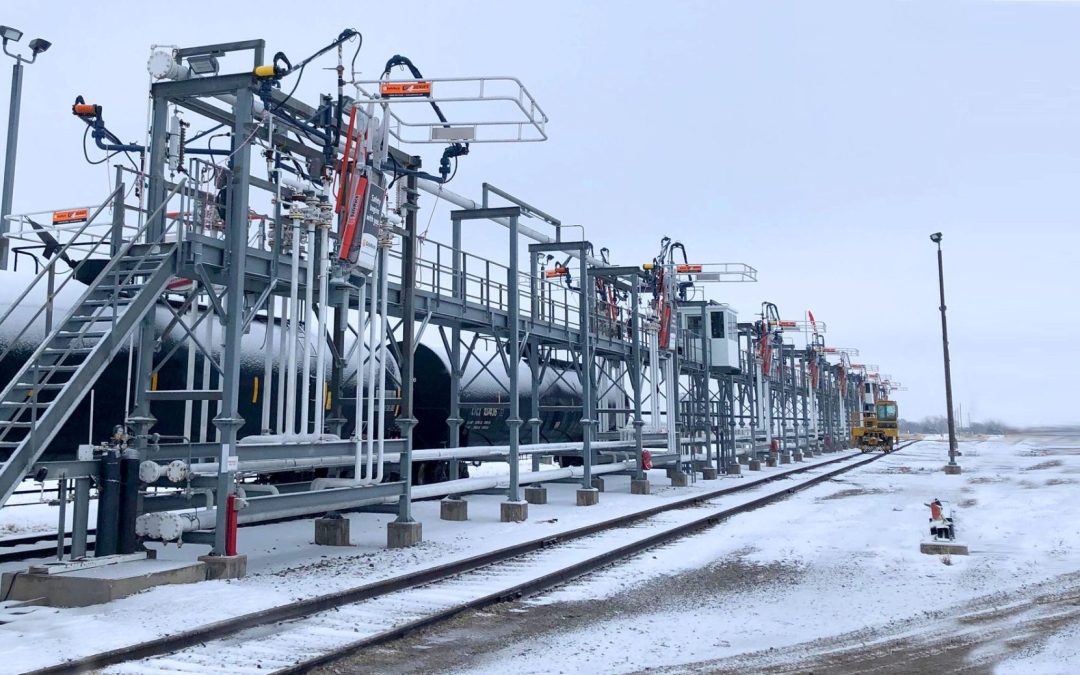
Multi-spot loading racks are designed to handle multiple vehicles at the same time along one continuous rack. Instead of loading one truck at a time in a bay, several trucks can be staged along the rack, each at its own loading position. The same concept applies to rail: a multi-spot rail loading rack may be designed to reach several cars in a string without moving the train.
These systems are common at higher-volume terminals and facilities where minimizing truck wait times and maximizing throughput are top priorities. By enabling simultaneous loading at multiple spots, they make it possible to move more product in the same window of time.
Key Considerations When Choosing Between Single-Spot and Multi-Spot
Not sure if a single-spot or multi-spot model is right for you? Here are a few factors to consider:
Current and future throughput. Are you loading a handful of trucks per day, or dozens? Are volumes expected to grow significantly over the next 5–10 years?
Available space. Do you have room for multiple lanes, longer racks, and safe traffic circulation, or is the site constrained by existing buildings and infrastructure?
Product mix. Are you loading a single product or multiple grades? Multi-spot racks can be engineered to handle different products, but this may add complexity to the design.
Staffing and operations. Do you have enough trained operators to run multiple spots at once, or is your team better suited to a simpler, single-spot layout?
Budget and phasing. Sometimes it makes sense to start with a single-spot rack that’s designed with future expansion in mind, so you can add additional spots later without starting from scratch.
A good starting point is to map out your current loading volumes, peak periods, and any bottlenecks. From there, you can evaluate whether a single-spot rack will truly support your needs or whether a multi-spot system is a better long-term fit.
Northern Platforms: Your Source for Loading Racks
Choosing between single-spot and multi-spot loading racks is about more than just counting trucks or railcars. It’s about understanding how your facility operates today, where your bottlenecks are, and where your business is headed.
Northern Platforms works with operations across Western Canada to design, supply, and install loading racks tailored to each site’s needs. From initial layout and equipment selection to turnkey installation and preventative maintenance, our team can help you find a solution that is safe, efficient, and built for growth.
Ready to explore your options for loading racks? Reach out to discuss your operation or request a quote through our website today!
If your fuel terminal or bulk storage facility is operating with aging equipment, 2026 may be the right time to modernize your fuel tanker unloading system. Wondering which upgrades to prioritize? In this blog post, we’ll break down why a fuel tanker unloading system is important and the key modern components to consider. Keep reading!
Why a New Fuel Tanker Unloading System Matters
Many facilities delay upgrades until something fails. However, reactive replacements often cost more and cause more disruption than planned capital improvements. Here’s why proactive upgrades make sense in 2026:
Increase efficiency: Your outdated system might be costing you thousands. While small misalignments or loading errors might not feel like a big deal in the moment, they can add up over time—resulting in major operational losses.
Stay code-compliant: Fuel loading and unloading operations are subject to strict regulations around fire risks, vapour recovery, and hazardous materials. Investing in a new system ensures all crucial standards are met.
Invest in worker safety: If your operators are working at height without adequate fall protection, this creates serious risks. Additionally, hoses or unsafe fuel transfer procedures expose workers to substantial hazards.
Key Components of a Modern Fuel Tanker Unloading System
Fuel tanker unloading systems are comprised of numerous parts. Depending on your situation, you might consider upgrading one element or overhauling the whole system.
Are you still relying on hoses for fuel transfer? If so, installing a load arm is one of the easiest and highest-value upgrades you can make in 2026.
While many small operations use hoses for their affordability, there are several risks to these systems, including:
Increased physical strain for operators
Slower connection times
Higher spill risk during handling
Premature wear and frequent replacement
Inconsistent alignment with tanker connections
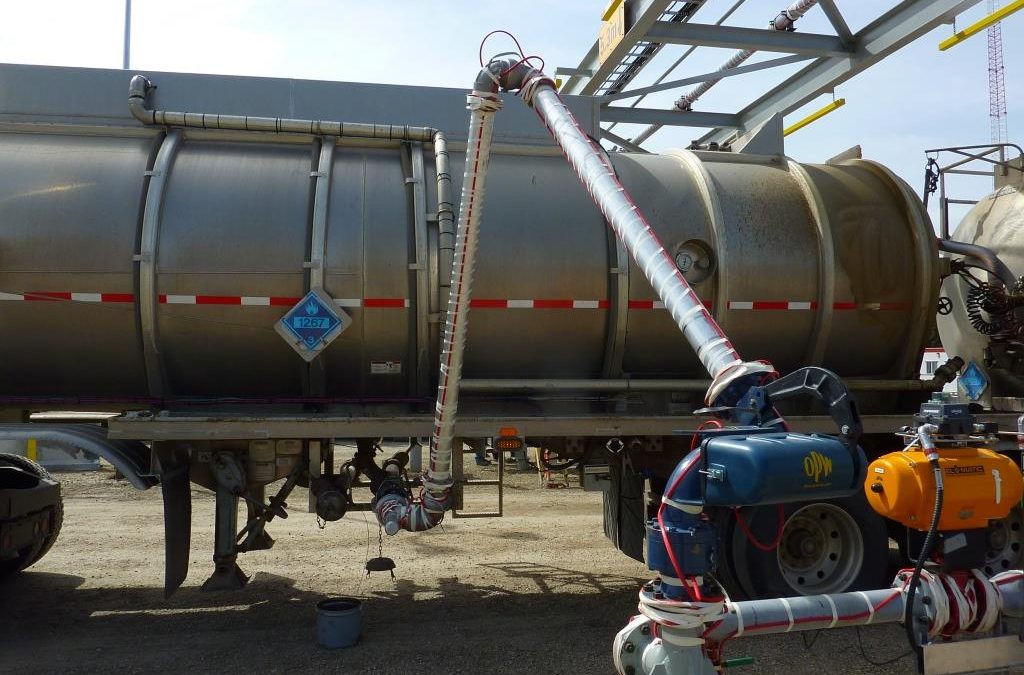
On the other hand, modern fuel loading arms provide a safer, more controlled alternative. Designed with precision swivel joints and counterbalanced articulation, loading arms move smoothly into position and remain supported during transfer. This reduces operator fatigue, improves seal integrity, and speeds up truck turnaround.
In facilities that require top-of-truck access, whether for loading, inspection or sampling, properly engineered platforms and gangways are essential. Modern loading racks are designed to:
Resist corrosion through modular aluminum construction
Seamlessly incorporate guardrails and safety gates
Even in bottom-loading operations, platforms may still be required. If you have primarily been using mobile access units and want to invest in a permanent solution, the truck loading platform can be a beneficial upgrade.
If you are considering an elevated work surface, fall protection is a must. This could include gangway safety cages, handrails, self-closing industrial swing gates, and more.
Plan Your 2026 Project with Northern Platforms Today
Replacing elements of your fuel loading and unloading system can sound like a large undertaking, but it doesn’t have to be–especially when you partner with the right provider. Northern Platforms works with leading manufacturers to deliver turnkey unloading system solutions, including:
Site assessments and system audits
Engineered platform and gangway design
Loading arm supply and replacement
Fall protection integration
Professional installation
Ongoing preventative maintenance programs
By planning your 2026 upgrade now, you can align with capital budgeting cycles, minimize operational disruption, and avoid emergency replacements caused by equipment failure.
An essential part of many Albertan industries, tanker trucks transport essential chemicals, food products, and water on a daily basis. However, without proper fall protection, these essential trailers can become dangerous work sites. In this blog post, we’ll discuss the basics of a truck loading platform—including how they are used, what industries rely on them, and the elements that make up the ideal system. Keep reading to learn more!
What is a Truck Loading Platform?
A truck loading platform is a specialized access system designed to provide safe, elevated access to the tops of tanker trucks and trailers during loading and unloading operations. These platforms typically consist of a sturdy steel or aluminum structure with integrated stairs, handrails, and safety features that allow workers to safely reach truck hatches, connection points, and inspection areas. By utilizing these systems, workers are protected from the significant safety risks of vehicle-mounted ladders.
Common Industrial Uses for Truck Loading Platforms
In today’s industrial world, tanker trucks are used to transport a wide variety of items. Here are some common industries that use tanker truck loading platforms daily.
Chemicals and Refined Fuels
As Alberta’s leading sector, oil and gas facilities rely on loading platforms to safely load and unload the hazardous materials they deal with on a daily basis.
Uses: In addition to basic access, operators will use a truck loading rack to connect loading arms, vent overfills, and monitor transfer operations.
Special Considerations: When dealing with harsh chemicals, pay close attention to the materials of your loading system. Opt for a strong and corrosion-resistant material like stainless steel.
Food and Beverage Operations
Food and beverage facilities across Canada require truck loading platforms that meet the highest sanitary standards while maintaining worker safety during liquid ingredient transfers.
Uses: Typically, workers in the food and beverage industry use loading platforms to inspect hatch seals for contamination prevention, connect food-grade hoses and loading arms, collect quality control samples, and monitor transfer operations of milk, juices, cooking oils, and liquid sweeteners.
Special Considerations: Food-grade materials and seals are a must for food and beverage operations. Northern Platforms has extensive experience building systems that meet or exceed the stringent sanitary regulations in this industry.
Bulk Water Stations
Remote locations and Northern communities depend on water filling trucks to access clean drinking water. However, without adequate fall protection, operators face a large risk of catastrophic injury.
Uses: Operators use these platforms to safely access the tops of water tanker trucks and provide potable water to local residents.
Special Considerations: Many Northern Canadian communities rely on truck fill stations. However, these areas also deal with harsh temperatures which demand systems that function up to -40°C. With over two decades of experience working with cold temperatures, Northern Platforms regularly builds systems that are built for the climate.
A platform to provide a solid foundation and stable work surface for workers.
Gangways are used to connect the main platform to the vehicle and protect operators from falling. Northern Platforms stocks three different gangway options which are suitable for a variety of applications. We recommend adding a safety cage to end of your gangway for complete protection.
Finally, pair your platform with a loading arm for smooth loading and unloading operations. These systems are sturdier and safer than hoses and can significantly increase the efficiency of your operation.
How Northern Platforms Can Help
With over 20 years of experience designing, building, and installing custom truck loading platforms, Northern Platforms is your trusted partner for all things fall protection. We have experience building tanker truck loading platforms for a variety of industries, including oil and gas operations, food and beverage facilities, municipal water filling stations, and more. Here’s how our process works:
On-site Consultation: Our convenient Central Alberta location means that we can be on your site within a couple of hours. Once we arrive, we’ll conduct a thorough evaluation to understand your operational requirements, safety challenges, and more.
Truck Loading Platform Design: Next, we’ll draw on decades of collective experience to design a tanker truck loading system that integrates seamlessly into your site. Our designs consider everything from material compatibility to local safety regulations. We’ll also provide a cost estimate at this stage.
Turnkey Installation: Avoid the headache of working with multiple contractors—Northern Platforms can take care of it all. With our turnkey installation services, we’ll ensure that your platform, gangway, and loading arm work together.
Request a Quote Today!
Ready to upgrade your truck loading platform? Call Northern Platforms today! Let’s work together to make your site safer and more efficient.