Fuel loading and unloading can create serious safety, environmental, and operational challenges. From flammable vapours to product spills, even a routine transfer can become risky, especially if you don’t have the right equipment.
That’s why more and more site managers are investing in proper safety systems, such as loading arms with integrated vapour recovery. These systems help capture displaced vapours during loading or unloading, reducing emissions and helping protect operators, equipment, and the environment.
A vapour recovery system is a closed-loop configuration designed to capture hydrocarbon vapours that are displaced or released during the transfer of volatile liquids.
These systems are used across a wide range of industries, from petroleum terminals and chemical plants to food and beverage facilities and gas stations. In every application, the goal is the same: keep Volatile Organic Compounds (VOCs) out of the air.
How Do Vapour Recovery Systems Work?
In the context of tanker truck loading and unloading, the basic principles of vapour recovery systems are simple. The process unfolds in three stages:
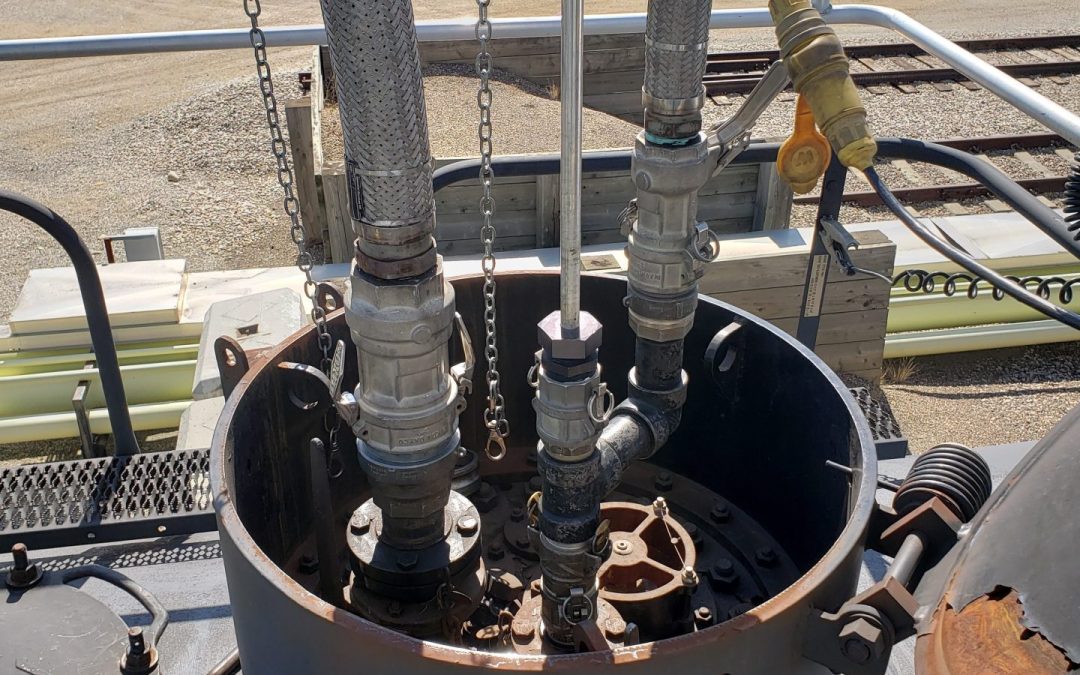
1. Vapour Capture When the loading arm connects to the tanker truck, a vapour recovery coupler or hose creates an airtight seal at the connection point. As product flows in, displaced vapours are drawn into the vapour return circuit rather than escaping through the fill opening.
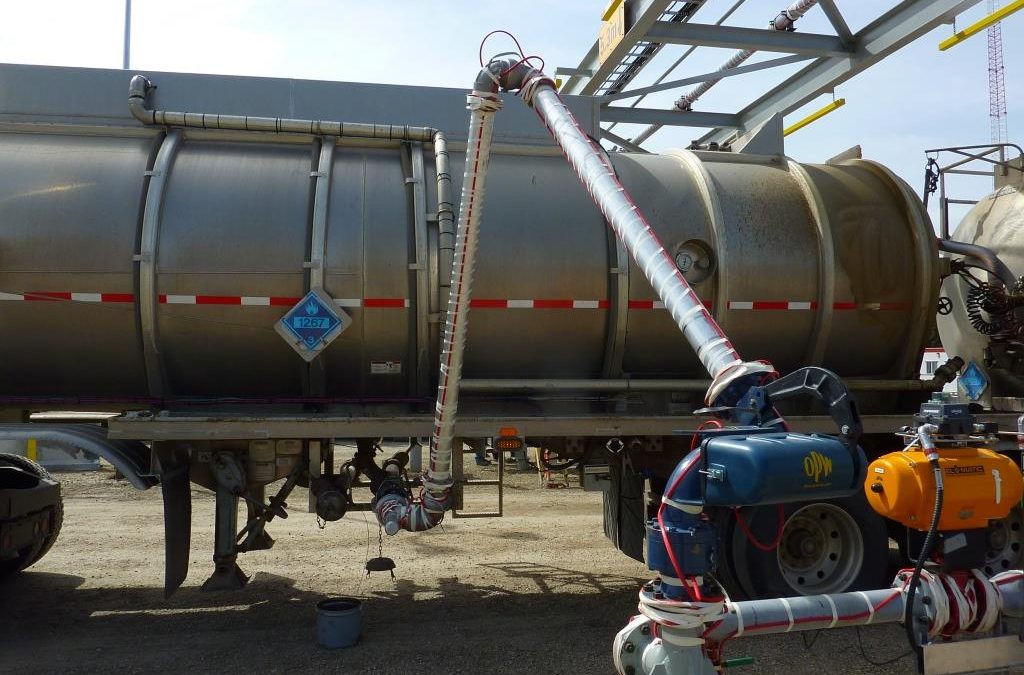
2. Vapour Transfer The captured vapours travel back through the loading arm’s vapour return line, either via a piggyback hose welded to the product arm, or through a dedicated second arm in a dual-arm configuration.
3. Vapour Recovery and Re-use At the receiving end, captured vapours are processed — either returned directly to the product storage tank, compressed and condensed back into liquid form, or fed into a vapour combustion or treatment unit.
The end result is a closed system: product flows in, vapours flow back, and nothing escapes to atmosphere during normal operation.
Benefits of Vapour Recovery Systems
More and more operations managers are adding vapour recovery systems to their tanker truck loading systems. Here’s why:
Environmental Impact
Hydrocarbon vapours released during fuel loading are composed primarily of volatile organic compounds (VOCs). Canada’s Canadian Environmental Protection Act (CEPA) establishes regulations on VOC emissions from fuel loading and storage operations, and provincial regulators in Alberta and BC have their own emissions requirements for petroleum handling facilities. Vapour recovery systems capable of capturing upwards of 95% of displaced vapours are required by these regulations.
Worker Safety
Displaced vapours can also be dangerous for workers. Without vapour recovery, operators can be exposed to a cloud of flammable vapour throughout the loading process, which creates a serious hazard.
A sealed vapour recovery system eliminates that exposure at the source. Workers on the loading platform aren’t breathing displaced product vapours and fire hazards are substantially lowered. For sites already managing fall protection, PPE requirements, and emergency shutoff systems, vapour recovery is an important piece of the overall site safety picture.
Operational Efficiency
The right vapour recovery system can also reduce time on the loading rack. At Northern Platforms, we use OPW’s Drylok™ Vapour Recovery Technology, which helps reduces the average time to connect a loading arm to railcar valves to 35–40 seconds. Operators simply turn a lever to connect; no pipe wrenches, cheater bars, or hammers required. That reduction in connection time adds up fast across a high-volume loading operation.
Vapour Recovery in Tanker Truck Loading and Unloading
At Northern Platforms, we use OPW Engineered Systems products to offer two primary vapour recovery loading arm configurations:
Piggyback Style Arm A simpler and more compact design where the vapour return line is welded directly to the product loading arm. The vapour hose runs parallel to the arm structure and connects at the dome hatch alongside the product drop tube. This configuration works well for lower-volume applications or sites where space at the loading rack is limited.
Dual Arm / Siamese Configuration The more commonly specified design for higher-volume or more demanding applications. This configuration uses two separate loading arms, one for product transfer and one for vapour recovery, joined together at the inner boom structure so they operate as a single, counterbalanced unit. The dual arm arrangement provides better flow capacity for the vapour return circuit and is the preferred setup for most fuel terminal and petroleum loading applications.
In addition to core system design, Northern Platforms offers a range of customization options to match the specific demands of your product and operating environment, including steam jacketing, heat tracing, insulation packages, and specialized couplings. Contact us with your site requirements, and we can recommend the right configuration for your operation.
Request a Quote Today
Interested in a new fuel tanker unloading system or looking to improve your existing operation? The Northern Platforms team is here to help. Contact us today with details about your project for a free quote. For businesses based in Alberta, we also offer free site visits and assessments.
Northern Platforms recently partnered with the Western Milk Pool to complete a fit-for-purpose truck loading platform for a unique dairy processing facility located in Blackfalds, Alberta. Learn more about this project below.
About the Dairy Innovation West Facility
Dairy Innovation West (DIW) is a state-of-the-art facility located in Alberta, built as a result of a major collaboration between several Western Canadian dairy organizations. Serving as a major hub for dairy farmers and companies, this processing plant uses advanced technology to remove water from raw milk, producing concentrated products. DIW is unique for its profound environmental impact: for every three to four trucks of raw milk from local farms, only one truck leaves the plant. This means fewer tanker trucks on the road and reduced overall emissions over time.
The Challenge: Efficient and Compliant Tanker Truck Top Access
Building a truck loading rack for this facility presented several challenges, including:
Loading requirements: Most dairy operations rely on gravity loading rather than pumped loading arms. This impacted how the truck loading platform would be built.
Fleet variability: The Dairy Innovation West Facility receives trucks from all over Western Canada. As such, their truck loading platform needed to accommodate a variety of truck sizes, lengths, and configurations.
Operator Safety: Like many tanker truck loading and unloading operations, workers needed safe access to the tops of tanker trucks, making consistent and reliable fall protection a top priority.
The Solution: A Fit-for-Purpose Truck Loading Platform
Through close collaboration with the Western Milk Pool and a comprehensive site assessment, Northern Platforms was able to build a comprehensive, fit-for-purpose truck loading rack. Unique features of this system included:
Sloped design: To guarantee smooth gravity unloading, the entire loading rack was designed with a slight incline.
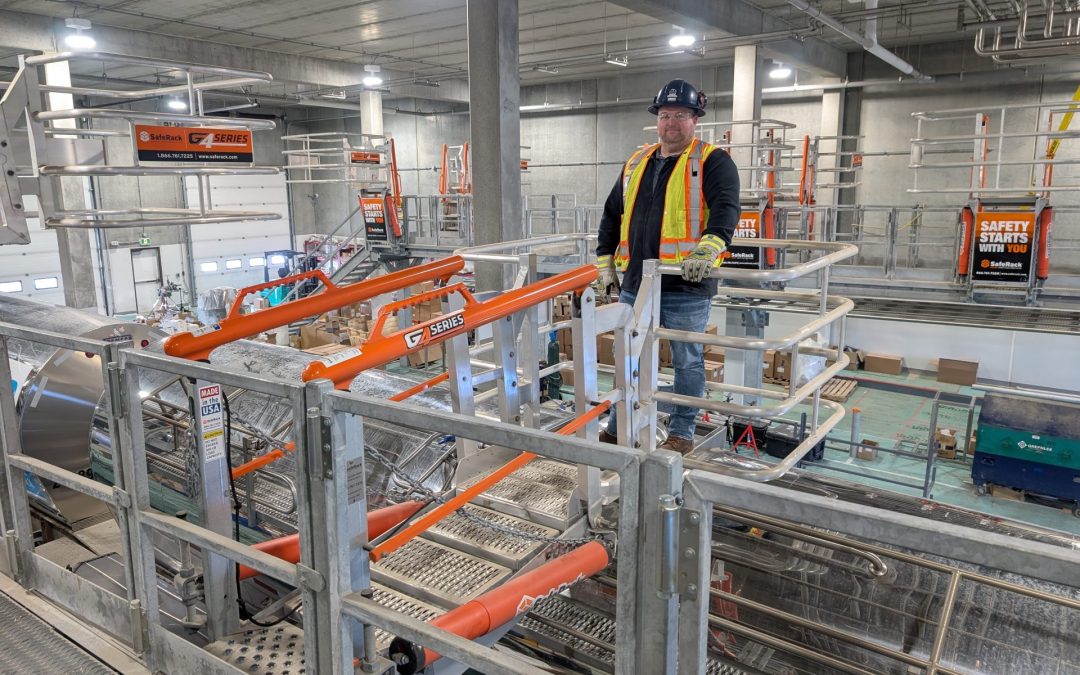
Articulating and tracking gangways: SafeRack’s self-adjusting stair gangways are a crucial component of this loading and unloading system. These gangways allow operators to safely align with tanker trucks, regardless of size, length, or configuration.
Dual-level truck loading platform: This allowed workers to access different connection points depending on trailer height and loading requirements. The result: improved operational efficiency.
Fall protection at every stage: Gangway safety cages and safety swing gates were integrated throughout the loading platform to ensure that operators were always protected. Thanks to high-quality products from YellowGate and SafeRack, these fall protection measures are integrated seamlessly into workflows and do not disrupt operational efficiency.
The Result: Final System Details
Once completed and commissioned, the DIW truck loading system included:
3 raised truck loading platforms
15 tracking gangways
Numerous gangway safety cages
Several YellowGate safety swing gates
Ultimately, Northern Platforms was able to design, deliver, and install a system that met DIW’s operational needs with ease. The result? A one-of-a-kind truck loading rack for a one-of-a-kind facility.
Why Choose Northern Platforms?
The Dairy Innovation West is simply one of many notable projects that the Northern Platforms team has completed. We’ve worked with notable oil and gas companies, local food processing facilities, national shipping operations, and more! Here’s why these companies consistently choose Northern Platforms for their fall protection systems:
Complete turnkey installation: From initial system design to final installation, Northern Platforms can take care of it all. Plus, thanks to our expansive inventory from industry-leading suppliers, we design systems that seamlessly integrate from top to bottom.
In-person consultations: Are you located in Alberta? Thanks to our central Leduc location, Northern Platforms can have a technician on site quickly to conduct thorough in-person assessments. Need a safe access solution installed fast? We’re the right team for you.
Dedicated inspection and maintenance programs: In addition to truck loading platform design and installation, we also offer comprehensive inspection and maintenance on key systems, including loading arms and gangways.
Request a Quote Today!
Interested in partnering with Northern Platforms on a future project? We bring over 20 years of experience to every job. When you work with us, we guarantee you’ll receive a safe access system that integrates seamlessly into your operation. Request a quote through our website or call our office today to get started.
If your fuel terminal or bulk storage facility is operating with aging equipment, 2026 may be the right time to modernize your fuel tanker unloading system. Wondering which upgrades to prioritize? In this blog post, we’ll break down why a fuel tanker unloading system is important and the key modern components to consider. Keep reading!
Why a New Fuel Tanker Unloading System Matters
Many facilities delay upgrades until something fails. However, reactive replacements often cost more and cause more disruption than planned capital improvements. Here’s why proactive upgrades make sense in 2026:
Increase efficiency: Your outdated system might be costing you thousands. While small misalignments or loading errors might not feel like a big deal in the moment, they can add up over time—resulting in major operational losses.
Stay code-compliant: Fuel loading and unloading operations are subject to strict regulations around fire risks, vapour recovery, and hazardous materials. Investing in a new system ensures all crucial standards are met.
Invest in worker safety: If your operators are working at height without adequate fall protection, this creates serious risks. Additionally, hoses or unsafe fuel transfer procedures expose workers to substantial hazards.
Key Components of a Modern Fuel Tanker Unloading System
Fuel tanker unloading systems are comprised of numerous parts. Depending on your situation, you might consider upgrading one element or overhauling the whole system.
Are you still relying on hoses for fuel transfer? If so, installing a load arm is one of the easiest and highest-value upgrades you can make in 2026.
While many small operations use hoses for their affordability, there are several risks to these systems, including:
Increased physical strain for operators
Slower connection times
Higher spill risk during handling
Premature wear and frequent replacement
Inconsistent alignment with tanker connections
On the other hand, modern fuel loading arms provide a safer, more controlled alternative. Designed with precision swivel joints and counterbalanced articulation, loading arms move smoothly into position and remain supported during transfer. This reduces operator fatigue, improves seal integrity, and speeds up truck turnaround.
In facilities that require top-of-truck access, whether for loading, inspection or sampling, properly engineered platforms and gangways are essential. Modern loading racks are designed to:
Resist corrosion through modular aluminum construction
Seamlessly incorporate guardrails and safety gates
Even in bottom-loading operations, platforms may still be required. If you have primarily been using mobile access units and want to invest in a permanent solution, the truck loading platform can be a beneficial upgrade.
If you are considering an elevated work surface, fall protection is a must. This could include gangway safety cages, handrails, self-closing industrial swing gates, and more.
Plan Your 2026 Project with Northern Platforms Today
Replacing elements of your fuel loading and unloading system can sound like a large undertaking, but it doesn’t have to be–especially when you partner with the right provider. Northern Platforms works with leading manufacturers to deliver turnkey unloading system solutions, including:
Site assessments and system audits
Engineered platform and gangway design
Loading arm supply and replacement
Fall protection integration
Professional installation
Ongoing preventative maintenance programs
By planning your 2026 upgrade now, you can align with capital budgeting cycles, minimize operational disruption, and avoid emergency replacements caused by equipment failure.
Truck loading platforms are the foundation of many operations across Alberta. But is your equipment really improving efficiency and safety on your site? We’ve previously discussed how the Northern Platforms team can assess your current system for overall efficiency and safety requirements. But did you know that we also offer preventative maintenance? Keep reading to learn more about this key service offering.
Truck Loading Platform Assessments
A robust truck loading platform system integrates multiple components working together to eliminate fall hazards and streamline operations:
Safe access equipment: Safety cages, gangways, and loading arms that provide secure pathways to elevated work areas
Engineered platforms: Rolling platforms and fixed truck loading platforms designed for specific trailer types and loading configurations
Site-fit controls: Solutions matched to your cargo properties, traffic flow, space constraints, and operational requirements
Preventative Maintenance for Truck Loading Platforms
In addition to our assessment services, the Northern Platforms team offers comprehensive preventative maintenance packages for all kinds of systems, including truck loading platforms. Most equipment manufacturers include scheduled maintenance requirements in their IOM manuals. These maintenance requirements are often a condition of warranty coverage for your truck loading platform. Our preventative maintenance programs include:
Visual inspection of welds, structural connections, and load-bearing components
Lubrication of pivot points, hinges, and moving assemblies
Hardware torque checks to ensure bolts and fasteners remain secure
Functionality testing of safety mechanisms, gates, and locking systems
Documentation of inspection findings and maintenance actions
The Key Benefit of Preventive Maintenance
Preventative maintenance matters because it catches problems when they’re small and inexpensive to fix—not when they’ve escalated into major component failures. For example, consider a loading arm with a minor seal leak. Caught early during a routine inspection by Northern Platforms, a seal kit replacement only costs $400 to $900 in parts and labour.
But if that leak is ignored, it can have a profound impact on your loading arm–often leading to swivel joint failures or other major issues. Replacing your loading arm can cost up to $10,000.
When you break it down like this, the answer is clear: preventative maintenance pays for itself 10 times over.
Why Choose Northern Platforms
Everything Northern Platforms supplies, we can install. This turnkey approach delivers several advantages over separating equipment procurement from installation and maintenance:
Warranty Protection: When the same company supplies and installs your truck loading platform, warranty coverage is iron-clad. There’s no ambiguity about whether installation errors voided manufacturer protections, and your installation will keep track of mandatory maintenance schedules.
Faster Timelines: A single point of contact means fewer scheduling delays, streamlined communication, and faster commissioning. In other words, your truck loading platform is operational sooner and serviced faster.
Correct Specification: Installation teams familiar with the equipment catch specification errors during site surveys, preventing costly rework or incompatible components.
One Stop Shop: Having Northern Platforms handle both supply and installation means accountability is crystal clear. If something needs attention, you know exactly who to call.
Contact Us Today!
Are you looking for a safety equipment supplier that does it all? Northern Platforms is the company for you. We bring decades of experience in installing and maintaining truck loading platforms across Western Canada, ensuring your systems perform safely, reliably, and cost-effectively for years to come. Call us to learn more and schedule your free site assessment today!
Truck loading platforms are the foundation of many operations across Alberta. But is your equipment really improving efficiency and safety on your site? We’ve previously discussed how the Northern Platforms team can assess your current system for overall efficiency and safety requirements. But did you know that we also offer preventative maintenance? Keep reading to learn more about this key service offering.
Truck Loading Platform Assessments
A robust truck loading platform system integrates multiple components working together to eliminate fall hazards and streamline operations:
Safe access equipment: Safety cages, gangways, and loading arms that provide secure pathways to elevated work areas
Engineered platforms: Rolling platforms and fixed truck loading platforms designed for specific trailer types and loading configurations
Site-fit controls: Solutions matched to your cargo properties, traffic flow, space constraints, and operational requirements
Preventative Maintenance for Truck Loading Platforms
In addition to our assessment services, the Northern Platforms team offers comprehensive preventative maintenance packages for all kinds of systems, including truck loading platforms. Most equipment manufacturers include scheduled maintenance requirements in their IOM manuals. These maintenance requirements are often a condition of warranty coverage for your truck loading platform. Our preventative maintenance programs include:
Visual inspection of welds, structural connections, and load-bearing components
Lubrication of pivot points, hinges, and moving assemblies
Hardware torque checks to ensure bolts and fasteners remain secure
Functionality testing of safety mechanisms, gates, and locking systems
Documentation of inspection findings and maintenance actions
The Key Benefit of Preventive Maintenance
Preventative maintenance matters because it catches problems when they’re small and inexpensive to fix—not when they’ve escalated into major component failures. For example, consider a loading arm with a minor seal leak. Caught early during a routine inspection by Northern Platforms, a seal kit replacement only costs $400 to $900 in parts and labour.
But if that leak is ignored, it can have a profound impact on your loading arm–often leading to swivel joint failures or other major issues. Replacing your loading arm can cost up to $10,000.
When you break it down like this, the answer is clear: preventative maintenance pays for itself 10 times over.
Why Choose Northern Platforms
Everything Northern Platforms supplies, we can install. This turnkey approach delivers several advantages over separating equipment procurement from installation and maintenance:
Warranty Protection: When the same company supplies and installs your truck loading platform, warranty coverage is iron-clad. There’s no ambiguity about whether installation errors voided manufacturer protections, and your installation will keep track of mandatory maintenance schedules.
Faster Timelines: A single point of contact means fewer scheduling delays, streamlined communication, and faster commissioning. In other words, your truck loading platform is operational sooner and serviced faster.
Correct Specification: Installation teams familiar with the equipment catch specification errors during site surveys, preventing costly rework or incompatible components.
One Stop Shop: Having Northern Platforms handle both supply and installation means accountability is crystal clear. If something needs attention, you know exactly who to call.
Contact Us Today!
Are you looking for a safety equipment supplier that does it all? Northern Platforms is the company for you. We bring decades of experience in installing and maintaining truck loading platforms across Western Canada, ensuring your systems perform safely, reliably, and cost-effectively for years to come. Call us to learn more and schedule your free site assessment today!
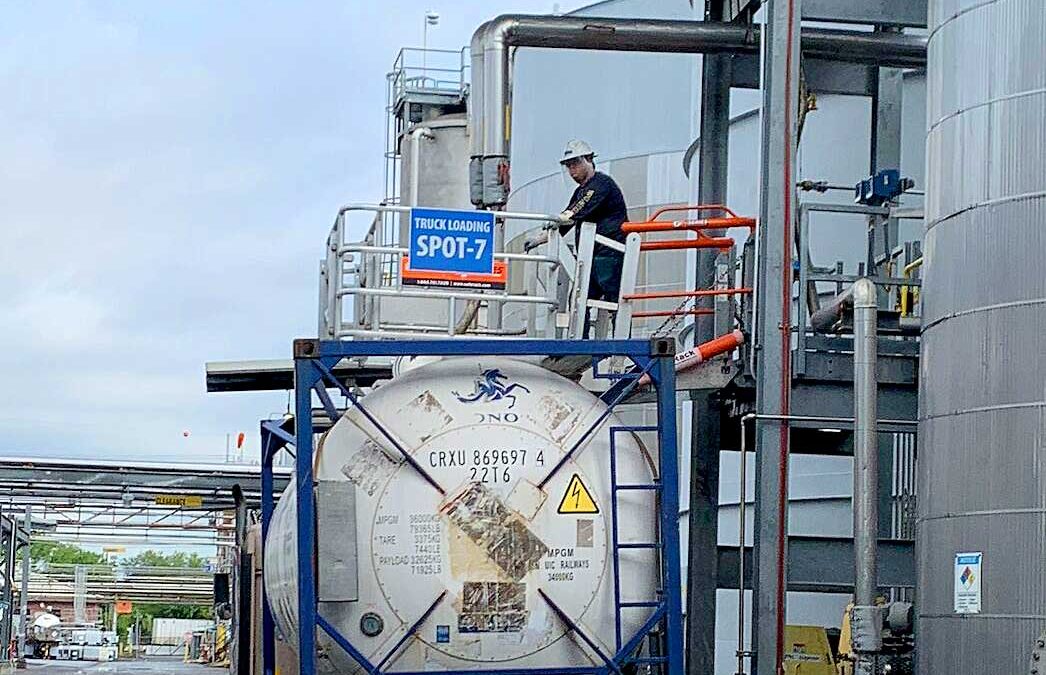
Articulating stairs, or self-adjusting gangways, bridge loading platforms to tanker trucks and railcars. These systems are essential for operations around Alberta and BC, especially when handling mixed fleets or frequent vehicle mis-spotting. However, selecting the right system isn’t simply about choosing between SAS, SFR, and FRT configurations. A successful installation requires careful measurement, specification validation, and alignment with your site’s operational realities. This buyer’s guide walks you through the process of selecting a gangway, from initial site assessment through final specifications. Keep reading to learn more!
How to Choose the Right Articulating Stairs: Step-by-Step
Many existing operations would benefit from adding articulating stairs to their site. However, choosing the right model can be tough–especially if you don’t know what to watch out for. Let’s walk through it, step by step.
Step 1: Take Accurate Measurements
Accurate measurements are the foundation of your system. Before you start shopping, make sure you have these details on hand:
Lowest hatch height
Highest hatch height
Horizontal reach (especially if you experience frequent mis-spotting)
Size limitations of existing platforms
Step 2: Assess Your Operations
Your site’s daily realities also play a crucial role in finding the right system. We recommend documenting the vehicles that consistently use your loading bay:
Truck types: Box trucks, tankers, hoppers—each trailer type has different hatch heights and loading profiles.
Railcar types: Covered hoppers (which need FRT-style telescoping access), liquid tankers, and flat cars also need different accommodations.
Height consistency: Do all vehicles in a category arrive at roughly the same height, or is there significant variation between loads?
If heights are consistent, a Simple Flat Ramp (SFR) is cost-effective and low-maintenance. If heights vary by load, load condition, or suspension state, a Self-Adjusting Stair (SAS) with self-levelling is worth the investment.
Additionally, you should track how often vehicles park off-center or at the wrong hatch locations. Monitor frequency, re-spotting time, and any associated safety risks. If mis-spotting is rare and re-spotting is quick, opt for a stationary gangway. If it’s frequent (more than once per shift), a track-mounted gangway can help significantly increase the efficiency of your site.
Step 3: Decide on Key Features & Specifications
Now that you have a clear sense of your site’s size and needs, you can finalize additional features of your articulating stair system, including:
Gangway width and load ratings
Safety cage design
Power and control systems
Materials
Compatibility with existing systems, including loading arms.
Questions to Ask Before Buying
In order to find the ideal system for your site, ask yourself these questions:
What is the height range of vehicles at your loading bays? Do these heights vary? Measure from the platform deck to typical hatch heights for both trucks and railcars. Include minimum and maximum heights to ensure adequate adjustment range.
How frequently do vehicles mis-spot? If re-positioning happens more often than not, track-mounted or FRT configurations will save significant time and frustration.
What are your platform space constraints? Existing platforms may limit gangway width, cage depth, or track length. Northern Platforms can engineer solutions to fit tight spaces.
Do you need multiple gangways? High-volume facilities may require multiple articulating stair systems. Northern Platforms can design coordinated installations for maximum efficiency.
How to Choose the Right Articulating Stairs
Once you’ve answered all the questions above, you should have a clear understanding of your top priorities. Use these insights to make an informed decision about your articulating stairs. Still not sure which option is right for you? Use this table to help make your decision:
Your Situation
Recommended System
Why It Works
Mixed truck heights, frequent vehicle changes
SAS (Self-Adjusting Stairs)
Self-levels to any height; stairs provide a solid foundation
Liquid railcar loading with mis-spotting issues
FRT (Flat Ramp Telescoping)
Can reach offset hatches; eliminates re-spots
Hopper cars or trucks with consistent heights
SFR (Simple Flat Ramp)
Simple, stable, low-maintenance solution for predictable applications
Multiple vehicle types and unpredictable positioning
SAS with track mounting
Combines height adjustment with a flexible track
LPG, asphalt, or chemical loading requiring quick access
SAS with power assist
Fast deployment and retraction; reduces manual handling
Why Choose Northern Platforms
Northern Platforms is Western Canada’s leading supplier of safe access solutions, including SafeRack articulating stairs and gangway systems. We offer:
Expert site assessment: Our team conducts thorough measurements and site evaluations, ensuring specifications match your operational realities.
Turnkey installation: From design through final safety testing, we handle the complete build and integration process.
Preventive maintenance and support: Our maintenance contracts minimize downtime and extend system lifespan, critical for high-cycle operations and harsh Western Canadian conditions.
Local presence: Based in Alberta, we can be on your site within hours.
Contact Us Today!
Ready to get started? Northern Platforms is here to help. Call our office or request a quote through our website now.

















![The Complete Buyer’s Guide to Articulating Stairs [2025]](https://northernplatformsltd.ca/wp-content/uploads/2025/05/self-adjusting-stairs-and-gangway-canada.jpg)