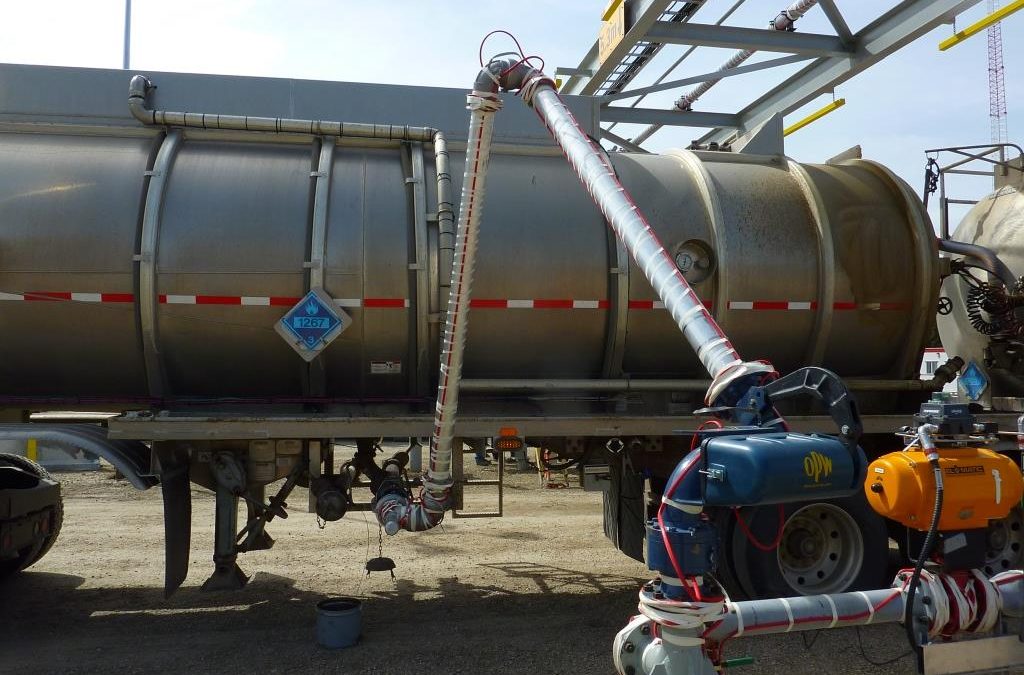
Does your operation have the equipment it needs? If not, Northern Platforms is here to help. As a leading Western Canada supplier of SafeRack and OPW products, our team specializes in building railcar loading and unloading systems that protect workers and maintain throughput at the same time. Keep reading to learn more about the different types of railcar loading arms and platforms that we offer, broken down by application.
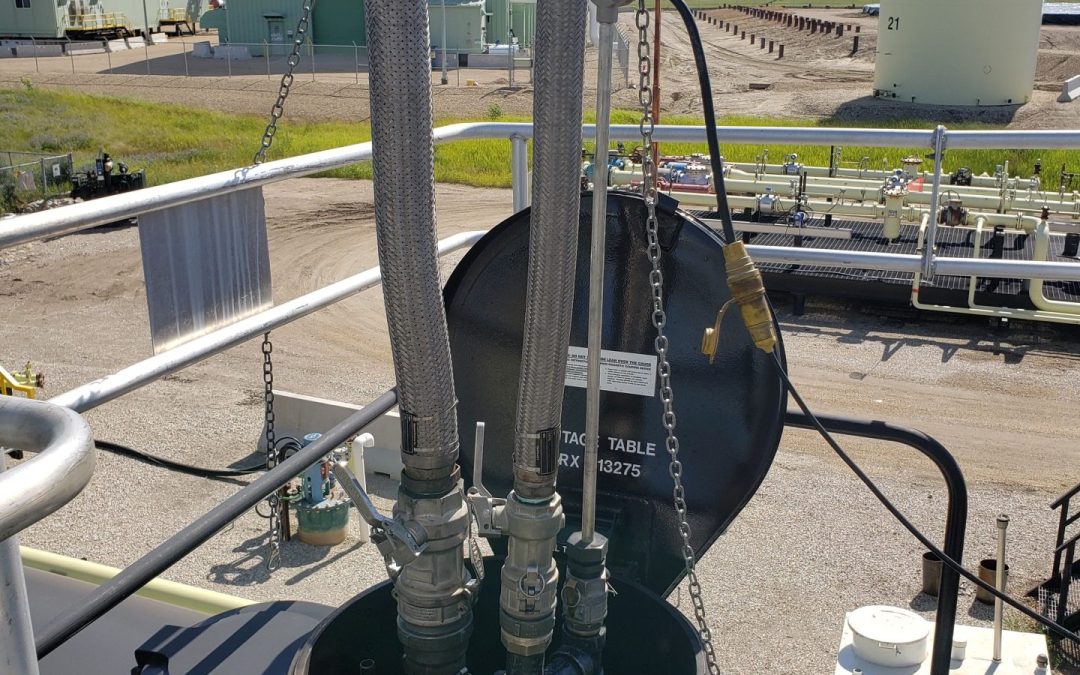
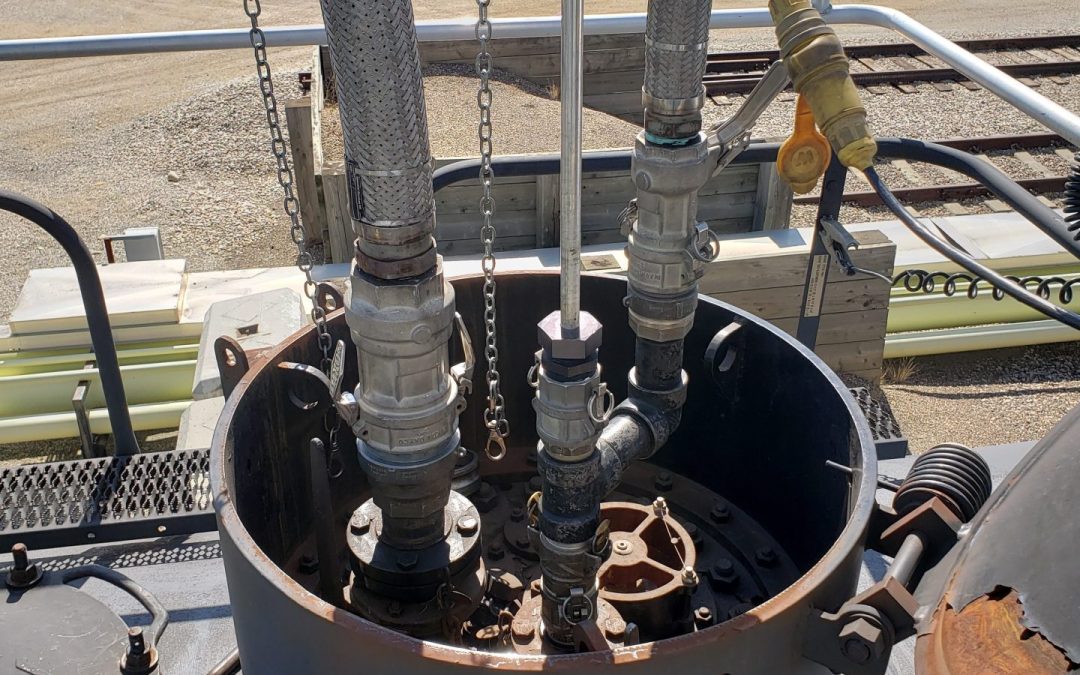
Common equipment considerations: Loading arm, grounding/bonding, vapour management where required, overfill protection, spill containment, gangway or access platform, fall protection, heated or jacketed components
Railcar Loading Systems for Refined Fuels (Gasoline, Diesel, Jet Fuel)
Refined fuels such as gasoline, diesel, and jet fuel require loading systems that support fast, controlled, and clean transfer. Because these products are flammable or combustible, the system must be designed to reduce ignition risk, control vapours where required, prevent spills, and keep workers safely positioned during loading. Key design considerations for refined fuel loading systems include:
Type of railcar: General service tank car for flammable or combustible liquids
Type of loading: Top or bottom loading; gasoline is commonly handled with closed loading and vapour recovery (where required)
Common equipment considerations: Loading arm, dry disconnect or tight-fill couplers, vapour recovery arm or line, grounding/bonding, overfill protection, emergency shutoff system, gangway or access platform, fall protection
Railcar Loading Systems for Natural Gas/LPG (Propane, Butane)
Liquified petroleum gas (LPG) is transported in pressurized tank cars and presents a very different risk profile than crude bitumen or refined fuels. Loading systems must maintain proper pressure during loading and unloading. Additionally, platforms and racks must meet strict industry standards (NFPA 53). Key considerations for these loading systems include:
Common equipment considerations: Pressure-rated loading arm, secure couplers, emergency shutoff valves, breakaway protection, vapour return or equalization line where required, gas detection, gangway or access platform, fall protection
Railcar Loading Systems for Ammonia (NH3)
Railcar loading systems for LPG and ammonia share several characteristics. Both products are transported under pressure, both require secure connections, and both rely on closed transfer systems to maintain containment. However, ammonia introduces an additional layer of risk: it is highly hazardous to workers if released. As a result, ammonia loading systems must be designed with particular attention to leak prevention, emergency shutoff, vapour or vent management, and safe operator access. Key design considerations for ammonia loading systems include:
Common equipment considerations: Loading arm, emergency shutoff system, secure couplers, vapour/vent management, gas detection, eyewash and safety shower access, gangway or access platform, fall protection
Railcar Loading Systems for Molten Sulphur
Molten sulphur is one of the more complex bulk liquid loading applications because the product must be kept hot enough to remain in a liquid state. If the product cools during transfer, it can begin to solidify inside the loading arm, piping, valves, or railcar connection point. Details about molten sulphur loading systems:
Type of railcar: Insulated tank car designed for molten sulphur service
Type of loading: Heated top loading through the railcar hatch
Key loading concern: Maintaining product temperature, preventing solidification, managing H₂S exposure, avoiding spills or residue, and protecting operators from burns
Common equipment considerations: Steam-jacketed or heat-traced loading arm, heated piping, vapour management or venting provisions, spill control, gangway or access platform, safety cage, fall protection, eyewash and safety shower access
Crude, LPG, refined fuels, ammonia, and molten sulphur all move by rail, but they all require different infrastructure. Each product has its own requirements for tank car fittings, loading arms, vapour control, fall protection, safety systems, and more.
As a full-service provider, Northern Platforms specializes in designing and installing complete turn-key railcar loading solutions for crude oil, refined fuels, propane, butane, ammonia, molten sulphur, and more. We have nearly 30 years of experience and have worked with some of the largest industrial operations in Western Canada.
Contact Us for a Free Quote
Ready to get started? Contact our team with your project details today.
Is your specific application missing from this list? We’d still love to hear from you. Request a quote through our website or call our office to get started on a turnkey railcar loading platform customized specifically for your operation.
Fuel loading and unloading can create serious safety, environmental, and operational challenges. From flammable vapours to product spills, even a routine transfer can become risky, especially if you don’t have the right equipment.
That’s why more and more site managers are investing in proper safety systems, such as loading arms with integrated vapour recovery. These systems help capture displaced vapours during loading or unloading, reducing emissions and helping protect operators, equipment, and the environment.
A vapour recovery system is a closed-loop configuration designed to capture hydrocarbon vapours that are displaced or released during the transfer of volatile liquids.
These systems are used across a wide range of industries, from petroleum terminals and chemical plants to food and beverage facilities and gas stations. In every application, the goal is the same: keep Volatile Organic Compounds (VOCs) out of the air.
How Do Vapour Recovery Systems Work?
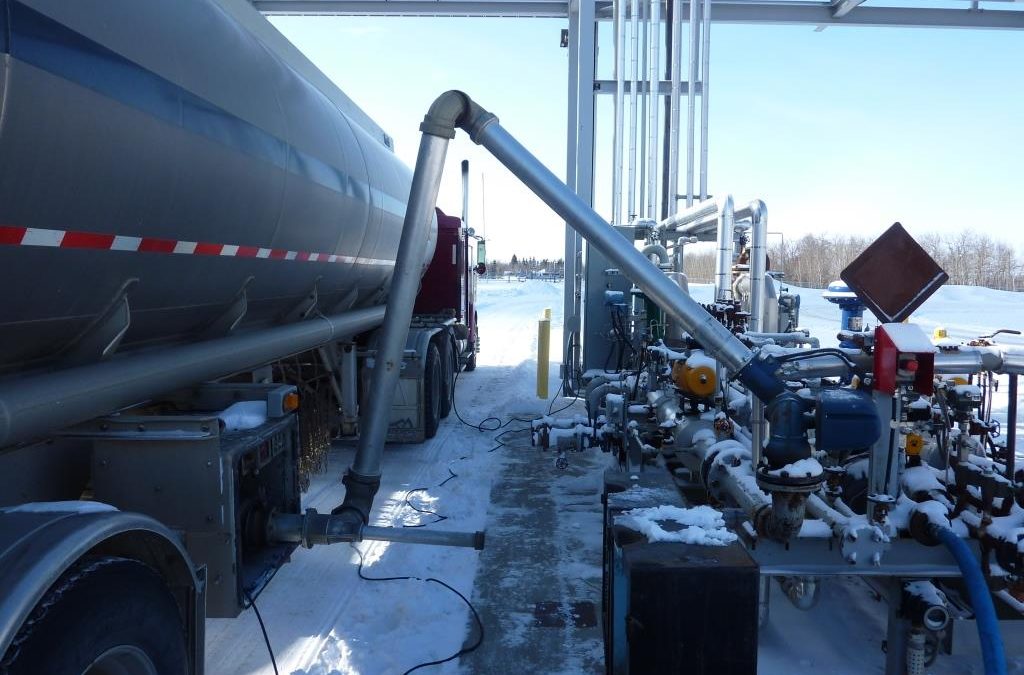
In the context of tanker truck loading and unloading, the basic principles of vapour recovery systems are simple. The process unfolds in three stages:
1. Vapour Capture When the loading arm connects to the tanker truck, a vapour recovery coupler or hose creates an airtight seal at the connection point. As product flows in, displaced vapours are drawn into the vapour return circuit rather than escaping through the fill opening.
2. Vapour Transfer The captured vapours travel back through the loading arm’s vapour return line, either via a piggyback hose welded to the product arm, or through a dedicated second arm in a dual-arm configuration.
3. Vapour Recovery and Re-use At the receiving end, captured vapours are processed — either returned directly to the product storage tank, compressed and condensed back into liquid form, or fed into a vapour combustion or treatment unit.
The end result is a closed system: product flows in, vapours flow back, and nothing escapes to atmosphere during normal operation.
Benefits of Vapour Recovery Systems
More and more operations managers are adding vapour recovery systems to their tanker truck loading systems. Here’s why:
Environmental Impact
Hydrocarbon vapours released during fuel loading are composed primarily of volatile organic compounds (VOCs). Canada’s Canadian Environmental Protection Act (CEPA) establishes regulations on VOC emissions from fuel loading and storage operations, and provincial regulators in Alberta and BC have their own emissions requirements for petroleum handling facilities. Vapour recovery systems capable of capturing upwards of 95% of displaced vapours are required by these regulations.
Worker Safety
Displaced vapours can also be dangerous for workers. Without vapour recovery, operators can be exposed to a cloud of flammable vapour throughout the loading process, which creates a serious hazard.
A sealed vapour recovery system eliminates that exposure at the source. Workers on the loading platform aren’t breathing displaced product vapours and fire hazards are substantially lowered. For sites already managing fall protection, PPE requirements, and emergency shutoff systems, vapour recovery is an important piece of the overall site safety picture.
Operational Efficiency
The right vapour recovery system can also reduce time on the loading rack. At Northern Platforms, we use OPW’s Drylok™ Vapour Recovery Technology, which helps reduces the average time to connect a loading arm to railcar valves to 35–40 seconds. Operators simply turn a lever to connect; no pipe wrenches, cheater bars, or hammers required. That reduction in connection time adds up fast across a high-volume loading operation.
Vapour Recovery in Tanker Truck Loading and Unloading
At Northern Platforms, we use OPW Engineered Systems products to offer two primary vapour recovery loading arm configurations:
Piggyback Style Arm A simpler and more compact design where the vapour return line is welded directly to the product loading arm. The vapour hose runs parallel to the arm structure and connects at the dome hatch alongside the product drop tube. This configuration works well for lower-volume applications or sites where space at the loading rack is limited.
Dual Arm / Siamese Configuration The more commonly specified design for higher-volume or more demanding applications. This configuration uses two separate loading arms, one for product transfer and one for vapour recovery, joined together at the inner boom structure so they operate as a single, counterbalanced unit. The dual arm arrangement provides better flow capacity for the vapour return circuit and is the preferred setup for most fuel terminal and petroleum loading applications.
In addition to core system design, Northern Platforms offers a range of customization options to match the specific demands of your product and operating environment, including steam jacketing, heat tracing, insulation packages, and specialized couplings. Contact us with your site requirements, and we can recommend the right configuration for your operation.
Request a Quote Today
Interested in a new fuel tanker unloading system or looking to improve your existing operation? The Northern Platforms team is here to help. Contact us today with details about your project for a free quote. For businesses based in Alberta, we also offer free site visits and assessments.
When it comes to fuel tanker unloading equipment, dry disconnects have become essential for modern loading and unloading operations. These systems automatically shut as soon as your hose or loading arm is disconnected, which helps prevent spills and increases the overall safety of your site. At Northern Platforms, we specialize in turnkey fuel tanker loading and unloading equipment that integrates seamlessly into your site. In this guide, we’ll walk you through how dry disconnects work, the key equipment you need, and why they are a smart investment for your operation.
What are Dry Disconnects?
Dry disconnect couplings automatically shut off product flow when disconnected, helping to eliminate even the smallest spills. Unlike traditional couplings that release residual product into containment areas, dry disconnects retain any remaining fuel inside the connector itself. This means:
No fuel spills onto the ground
No product drips onto equipment or personnel
No vapour releases during disconnection
No cleanup required between unloading cycles
The retained product typically remains in the coupler and is removed during the next connection, or it can be drained safely during maintenance.
Dry Disconnect Options Available at Northern Platforms
Northern Platforms stocks two proven dry disconnect solutions for fuel tanker unloading:
OPW Kamvalok Dry Disconnect
The OPW Kamvalok is an industry-leading dry disconnect system designed specifically for critical and high-value products. Key features include:
Locking handle maintains position to prevent unintended coupler opening or closing
Automatic closure in both directions—both coupler and adapter shut off simultaneously
Optimized for low pressure drop and maximum flow rates
Available in 1½”, 2″, and 3″ sizes to match your system requirements
Material choices: Aluminum or 316 stainless steel construction
Best for: High-volume operations, critical products, facilities requiring maximum reliability and minimal maintenance
Drylok Dry Disconnect Coupler/Adaptor
The Drylok system offers an alternative dry disconnect solution engineered for dependable performance in demanding fuel tanker unloading environments. Key features include:
Designed for optimal flow and pressure performance
Durable construction suitable for high-frequency cycling
Compatible with standard tanker receptacles
Available in multiple sizes and pressure ratings
Best for: Standard fuel tanker operations, retrofit applications, cost-conscious facilities seeking proven reliability
Why Choose Northern Platforms
At Northern Platforms, we’ll partner with you from initial assessment through installation, commissioning, and ongoing support. The result? Fuel tanker unloading equipment that seamlessly integrates into your operation. Here’s why Western Canadian companies choose us:
Single-source accountability: One partner for loading arms, vapour recovery hardware, gangways, and loading platforms, and more.
Proven equipment: We work with industry-leading manufacturers like Emco Wheaton, OPW, and SafeRack.
Custom solutions: Systems designed for your specific fleet, site layout, and operational requirements.
Installation and training: Complete commissioning services and operator training for long-term success
Maintenance support: Ongoing service to keep your system running at peak efficiency
Our experience across diverse industries—from petroleum terminals to chemical facilities—means we understand the unique challenges of different loading applications and can design the right solution for your operation.
Call Us Now!
Ready to invest in fuel tanker unloading equipment? Contact Northern Platforms to schedule your site visit today!
Overflow spills, static fires…these are just some of the risks of unsafe fuel tanker loading systems. But did you know that you can easily prevent these dangers by investing in the proper equipment? In this guide, we’ll explore practical solutions to common fuel tanker loading mistakes. With a couple of simple products from Northern Platforms, your oil and gas operation will be safer and more efficient.
1. Overflow Spills
Depending on the scope, oil and gas spills can range from inconvenient to catastrophic. Even when operators are careful, a loading arm or hose can be accidentally dislodged, causing environmental damage and worker harm in seconds.
The Solution: Dry Disconnects
OPW’s dry disconnect couplings eliminate residual product spills by automatically sealing both sides of the connection. By using one simple solution, operators don’t have to worry about shutting valves or dealing with unions. Instead, you can ensure complete spill protection by upgrading to these couplings on all your loading arms.
2. Static Ignition Fires
Operators must be careful of static buildup when loading a fuel tanker, which can cause dangerous fires. One of the main ways static builds up is through turbulence and agitation inside the fuel tank during loading, especially when using traditional top-loading methods. These systems often cause splashing and sloshing, quickly increasing the amount of static electricity generated.
The Solution: Bottom Loading Arms
The best way to minimize liquid agitation and turbulence is to use bottom-loading arms. These fuel tanker loading systems are closer to the ground and help introduce fuel into the tank with minimal agitation.
3. Falls From Height
Falls are a leading cause of injury at loading sites, especially when workers need to access the tops of trucks or railcars for venting, inspection, or loading. Most Canadian regulations require fall protection for anyone working at heights of 4 meters or more or where a fall could cause serious injury. Icy surfaces, unstable work platforms, and other unsafe operations can turn routine loading tasks into serious fall hazards, leading to costly injuries and downtime.
The Solution: Fall Protection Systems
Safety swing gates, guardrails, gangways, and safety cages are all easy fall protection solutions that protect your workers from falling hazards. These passive fall protection systems are always in place, meaning your workers will always be protected even when distracted or busy. Plus, when you design a system with Northern Platforms, we’ll seamlessly integrate these fall protection products into your loading operations, minimizing disruption.
4. Equipment Failure Leaks
Does your site rely on hoses for loading and unloading your fuel tankers? While these systems have been trusted for many years, they have some significant drawbacks. Hoses can twist, break down, and leak over time, significantly slowing your operations. In the worst-case scenario, you might be on the hook for costly clean-ups or equipment replacements.
The Solution: Loading Arms
Are you tired of lugging hoses around your site? It might be time to invest in a loading arm. With high-quality fabrication and top-notch engineering, loading arms ensure a tight and safe connection throughout the transfer cycle. Available in truck, rail, and specialty configurations–with options for vapor recovery–these arms deliver leak-proof performance, simplify maintenance, and protect both workers and the environment.
Choose Northern Platforms for Comprehensive Fuel Tanker Loading Systems
While mistakes happen, there are still easy ways to prevent common fuel loading accidents. With a couple of products from Northern Platforms, you can take a proactive approach to protecting against fuel spills, static fires, and more. Ready to upgrade your safety protocols? Contact the Northern Platforms team today! With just one site assessment, our experts will analyze your workflow, recommend solutions, and improve your site. Partner with our team by calling us today!
Efficient, safe, and effective–bottom loading arms are a worthwhile addition to your loading system.
Northern Platforms offers a wide selection of trusted and ergonomic bottom-loading arms from established brands like OPW Engineered Systems and EMCO Wheaton. Ready to integrate bottom-loading arms into your operation? Let’s go over some key things to consider before you make this purchase.
What are Bottom Loading Arms?
As the name suggests, bottom loading arms are used when loading from the bottom and should be paired with trucks or railcars that accommodate a bottom loading configuration.
Bottom-loading arms are a safer and more efficient alternative to hoses. Read more about the difference between hoses and loading arms in our previous post: “Hoses vs Loading Arms: Which Works Best?”
Here are some more advantages of bottom-loading arms:
Operator safety: Workers remain on the ground, which reduces fall risks.
Faster loading: Quicker connections and the ability to load multiple compartments at the same time.
Less turbulence: The process generates less turbulence in the tank, which helps lower static generation.
Less vapours: Fewer vapours are released, which helps lessen the environmental impact.
More cost-effective: Typically, these systems are easier and cheaper to build than top-loading arms.
Key Considerations for Choosing Bottom Loading Arms
There are several factors to consider when choosing your bottom loading arm. It is essential to consider your existing operation to ensure that you can find the right equipment for you.
If you aren’t sure where to start, contact Northern Platforms, and we will be happy to help you find a loading configuration that integrates seamlessly into your existing operation.
What type of fluid are you handling?
First, it is important to ensure that the materials of your bottom loading arm are compatible with the fluid you are moving.
For example, if you are moving corrosive substances, you will want to ensure that your bottom loading arms are made of a corrosion-resistant material like stainless steel. However, if you are moving non-hazardous materials, you could use carbon steel, which is often cheaper and lighter.
What type of vehicle are you loading?
Whether you are loading a tanker truck or a railcar, the type of vehicle you are loading affects the design of your bottom loading arms. Keep in mind that different vehicles have specific connection points and height requirements. Make sure to choose an arm that can easily reach and securely connect to your vehicle to avoid leaks and operational issues.
What is your loading environment like?
Your loading environment can significantly impact the type of loading arm you need. Consider: is there existing equipment that would interfere with your loading arm? Do you need an operation that is suitable for outdoor use? Are there other environmental factors you should consider, like extreme temperatures or exposure to hazardous chemicals?
What additional safety equipment do you need?
While bottom loading arms are a good start, there are always ways to make your site safer and more efficient. At Northern Platforms, we offer extra safety equipment to help ensure that your loading system operates smoothly and safely.
While bottom loading arms can improve the efficiency and safety of your loading and unloading operations, working with an experienced team is essential to ensure this new addition integrates seamlessly into your existing operation. That’s where Northern Platforms comes in. We’ll consider your existing equipment and ensure your new loading arm fits perfectly.
With over 50 years of industry experience, Northern Platforms is always happy to send one of our experts to your site. We’ll conduct a thorough evaluation every time to help guarantee a perfect match. Contact us today to find the loading arm that is right for you.
When it comes to loading a fuel tanker, proper loading equipment is essential. By using the right equipment, you can maximize workplace efficiency, as well as significantly reduce the risk of accidents and spills. At Northern Platforms, we are proud to be industry-leading providers of renowned safety brands like SafeRack, Emco Wheaton, OPW, and more.
Whether you need loading arms, loading platforms, gangways, safety cages, or hoses, we’ve got you covered! Keep reading to learn more about our top fuel tanker loading equipment.
Loading Arms
The safest and most efficient piece of fuel tanker loading equipment is a loading arm. These loading systems are designed to seamlessly and securely connect the fuel tanker to the storage tank. Loading arms can also include several safety features, such as swivel joints, automatic shut-off valves, and more. By using loading arms, companies can minimize the risks associated with manual connections and enhance operational safety.
Are looking to integrate a loading arm into your existing operation? Contact us today to speak with one of our experienced sales team members and learn more about how Northern Platforms can help.
Hoses and Couplings
If your operation isn’t compatible with a loading arm, then you will have to use a different type of fuel tanker loading equipment, such as hoses and couplings.
At Northern Platforms, we offer a complete selection of custom hose assemblies supplied to meet your specific requirements and individual needs. We stock a variety of hose sizes in-house, ranging from ¼-inch to 6-inch. Plus, larger sizes are available upon request.
We offer three different types of hoses:
Composite Hoses: A unique type of hose composed of many layers of special materials/films held together between an inner and outer wire. Composite hoses offer flexibility, safety, and chemical resistance. They are ideal for use in most petroleum, oil, chemical, and LPG transfer applications.
Metal Braided Hoses: Northern Platforms offers a wide variety of specialized products, such as stainless steel braids, metal hoses, and flexible hose assemblies.
Industrial Hoses: Northern Platforms is proud to offer a full line of industrial hoses, including rubber, PTFE, air/water, steam, and suction/discharge hoses
In addition to hoses, Northern Platforms offers several fuel tanker loading accessories, including:
Hiltap fittings, also known as low/high temperature & pressure couplings
Hose handlers and hose retriever components
Sight flow indicators
Swivel joints
Hose and coupling restraints, such as velcro straps and whip checks
Fuel Tanker Loading Equipment, Tested
Did you know that Northern Platforms offers in-house hose testing and recertification up to 1200 PSI? Each hose comes with a chart showing the duration of the test and the pressure it was tested to.
Additionally, we can also help you test your hoses to ensure they are in good working condition. To make sure your hoses meet safety standards, Northern Platforms offers hose recertification testing. We’ll test your hoses, and if they pass, they’ll be recertified with a new ID tag. If they don’t, we can tag them and recycle them for you.
Your Source for Fuel Tanker Loading Equipment
No matter what your operation looks like, Northern Platforms has all your safe access and fuel tanker loading equipment needs covered. We are committed to providing our customers with superior quality products, on-time delivery, and outstanding service. Contact us today to learn more about how you can make your fuel tanker loading system safer and more efficient.