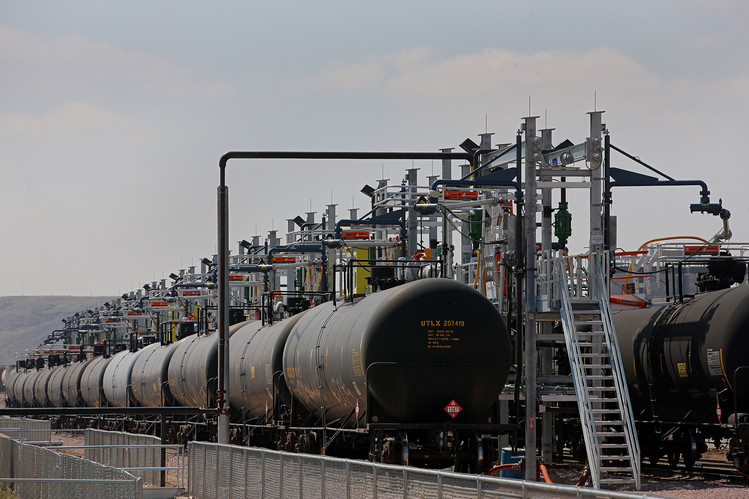
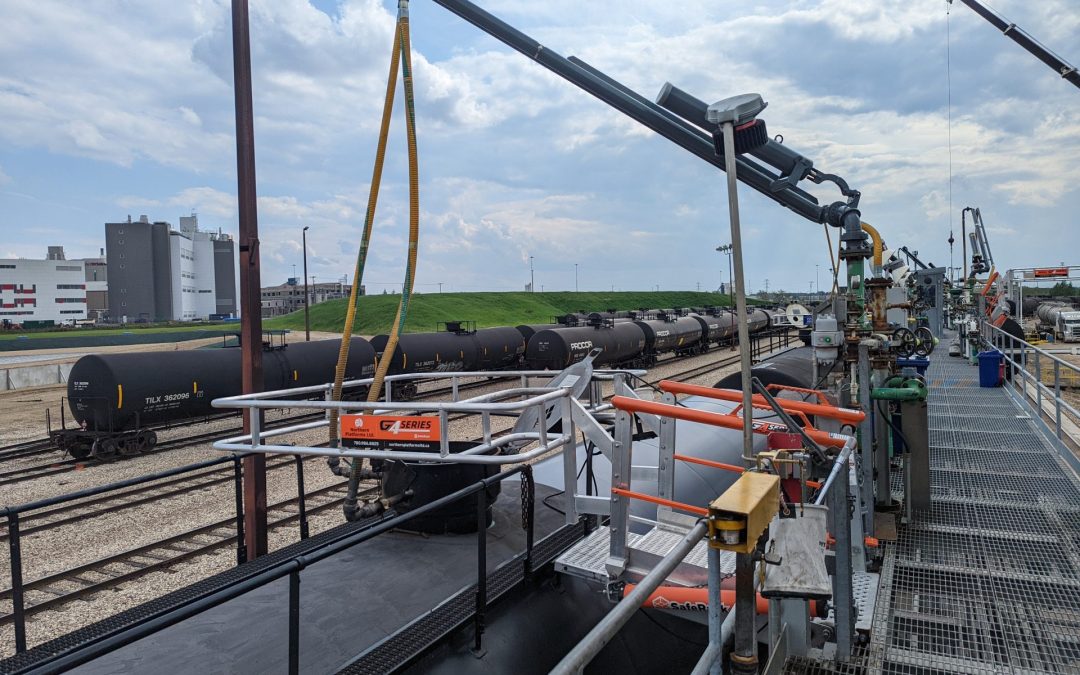
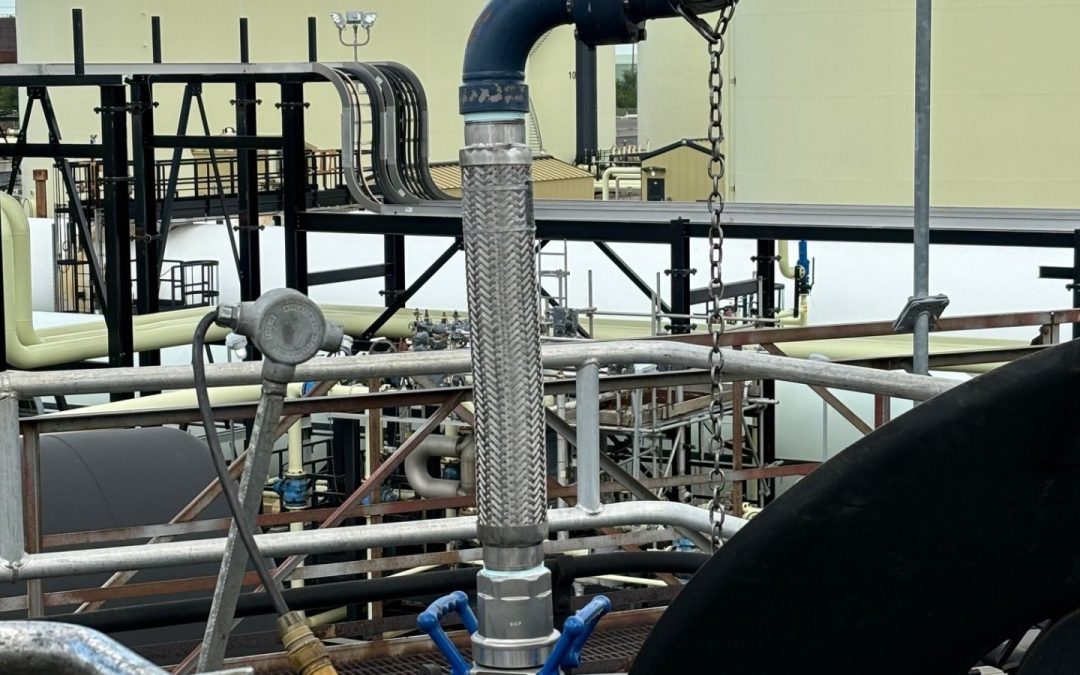
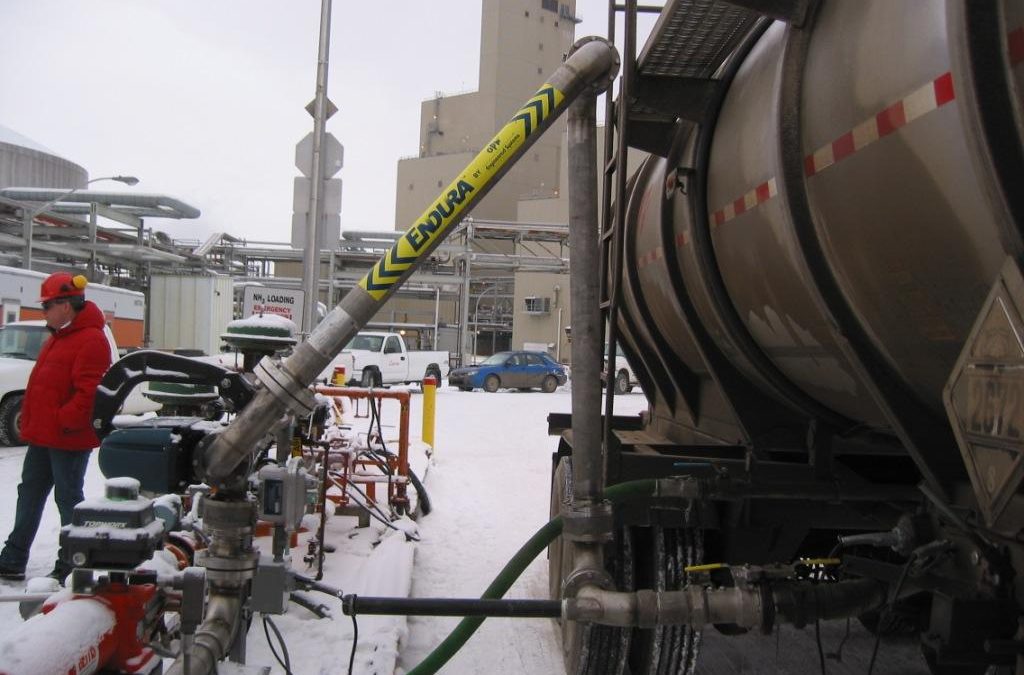
Does your operation have the equipment it needs? If not, Northern Platforms is here to help. As a leading Western Canada supplier of SafeRack and OPW products, our team specializes in building railcar loading and unloading systems that protect workers and maintain throughput at the same time. Keep reading to learn more about the different types of railcar loading arms and platforms that we offer, broken down by application.
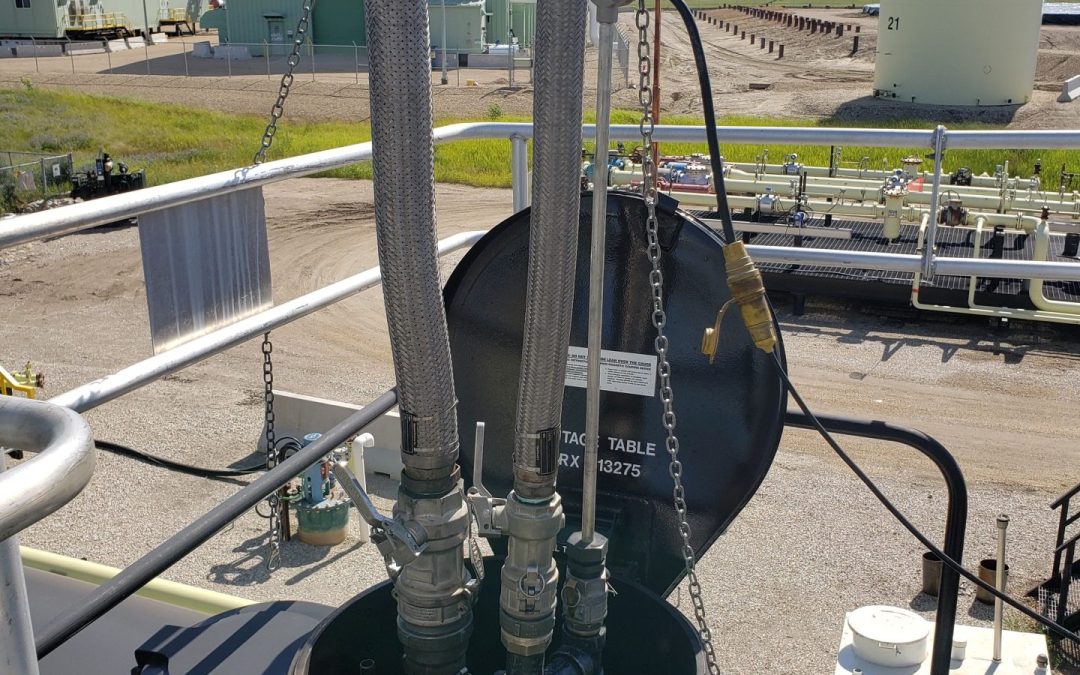
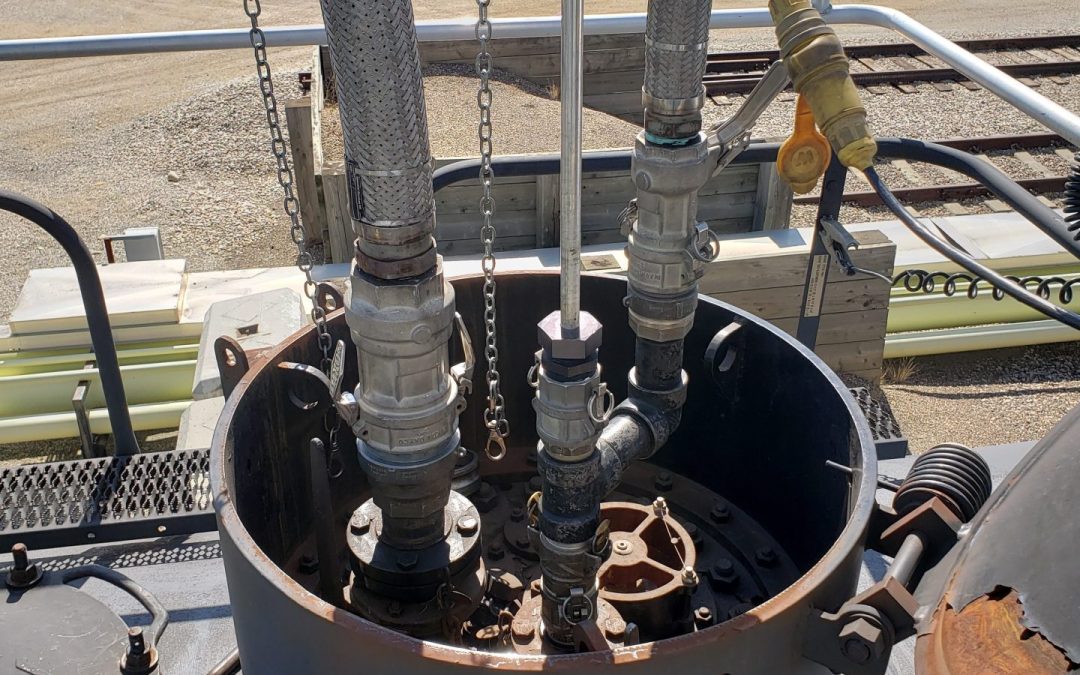
Common equipment considerations: Loading arm, grounding/bonding, vapour management where required, overfill protection, spill containment, gangway or access platform, fall protection, heated or jacketed components
Railcar Loading Systems for Refined Fuels (Gasoline, Diesel, Jet Fuel)
Refined fuels such as gasoline, diesel, and jet fuel require loading systems that support fast, controlled, and clean transfer. Because these products are flammable or combustible, the system must be designed to reduce ignition risk, control vapours where required, prevent spills, and keep workers safely positioned during loading. Key design considerations for refined fuel loading systems include:
Type of railcar: General service tank car for flammable or combustible liquids
Type of loading: Top or bottom loading; gasoline is commonly handled with closed loading and vapour recovery (where required)
Common equipment considerations: Loading arm, dry disconnect or tight-fill couplers, vapour recovery arm or line, grounding/bonding, overfill protection, emergency shutoff system, gangway or access platform, fall protection
Railcar Loading Systems for Natural Gas/LPG (Propane, Butane)
Liquified petroleum gas (LPG) is transported in pressurized tank cars and presents a very different risk profile than crude bitumen or refined fuels. Loading systems must maintain proper pressure during loading and unloading. Additionally, platforms and racks must meet strict industry standards (NFPA 53). Key considerations for these loading systems include:
Common equipment considerations: Pressure-rated loading arm, secure couplers, emergency shutoff valves, breakaway protection, vapour return or equalization line where required, gas detection, gangway or access platform, fall protection
Railcar Loading Systems for Ammonia (NH3)
Railcar loading systems for LPG and ammonia share several characteristics. Both products are transported under pressure, both require secure connections, and both rely on closed transfer systems to maintain containment. However, ammonia introduces an additional layer of risk: it is highly hazardous to workers if released. As a result, ammonia loading systems must be designed with particular attention to leak prevention, emergency shutoff, vapour or vent management, and safe operator access. Key design considerations for ammonia loading systems include:
Common equipment considerations: Loading arm, emergency shutoff system, secure couplers, vapour/vent management, gas detection, eyewash and safety shower access, gangway or access platform, fall protection
Railcar Loading Systems for Molten Sulphur
Molten sulphur is one of the more complex bulk liquid loading applications because the product must be kept hot enough to remain in a liquid state. If the product cools during transfer, it can begin to solidify inside the loading arm, piping, valves, or railcar connection point. Details about molten sulphur loading systems:
Type of railcar: Insulated tank car designed for molten sulphur service
Type of loading: Heated top loading through the railcar hatch
Key loading concern: Maintaining product temperature, preventing solidification, managing H₂S exposure, avoiding spills or residue, and protecting operators from burns
Common equipment considerations: Steam-jacketed or heat-traced loading arm, heated piping, vapour management or venting provisions, spill control, gangway or access platform, safety cage, fall protection, eyewash and safety shower access
Crude, LPG, refined fuels, ammonia, and molten sulphur all move by rail, but they all require different infrastructure. Each product has its own requirements for tank car fittings, loading arms, vapour control, fall protection, safety systems, and more.
As a full-service provider, Northern Platforms specializes in designing and installing complete turn-key railcar loading solutions for crude oil, refined fuels, propane, butane, ammonia, molten sulphur, and more. We have nearly 30 years of experience and have worked with some of the largest industrial operations in Western Canada.
Contact Us for a Free Quote
Ready to get started? Contact our team with your project details today.
Is your specific application missing from this list? We’d still love to hear from you. Request a quote through our website or call our office to get started on a turnkey railcar loading platform customized specifically for your operation.
Fuel loading and unloading can create serious safety, environmental, and operational challenges. From flammable vapours to product spills, even a routine transfer can become risky, especially if you don’t have the right equipment.
That’s why more and more site managers are investing in proper safety systems, such as loading arms with integrated vapour recovery. These systems help capture displaced vapours during loading or unloading, reducing emissions and helping protect operators, equipment, and the environment.
A vapour recovery system is a closed-loop configuration designed to capture hydrocarbon vapours that are displaced or released during the transfer of volatile liquids.
These systems are used across a wide range of industries, from petroleum terminals and chemical plants to food and beverage facilities and gas stations. In every application, the goal is the same: keep Volatile Organic Compounds (VOCs) out of the air.
How Do Vapour Recovery Systems Work?
In the context of tanker truck loading and unloading, the basic principles of vapour recovery systems are simple. The process unfolds in three stages:
1. Vapour Capture When the loading arm connects to the tanker truck, a vapour recovery coupler or hose creates an airtight seal at the connection point. As product flows in, displaced vapours are drawn into the vapour return circuit rather than escaping through the fill opening.
2. Vapour Transfer The captured vapours travel back through the loading arm’s vapour return line, either via a piggyback hose welded to the product arm, or through a dedicated second arm in a dual-arm configuration.
3. Vapour Recovery and Re-use At the receiving end, captured vapours are processed — either returned directly to the product storage tank, compressed and condensed back into liquid form, or fed into a vapour combustion or treatment unit.
The end result is a closed system: product flows in, vapours flow back, and nothing escapes to atmosphere during normal operation.
Benefits of Vapour Recovery Systems
More and more operations managers are adding vapour recovery systems to their tanker truck loading systems. Here’s why:
Environmental Impact
Hydrocarbon vapours released during fuel loading are composed primarily of volatile organic compounds (VOCs). Canada’s Canadian Environmental Protection Act (CEPA) establishes regulations on VOC emissions from fuel loading and storage operations, and provincial regulators in Alberta and BC have their own emissions requirements for petroleum handling facilities. Vapour recovery systems capable of capturing upwards of 95% of displaced vapours are required by these regulations.
Worker Safety
Displaced vapours can also be dangerous for workers. Without vapour recovery, operators can be exposed to a cloud of flammable vapour throughout the loading process, which creates a serious hazard.
A sealed vapour recovery system eliminates that exposure at the source. Workers on the loading platform aren’t breathing displaced product vapours and fire hazards are substantially lowered. For sites already managing fall protection, PPE requirements, and emergency shutoff systems, vapour recovery is an important piece of the overall site safety picture.
Operational Efficiency
The right vapour recovery system can also reduce time on the loading rack. At Northern Platforms, we use OPW’s Drylok™ Vapour Recovery Technology, which helps reduces the average time to connect a loading arm to railcar valves to 35–40 seconds. Operators simply turn a lever to connect; no pipe wrenches, cheater bars, or hammers required. That reduction in connection time adds up fast across a high-volume loading operation.
Vapour Recovery in Tanker Truck Loading and Unloading
At Northern Platforms, we use OPW Engineered Systems products to offer two primary vapour recovery loading arm configurations:
Piggyback Style Arm A simpler and more compact design where the vapour return line is welded directly to the product loading arm. The vapour hose runs parallel to the arm structure and connects at the dome hatch alongside the product drop tube. This configuration works well for lower-volume applications or sites where space at the loading rack is limited.
Dual Arm / Siamese Configuration The more commonly specified design for higher-volume or more demanding applications. This configuration uses two separate loading arms, one for product transfer and one for vapour recovery, joined together at the inner boom structure so they operate as a single, counterbalanced unit. The dual arm arrangement provides better flow capacity for the vapour return circuit and is the preferred setup for most fuel terminal and petroleum loading applications.
In addition to core system design, Northern Platforms offers a range of customization options to match the specific demands of your product and operating environment, including steam jacketing, heat tracing, insulation packages, and specialized couplings. Contact us with your site requirements, and we can recommend the right configuration for your operation.
Request a Quote Today
Interested in a new fuel tanker unloading system or looking to improve your existing operation? The Northern Platforms team is here to help. Contact us today with details about your project for a free quote. For businesses based in Alberta, we also offer free site visits and assessments.
From crude oil, ethanol, chemicals, LPG, and everything in between, railcars move an enormous volume of product across Western Canada every day. But not every tank car is built the same, and not every loading system should be either. In other words, the equipment, safety controls, and regulatory requirements for a pressurized LPG railcar look very different from what you need for a non-pressurized option.
At Northern Platforms, we help industrial operators across Western Canada design and install turnkey loading solutions engineered for their specific application. We have experience with both pressurized and non-pressurized systems. Keep reading to learn more about how these systems are different and how we can help.
Understanding Tank Car Types
Before diving into equipment, it helps to understand the fundamental distinction between the two main categories of tank cars.
Non-Pressurized (General Service) Tank Cars
Non-pressurized tank cars, marked as TC-117 in Canada, are general service vessels designed to carry materials at pressures typically below 25 psi. These cars transport a wide range of products, including:
Agricultural commodities
Diesel fuel and petroleum products
Crude oil and ethanol
Food-grade liquids
Non-hazardous chemicals
These cars typically feature visible fittings and valves at the top, and may also include a bottom outlet valve for unloading. Their design is more straightforward, and loading operations are generally less complex than those of pressurized systems.
Pressurized Tank Cars
Pressurized tank cars, designated by TC-105 and TC-112 in Canada, are purpose-built vessels used to transport liquefied compressed gases under pressure, typically above 40 psi. Products commonly transported in pressurized tank cars include:
LPG (liquefied petroleum gas) — propane and butane
Anhydrous ammonia
Chlorine
Other liquefied gases and high-hazard materials
These cars feature heavy-duty protective housings over their fittings, steel jackets, and thermal protection systems designed to prevent catastrophic failure in the event of a fire or accident. The key reason LPG must be transported in pressurized cars? Propane and butane exist as liquids only when kept under pressure. The moment that pressure is compromised, the liquid can flash back into a gas.
Loading Systems for Non-Pressurized Tank Cars
Non-pressurized loading operations are the more common of the two configurations. The products involved, such as crude oil, ethanol, diesel, and chemicals, are typically at or near atmospheric pressure, which makes the loading system design more forgiving.
Transfer Equipment
For non-pressurized service, operators can choose from a range of transfer options, including standard top-loading arms, bottom-loading systems, or reinforced flexible hoses. The primary engineering priorities for non-pressurized loading are flow rate, material compatibility, and reach.
Vapor Management
Depending on the product, non-pressurized loading may allow for open venting or vapour balancing rather than full closed-loop vapour recovery. Environmental regulations still govern allowable emissions, but the system architecture is significantly less complex than what’s required for LPG.
Platform and Access
Regardless of what product you are transferring, worker access to the top of a non-pressurized tank car still requires a proper loading platform, gangway, and fall protection. These railcar loading platforms are typically purpose-built to accommodate the types of locomotives you deal with most frequently.
Regulatory Requirements
Non-pressurized loading operations are subject to Transport Canada’s Transportation of Dangerous Goods Act and relevant provincial OHS regulations. Alberta’s OHS Code and WorkSafeBC both require fall protection for workers at heights of three metres or more. Other regulations and requirements vary depending on the type of product that you are dealing with.
Loading Systems for Pressurized Tank Cars
Loading LPG into a pressurized railcar isn’t simply a matter of connecting a hose and opening a valve. The high-pressure, volatile nature of LPG demands a system built from the ground up for these conditions.
Transfer Equipment
The LPG loading arm is the heart of any pressurized railcar loading station. The best systems for railcar applications include:
High-pressure construction: Carbon steel or stainless steel rated for LPG service pressures
Counterbalanced swivel joints: Allow smooth, ergonomic movement so a single operator can position the arm without strain
Leak-resistant sealing systems: Engineered to prevent drips, leaks, and emissions at connection points
Integrated vapour recovery ports: Support a closed-loop system to capture displaced vapours during loading
Emergency breakaway safety couplers: Automatically disconnect and seal in the event of an unexpected railcar rollaway
NFPA 58-compliant design: Meets the Liquefied Petroleum Gas Code for safe LPG handling
Pressurized LPG loading requires a fully closed-loop vapour recovery system. As liquid LPG is pumped into the tank car, displaced vapours must be captured and routed back into the storage system. This prevents both environmental emissions and dangerous vapour accumulation around the loading platform.
A properly specified LPG loading arm integrates vapour recovery capability directly into the transfer system, maintaining a sealed circuit from storage tank to railcar throughout the entire loading cycle.
Platform and Worker Access
As with non-pressurized operations, a proper loading platform, gangway, and fall protection system are required. For LPG, this also includes a safety cage surrounding the operator at the top of the railcar during connection and disconnection.
Emergency Controls
Automatic emergency shutoff valves are mandatory for pressurized LPG service under NFPA 58. These valves immediately halt product flow in the event of a detected leak, fire, or unexpected railcar movement. In addition, a grounding and bonding system is required to eliminate static discharge risk.
Regulatory Requirements
Any facility loading LPG must comply with NFPA 58, the Liquefied Petroleum Gas Code. In Canada, the Transportation of Dangerous Goods (TDG) Act and the Liquefied Petroleum Gases Bulk Storage Regulations may also apply.
Top Loading and LPG Loading Arms from Northern Platforms
Whether you’re loading general service products or high-pressure LPG, Northern Platforms is your single source for railcar loading arms across Western Canada. As an authorized distributor of OPW Engineered Systems, we carry the full line of top-loading arm configurations, and we have the application expertise to match the right arm to your product, your railcar type, and your site.
Our loading arm inventory includes:
Boom-Style (Supported and Unsupported) Loading Arms: Available in 2″, 3″, 4″, and 6″ sizes in carbon steel, stainless steel, or aluminum. Built for variable-reach applications and ideal for both LPG and general service railcar loading. Folds back against the platform for compact storage.
Bullhorn (Dual Connection) Loading Arms: The preferred configuration for pressurized LPG railcars, providing dual product connections from a single standpost to accommodate two liquid lines and a vapour recovery line.
Scissor Style Loading Arms: Designed for tanker truck loading applications with a secondary arm that rotates 360° in the horizontal plane, offering a spotting allowance nearly twice its length.
Fixed Reach Style Loading Arms: A simplified three-swivel design for straightforward top-loading applications. Available with an optional outboard valve to reduce drips and leaks on viscous products.
Custom Insulation Packages: For temperature-sensitive loading applications like molten sulphur, fully removable and reusable, available in top and bottom designs.
We’ve been supplying and installing railcar loading systems across Alberta and BC for over 20 years. Whether you need a single replacement arm or a complete turnkey loading station, our team will make sure you get the right equipment for your application.
Get a Quote from Northern Platforms
Ready to add a new railcar loading arm to your site or upgrade your complete loading station? Our team will assess your site, recommend the right configuration, and provide a transparent quote.
In many industrial loading environments, loading arms and gangways are treated as separate pieces of equipment. A loading arm may be selected based on reach and flow requirements, while a gangway may be chosen based on platform height and vehicle access.
However, here’s what most site managers don’t realize: these two systems need to communicate. Without proper integration, you’ll be faced with slow operations, increased worker risk, and more.
At Northern Platforms, we specialize in designing and installing completely coordinated truck and railcar loading systems. Keep reading to learn more about the benefits of sourcing both your gangway and your loading arm from the same provider.
How Gangways and Loading Arms Work Together
Gangways and loading arms serve different purposes, but they operate in the same work zone.
The gangway gives operators safe access to the truck or railcar. The loading arm transfers product to or from that same vehicle. In many applications, the operator needs to deploy the gangway, enter the work area, position the loading arm, make the connection, complete the transfer, disconnect the arm, and exit safely.
For that process to work, both systems need to be designed around the same access point, movement path, and operator workflow. The gangway needs to land where the operator works, and the loading arm needs to move into position without interfering with the gangway, safety cage, platform, piping, canopy, or surrounding equipment.
When they are designed together, the full loading process becomes safer, smoother, and easier to operate.
The Risks of a Poorly Designed System
When loading arms and gangways are not designed together, sites may experience several different issues, including:
Clearance conflicts: Both loading arms and gangways have their own movement paths. If these components are not planned together, these systems can collide or block each other.
Poor operator access: Outside of major collisions, small misalignments can force operators into uncomfortable and unsafe positions.
Slower operations: Poor integration can also significantly slow down operations. Every delay, from re-spotting vehicles to moving one loading arm to access another, adds up over time.
Worker risk: In the worst-case scenarios, poorly designed systems can cause unsafe conditions for workers.
Expensive retrofits: Eventually, poorly integrated systems start creating more problems than they solve. At this point, site managers will need to invest in a retrofit or a replacement, which can be expensive and time-consuming.
Choose Northern Platforms for Integrated Loading Systems
Instead of looking at gangways and loading arms as separate purchases, Northern Platforms supports industrial facilities with coordinated loading systems that take your complete environment into account. That includes how the operator accesses the vehicle, where the gangway lands, how the loading arm moves, where the connection is made, and whether the full system supports safe and efficient work.
We work with truck and railcar loading applications across Alberta and British Columbia, helping facilities design systems that account for real site conditions, operator workflow, and long-term performance. Here are the benefits of working with us:
One Provider for Every Aspect of Your Loading Platform
Sourcing your gangway and loading arm from the same provider can make the design process more efficient.
When one team is responsible for the full loading position, it is easier to coordinate:
loading arm reach and movement
gangway location and travel
safety cage placement
platform height and layout
fall protection requirements
This reduces the risk of equipment conflicts and helps ensure the system is designed around how it will actually be used.
Site-Specific and Purpose-Built Design
No two loading environments are exactly the same. For example, a loading system for an LPG terminal may have different requirements than a food processing facility. At Northern Platforms, we take all these factors into account. The result? A system that is uniquely tailored for your application.
Support for New Installations and Retrofits
We have extensive experience supporting both new loading system installations and retrofit projects. For new installations, we can help coordinate the loading arm, gangway, platform, safety cage, and surrounding access equipment from the beginning. This allows the system to be designed with proper clearances, workflow, and equipment movement in mind.
For retrofits, we can review the existing loading area to identify interference points, access issues, structural concerns, and opportunities for improvement. This is especially important for facilities that have expanded or modified their loading systems over time.
Ready to Get Started?
If you are planning a new loading rack, replacing an existing gangway, adding a loading arm, or dealing with an inefficient loading area, Northern Platforms can help. Contact us to start discussing your site today!
Alberta operators count on railcar loading arms to perform crucial tasks within their operations. But here’s what they forget: without proper maintenance and inspection, these systems could fail right when you need them most. Are you overdue for loading arm maintenance? Keep reading to learn more about this essential service–and how to book an appointment with Northern Platforms today.
Loading arm maintenance involves a combination of routine visual inspections, lubrication of swivel joints and moving assemblies, seal checks, and counterbalance adjustments. Most equipment manufacturers outline specific maintenance requirements in their installation, operation, and maintenance manuals, and staying on top of these tasks is often a condition of your warranty coverage.
The goal is simple: keep your loading arms operating smoothly and catch minor issues before they turn into major, costly problems. When maintenance is performed on a regular schedule by a trained team, your loading arms will last longer, perform better, and help keep your workers safe.
What are the Benefits of Preventative Maintenance?
We’ve discussed the main benefit of preventative maintenance in a previous blog post, but to recap: scheduled inspections and maintenance on your truck and railcar loading systems will save you money in the long run. Proactive repairs often cost substantially less than complete system replacements.
In addition to cost savings, there’s another major benefit that often gets overlooked: time savings for your team. Outsourcing inspections and maintenance to a team like Northern Platforms leaves more time for facility managers to focus on efficiency, safety requirements, and ensuring their operation is running smoothly.
What’s Included in Loading Arm Maintenance?
Wondering what a typical inspection of your railcar loading arms might look like? Our process usually follows these steps:
Detailed Mechanical Checks
Technicians inspect all primary articulation points and structural components, including:
Swivel joints
Bearings
Counterbalance systems
Locking devices
Mounting hardware
Structural welds
Seal and Containment Checks
Next, we’ll ensure your seals and gaskets are functioning properly. Our technicians are experts in railcar loading arms, so they can easily spot leaks or weepage, even in the most minor cases.
Gangway Integration
If your loading system includes integrated gangways, our technicians will also perform standard checks on these elements. This could include looking for smooth articulation, proper spring tension, proper safety cage integration, and more.
Lubrication
Finally, we’ll lubricate all elements to ensure your systems move smoothly during even the harshest Alberta weather conditions.
Final Reporting
At Northern Platforms, we understand the importance of time for plant managers and site operators. That’s why all our maintenance reports are easy to read. Once our inspection is complete, we’ll provide you with a colour-coded report that clearly identifies which systems passed, what areas might need future work, and the aspects that need attention right now. You can identify the required next steps in seconds and book any required follow-up appointments on the spot.
Need Loading Arm Maintenance? Call Northern Platforms Today
If your facility operates truck or railcar loading systems in Alberta or BC, you need planned maintenance programs to keep your loading arms and gangways running smoothly.
Northern Platforms provides professional loading arm and gangway maintenance services designed specifically for Canadian industrial environments. As a SafeRack Platinum Partner (2025), our team understands the engineering behind these systems and provides OEM-backed service and parts. Ready to learn more about how we can help? Contact our office or request a quote through our website today!
If you’ve driven on the highway, there’s a high likelihood that you’ve seen a tanker. These trucks are integral to the oil and gas industry and are designed to transport liquids and gases by road. They are built with stable, rounded corners and can be trusted to transport flammable and unstable substances like gas, oil, and hazardous chemicals. Trucks need low centres of gravity and internal bulkheads or baffles when transporting fuel in a tanker. This is because fuel expands and contracts depending on its temperature. Tanker trucks might also transport other more stable liquid substances for human consumption.
How to Build the Best Fuel Tanker Unloading System
Looking to make your unloading operations the best in the business? The answer is simple: invest in a bottom-loading arm. While using hoses for loading and unloading in the fuel tanker industry is common, loading arms are superior for several reasons. Unlike hoses, they do not need to be recertified every year. Additionally, they are much safer for your crew. While Northern Platforms offers both bottom and top loading arms, we typically recommend bottom loading if your operation deals primarily with fuel. Here’s why bottom loading is best for fuel tanker unloading:
Helps prevent fires: bottom loading limits liquid agitation and turbulence, which can cause sparks and fires. These systems also typically feature grounding features.
Allows vapour recovery: bottom loading systems can be modified to recover displaced vapours, which can significantly reduce your environmental impact.
Reduces the risk of falls: As the name suggests, top loading is more dangerous since operators have to load and unload from the top of the truck, which creates a potential falling risk.
Extended lifespan (over 5 years) with frequent use.
Short lifespan with frequent use.
Site Safety
Easy and safe to operate. Can be outfitted with fall protection systems for additional safety.
Increased risk of tripping and other worker injuries.
Safety Features
Can easily be outfitted with additional safety features like dry disconnects, breakaway couplings, and overfill protection.
Can use breakaway couplings, dry disconnects, and hiltap fittings.
Certification Requirements
Low maintenance, no recertification required.
Must be maintained and require annual pressure tests.
Build a Comprehensive Fuel Tanker Loading and Unloading System with Northern Platforms
Ready to get started on making your operations safer and more efficient? We stock high-quality loading arms from EMCO Wheaton and OPW Engineered Systems, which are designed for optimal performance. These loading arms are ideal for unloading petroleum products, chemicals, and liquefied gases. Plus, when you partner with an experienced loading solution provider like Northern Platforms, you can ensure that your system will perfectly fit all your loading needs. We offer turnkey installation, expert maintenance, and consulting services. Explore our loading arm inventory and schedule a site visit with the Northern Platforms team today!