Northern Platforms recently partnered with the Western Milk Pool to complete a fit-for-purpose truck loading platform for a unique dairy processing facility located in Blackfalds, Alberta. Learn more about this project below.
About the Dairy Innovation West Facility
Dairy Innovation West (DIW) is a state-of-the-art facility located in Alberta, built as a result of a major collaboration between several Western Canadian dairy organizations. Serving as a major hub for dairy farmers and companies, this processing plant uses advanced technology to remove water from raw milk, producing concentrated products. DIW is unique for its profound environmental impact: for every three to four trucks of raw milk from local farms, only one truck leaves the plant. This means fewer tanker trucks on the road and reduced overall emissions over time.
The Challenge: Efficient and Compliant Tanker Truck Top Access
Building a truck loading rack for this facility presented several challenges, including:
Loading requirements: Most dairy operations rely on gravity loading rather than pumped loading arms. This impacted how the truck loading platform would be built.
Fleet variability: The Dairy Innovation West Facility receives trucks from all over Western Canada. As such, their truck loading platform needed to accommodate a variety of truck sizes, lengths, and configurations.
Operator Safety: Like many tanker truck loading and unloading operations, workers needed safe access to the tops of tanker trucks, making consistent and reliable fall protection a top priority.
The Solution: A Fit-for-Purpose Truck Loading Platform
Through close collaboration with the Western Milk Pool and a comprehensive site assessment, Northern Platforms was able to build a comprehensive, fit-for-purpose truck loading rack. Unique features of this system included:
Sloped design: To guarantee smooth gravity unloading, the entire loading rack was designed with a slight incline.
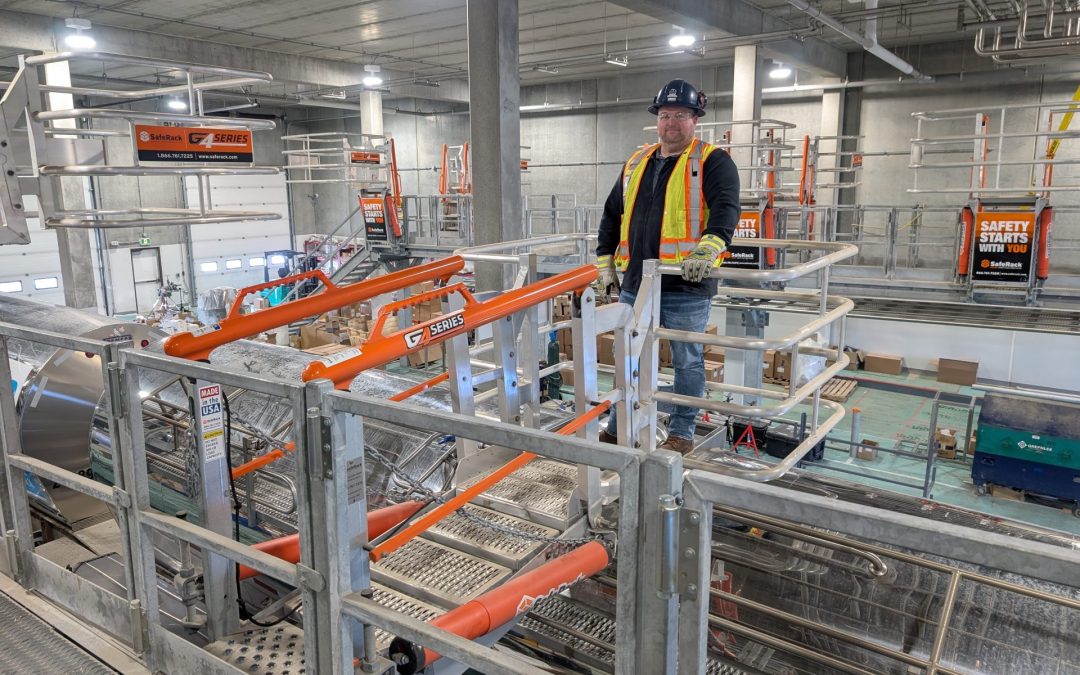
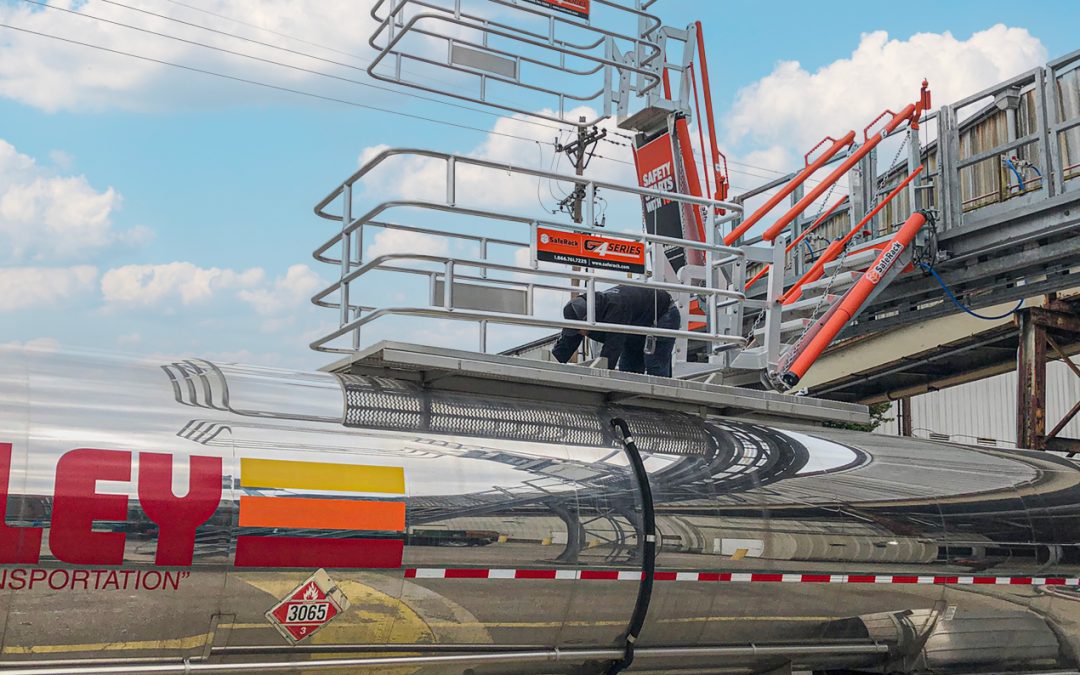
Articulating and tracking gangways: SafeRack’s self-adjusting stair gangways are a crucial component of this loading and unloading system. These gangways allow operators to safely align with tanker trucks, regardless of size, length, or configuration.
Dual-level truck loading platform: This allowed workers to access different connection points depending on trailer height and loading requirements. The result: improved operational efficiency.
Fall protection at every stage: Gangway safety cages and safety swing gates were integrated throughout the loading platform to ensure that operators were always protected. Thanks to high-quality products from YellowGate and SafeRack, these fall protection measures are integrated seamlessly into workflows and do not disrupt operational efficiency.
The Result: Final System Details
Once completed and commissioned, the DIW truck loading system included:
3 raised truck loading platforms
15 tracking gangways
Numerous gangway safety cages
Several YellowGate safety swing gates
Ultimately, Northern Platforms was able to design, deliver, and install a system that met DIW’s operational needs with ease. The result? A one-of-a-kind truck loading rack for a one-of-a-kind facility.
Why Choose Northern Platforms?
The Dairy Innovation West is simply one of many notable projects that the Northern Platforms team has completed. We’ve worked with notable oil and gas companies, local food processing facilities, national shipping operations, and more! Here’s why these companies consistently choose Northern Platforms for their fall protection systems:
Complete turnkey installation: From initial system design to final installation, Northern Platforms can take care of it all. Plus, thanks to our expansive inventory from industry-leading suppliers, we design systems that seamlessly integrate from top to bottom.
In-person consultations: Are you located in Alberta? Thanks to our central Leduc location, Northern Platforms can have a technician on site quickly to conduct thorough in-person assessments. Need a safe access solution installed fast? We’re the right team for you.
Dedicated inspection and maintenance programs: In addition to truck loading platform design and installation, we also offer comprehensive inspection and maintenance on key systems, including loading arms and gangways.
Request a Quote Today!
Interested in partnering with Northern Platforms on a future project? We bring over 20 years of experience to every job. When you work with us, we guarantee you’ll receive a safe access system that integrates seamlessly into your operation. Request a quote through our website or call our office today to get started.
Gangways are an essential component of most truck and railcar loading platforms. However, these systems are “one size fits all.” Instead, the right loading rack gangways depend on factors such as vehicle height variability, bay configuration, operational requirements, and more.Wondering if a fixed or tracking gangway is better for you? In this blog post, we’ll break down the basics, including key features of both and when each option is best. Keep reading!
What is a Gangway?
We’ve covered the basics of gangways (or “articulating stairs”) in several other blog posts, including how they work, their benefits, and the various options currently available at Northern Platforms. However, if you aren’t sure what a gangway is, here’s a recap: gangways are elevated walkways used in industrial operations to provide safe access to the top of tanker trucks, railcars, and other elevated surfaces. Typically, these units provide a stable bridge between the truck or railcar and your facility’s loading platforms. Gangways are an integral part of a comprehensive industrial fall protection system.
Gangways are typically available in two options: fixed and tracking. Let’s break it down
What is a Fixed Gangway?
A fixed gangway is mounted in a stationary position and provides vertical articulation only. It is designed to align with a consistent access point on vehicles that are standardized in height and configuration. Fixed gangways are ideal for facilities that consistently deal with the same types of vehicles and loading positions. They do not provide any horizontal adjustability.
What is a Tracking Gangway?
A tracking gangway is designed to move horizontally along a rail or track system mounted above or alongside a loading rack. This allows operators to reposition the gangway to align with different compartments or access points on a tanker truck or railcar.
Tracking systems are commonly used in multi-bay loading rack gangways where vehicle positioning varies. In more complex operations, a custom tracking gangway may be engineered to accommodate unique rack layouts, multi-product terminals, or irregular truck configurations.
Which is Best for You?
When evaluating fixed versus tracking loading gangways, the real question is not which system has more features. Instead, it’s how your facility operates on a daily basis.
A fixed gangway is often the right choice when:
Your fleet vehicles are standardized in height and hatch location
Trucks consistently park in the same position
You want a simpler system with fewer moving components
In these environments, fixed truck access gangways provide reliable, straightforward fall protection without added mechanical complexity.
On the other hand, a tracking or custom tracking gangway makes sense when:
You load multiple tanker configurations
Compartment access points vary across vehicles
You operate a multi-bay loading rack
Vehicles cannot be positioned identically every time
In these scenarios, choosing a tracking gangway helps reduce alignment issues and improve operational efficiency.
Northern Platforms: Your Source for Loading Racks, Fall Protection, and More
As SafeRack’s Platinum Partner of the Year for 2025, Northern Platforms is proud to carry a comprehensive inventory of SafeRack products, including gangways, loading racks, safety cages, and more. With over 20 years of experience supplying safe access equipment to Canadian operations, our team knows how to deliver a fit-for-purpose truck or rail loading system that you can count on.
Contact Us for a Quote Today
Ready to get started? Don’t delay–contact Northern Platforms today! Whether you need a completely new system or are looking to make some strategic improvements, our team has you covered. Call our office or request a quote through our website today.
Alberta operators count on railcar loading arms to perform crucial tasks within their operations. But here’s what they forget: without proper maintenance and inspection, these systems could fail right when you need them most. Are you overdue for loading arm maintenance? Keep reading to learn more about this essential service–and how to book an appointment with Northern Platforms today.
Loading arm maintenance involves a combination of routine visual inspections, lubrication of swivel joints and moving assemblies, seal checks, and counterbalance adjustments. Most equipment manufacturers outline specific maintenance requirements in their installation, operation, and maintenance manuals, and staying on top of these tasks is often a condition of your warranty coverage.
The goal is simple: keep your loading arms operating smoothly and catch minor issues before they turn into major, costly problems. When maintenance is performed on a regular schedule by a trained team, your loading arms will last longer, perform better, and help keep your workers safe.
What are the Benefits of Preventative Maintenance?
We’ve discussed the main benefit of preventative maintenance in a previous blog post, but to recap: scheduled inspections and maintenance on your truck and railcar loading systems will save you money in the long run. Proactive repairs often cost substantially less than complete system replacements.
In addition to cost savings, there’s another major benefit that often gets overlooked: time savings for your team. Outsourcing inspections and maintenance to a team like Northern Platforms leaves more time for facility managers to focus on efficiency, safety requirements, and ensuring their operation is running smoothly.
What’s Included in Loading Arm Maintenance?
Wondering what a typical inspection of your railcar loading arms might look like? Our process usually follows these steps:
Detailed Mechanical Checks
Technicians inspect all primary articulation points and structural components, including:
Swivel joints
Bearings
Counterbalance systems
Locking devices
Mounting hardware
Structural welds
Seal and Containment Checks
Next, we’ll ensure your seals and gaskets are functioning properly. Our technicians are experts in railcar loading arms, so they can easily spot leaks or weepage, even in the most minor cases.
Gangway Integration
If your loading system includes integrated gangways, our technicians will also perform standard checks on these elements. This could include looking for smooth articulation, proper spring tension, proper safety cage integration, and more.
Lubrication
Finally, we’ll lubricate all elements to ensure your systems move smoothly during even the harshest Alberta weather conditions.
Final Reporting
At Northern Platforms, we understand the importance of time for plant managers and site operators. That’s why all our maintenance reports are easy to read. Once our inspection is complete, we’ll provide you with a colour-coded report that clearly identifies which systems passed, what areas might need future work, and the aspects that need attention right now. You can identify the required next steps in seconds and book any required follow-up appointments on the spot.
Need Loading Arm Maintenance? Call Northern Platforms Today
If your facility operates truck or railcar loading systems in Alberta or BC, you need planned maintenance programs to keep your loading arms and gangways running smoothly.
Northern Platforms provides professional loading arm and gangway maintenance services designed specifically for Canadian industrial environments. As a SafeRack Platinum Partner (2025), our team understands the engineering behind these systems and provides OEM-backed service and parts. Ready to learn more about how we can help? Contact our office or request a quote through our website today!
Let’s face it: rooftops are filled with hazards. Between exposed pipes, HVAC ducting, cable trays, and unpredictable weather, every trip to the roof is a potential safety incident waiting to happen. The good news? Many of these incidents are entirely preventable—and installing a crossover walkway system is one of the most effective ways to make your rooftop safer, more accessible, and fully compliant with Canadian safety regulations. Keep reading to learn more about this key safe access system!
Rooftop Safety Risks
Every rooftop is different, but the dangers are often the same. Workers performing routine maintenance, inspections, or equipment repairs frequently encounter obstacles that create tripping, slipping, and falling hazards. Common rooftop risks include:
Pipes, conduit, and cable trays running across walking paths
HVAC systems and ductwork that block direct routes
Unprotected edges and parapet walls near work areas
Skylights and roof hatches that create fall-through hazards
Sloped, uneven, or weather-damaged surfaces that become slippery in rain, snow, or ice
These obstacles force workers to improvise—climbing over pipes, stepping around equipment, or walking dangerously close to unprotected roof edges. That’s exactly why a crossover walkway system is so valuable: it gives your team a clear, engineered route over and around rooftop obstructions, eliminating the guesswork and the danger.
What are Crossover Walkways?
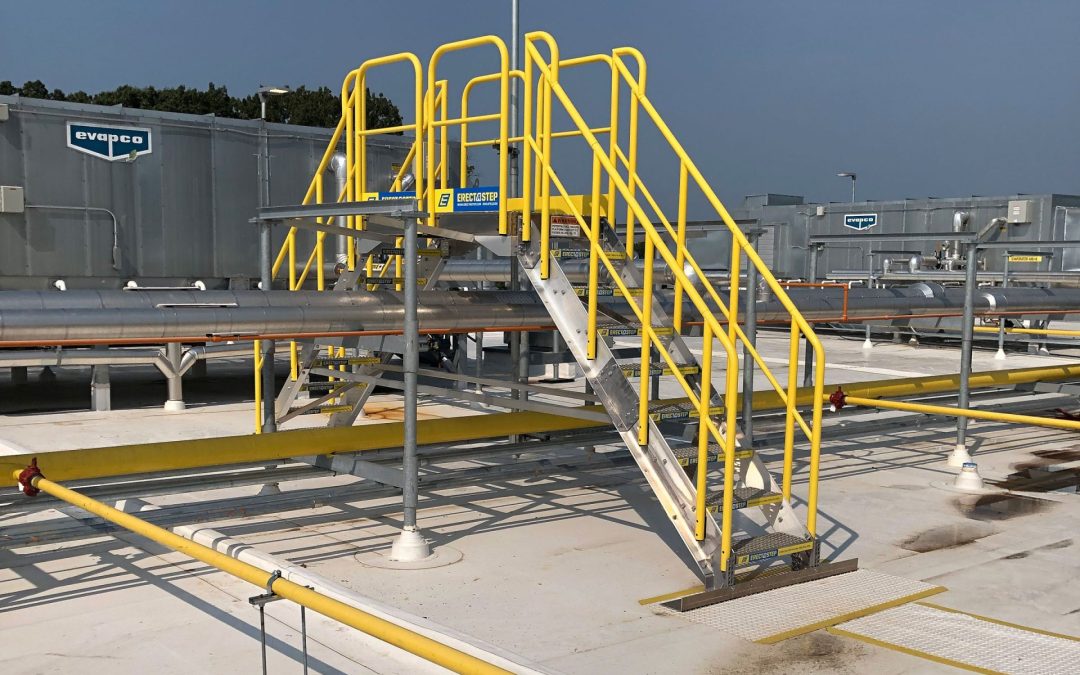
A crossover walkway is a raised, non-penetrating platform system designed to give workers safe passage over rooftop obstacles such as pipes, conduit, HVAC lines, and other obstructions. Rather than stepping over hazards or taking long detours, workers simply walk over and across.
Crossover walkway systems are typically modular, meaning they can be configured and customized to fit the unique layout of your rooftop. Depending on the height of the obstacles and the needs of your operation, a comprehensive rooftop crossover system may include:
Crossover walkways: Flat platforms used when obstacles are low and minimal elevation change is needed
Crossover stairs: Stepped systems ideal for navigating taller or more clustered obstructions, providing elevated clearance and secure footing
Benefits of Rooftop Crossovers
Rooftop crossovers deliver both safety and operational advantages any time workers need to access equipment or travel across the roof. By turning improvised routes into engineered access paths, they help protect people, property, and productivity.
Key benefits include:
Reduced slips, trips, and falls by providing a designated, level path over pipes, conduit, ductwork, and other obstacles.
Protection of the roof membrane by keeping foot traffic off vulnerable areas, reducing punctures, tears, and premature wear.
Safer all-weather access thanks to non-slip treads and stable platforms.
More efficient maintenance work because workers can take the most direct, safe route to rooftop equipment instead of detouring around hazards.
ErectaStep: The Gold Standard in Modular Crossover Walkways
At Northern Platforms, we regularly recommend ErectaStep’s modular crossover platform system for rooftop applications. ErectaStep uses just five standardized components—prefabricated metal stairs, universal platforms, industrial handrails, aluminum ladders, and tower supports—to create a limitless number of modular platform configurations.
Here’s what makes ErectaStep the go-to choice for Canadian operations:
All-aluminum construction that’s as sturdy as steel but significantly lighter
OSHA and OH&S compliant
Quick assembly with no need for welding, fabrication, or special tools required
Fully reusable and reconfigurable
Shorter lead times compared to custom-welded solutions
As a certified ErectaStep supplier, Northern Platforms keeps these systems in stock and ready to ship from our warehouse in Leduc, Alberta. With a digital real-time configuration tool, the team can design, draw, and quote your custom crossover walkway solution within minutes.
Northern Platforms: Your Experts in Rooftop Safety
Ready to make your rooftop operations safer, smarter, and more efficient? As Western Canada’s trusted safe access equipment supplier, Northern Platforms has been helping companies protect their workers since 2002. From crossover walkways and modular platforms to guardrails, safety gates, and more, our team has the expertise and the products you need! Contact us today to learn more about how we can help!
Loading racks are the heart of many bulk transfer operations. Whether you’re loading refined fuels, chemicals, or other liquid products, the right loading rack configuration has a direct impact on throughput, safety, and day-to-day efficiency. If your operation is growing—or you’re planning a new build—you’ll eventually face a key design question: should you invest in a single-spot loading rack, or step up to a multi-spot system?
What is a Loading Rack?
Loading racks are engineered platforms and support structures that bring together truck or rail access, fall protection, and loading arms or hoses into one integrated system. They provide safe, compliant access to the tops or sides of vehicles while supporting the equipment needed to transfer product efficiently.
Loading racks typically come in two layouts: single-spot and multi-spot configurations. We’ll break down the differences between these two configurations below.
Single-Spot Loading Racks
A single-spot loading rack is designed to service one truck or railcar at a time. With these systems, traffic is straightforward: one vehicle pulls in, is spotted under the loading arm or access platform, gets loaded, and then exits. This simplicity can be a real advantage for smaller teams, or for operations where each load requires hands-on attention from operators and quality or safety personnel. Additionally, single-spot configurations are often more cost-effective.
Opt for these loading racks if:
Your daily throughput is steady but not extremely high.
You operate in a tight footprint with limited room for additional lanes.
You’re upgrading an existing loading point rather than building a new facility from scratch.
You prefer a simpler system with fewer variables to manage and maintain.
What are Multi-Spot Loading Racks?
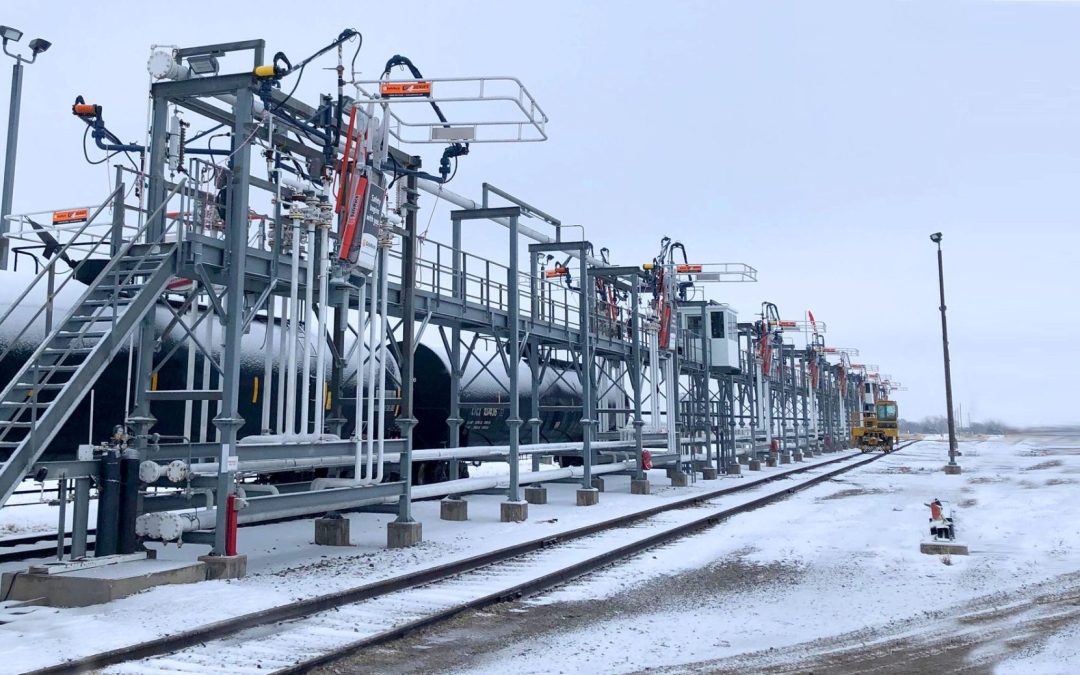
Multi-spot loading racks are designed to handle multiple vehicles at the same time along one continuous rack. Instead of loading one truck at a time in a bay, several trucks can be staged along the rack, each at its own loading position. The same concept applies to rail: a multi-spot rail loading rack may be designed to reach several cars in a string without moving the train.
These systems are common at higher-volume terminals and facilities where minimizing truck wait times and maximizing throughput are top priorities. By enabling simultaneous loading at multiple spots, they make it possible to move more product in the same window of time.
Key Considerations When Choosing Between Single-Spot and Multi-Spot
Not sure if a single-spot or multi-spot model is right for you? Here are a few factors to consider:
Current and future throughput. Are you loading a handful of trucks per day, or dozens? Are volumes expected to grow significantly over the next 5–10 years?
Available space. Do you have room for multiple lanes, longer racks, and safe traffic circulation, or is the site constrained by existing buildings and infrastructure?
Product mix. Are you loading a single product or multiple grades? Multi-spot racks can be engineered to handle different products, but this may add complexity to the design.
Staffing and operations. Do you have enough trained operators to run multiple spots at once, or is your team better suited to a simpler, single-spot layout?
Budget and phasing. Sometimes it makes sense to start with a single-spot rack that’s designed with future expansion in mind, so you can add additional spots later without starting from scratch.
A good starting point is to map out your current loading volumes, peak periods, and any bottlenecks. From there, you can evaluate whether a single-spot rack will truly support your needs or whether a multi-spot system is a better long-term fit.
Northern Platforms: Your Source for Loading Racks
Choosing between single-spot and multi-spot loading racks is about more than just counting trucks or railcars. It’s about understanding how your facility operates today, where your bottlenecks are, and where your business is headed.
Northern Platforms works with operations across Western Canada to design, supply, and install loading racks tailored to each site’s needs. From initial layout and equipment selection to turnkey installation and preventative maintenance, our team can help you find a solution that is safe, efficient, and built for growth.
Ready to explore your options for loading racks? Reach out to discuss your operation or request a quote through our website today!